 the symbol ofStrengthFind my product →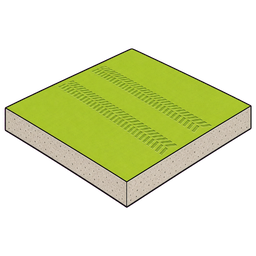
Non-metallic heavy-duty floor hardener for high-abrasion industrial floors — no rusting, no staining.
Industrial floors fail from the top down: forklift wheels, steel-tyred trolleys and dragged pallets abrade the weak cement laitance off an ordinary slab and then start on the concrete itself. A dry-shake floor hardener replaces that weak top layer with a dense, abrasion-resistant wearing surface, bonded monolithically while the slab is still fresh.
Non-metallic hardeners use hard mineral aggregate instead of iron filings — so the floor keeps its abrasion resistance without the rust spots and staining metallic toppings develop in humid plants and wash-down areas.
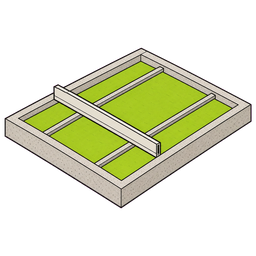
Broadcast at the right window — while the slab still accepts the shake.
Apply at the TDS dosage in two passes for uniform coverage.
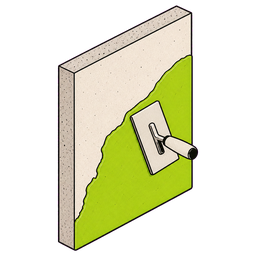
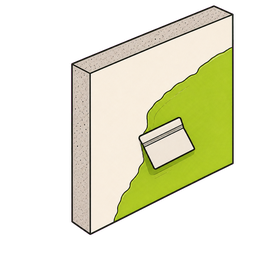
Float and power-trowel the shake into the surface — one floor, not a layer.
Cure properly; abrasion resistance depends on it.
THE PRODUCT TDS IS ALWAYS THE FINAL WORD ON RATIOS, THICKNESS AND CURE TIMES.
It densifies the top few millimetres of the slab — the only part traffic ever touches — with hard aggregate troweled in monolithically while the concrete is fresh. The result is a wearing surface several times more abrasion-resistant than plain concrete, without laying a separate topping later.
Metallic (iron-aggregate) hardeners offer high impact resistance but can rust and stain when the floor sees moisture — wash-downs, humidity, spillage. Non-metallic mineral hardeners keep high abrasion resistance without staining, which is why they are the default for most Indian plants, warehouses and yards.
Answer a few quick questions and we’ll spec the exact product for your project.