 the symbol ofStrengthFind my product →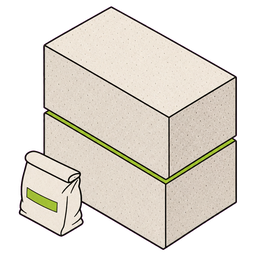
Water-resistant thin-bed mortar for strong AAC block bonding at 2–3 mm joints — less mortar, less wastage.
AAC blocks are precise, light and porous — three reasons a 12 mm sand-cement bed is the wrong way to lay them. Thick joints drink water from the mortar, telegraph through the plaster as cracks, and throw away the dimensional accuracy the blocks were made with.
A thin-bed block jointing mortar bonds AAC at a 2–3 mm joint: stronger walls, dramatically less mortar moved and mixed, and a flatter face that needs less plaster to finish. It is the method AAC manufacturers themselves specify.
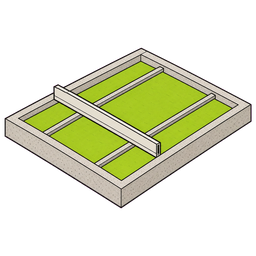
Set the first course dead level on conventional mortar — it carries the wall.
To the bag’s water ratio; use within its pot life.
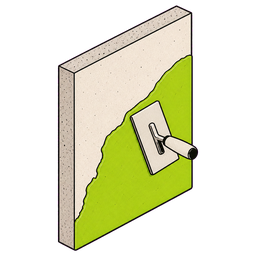
Apply with a notched trowel to bed and header faces.
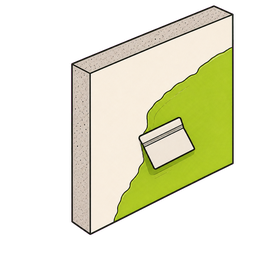
Position blocks within open time; tap level; check bond pattern.
THE PRODUCT TDS IS ALWAYS THE FINAL WORD ON RATIOS, THICKNESS AND CURE TIMES.
AAC block jointing mortar is a ready-mix, thin-bed mortar for laying lightweight AAC/CLC blocks with a 2–3 mm joint instead of a 12–15 mm cement–sand bed. It is faster to lay, uses far less material, gives stronger and more uniform joints and avoids the thermal bridges of thick cement joints. Use the BJM calculator to estimate bags.
With a thin-bed AAC block jointing mortar the joint is typically just 2–3 mm — far thinner than a conventional cement bed. A thin, full, even joint is exactly what gives the wall its strength and thermal performance, which is why the mortar is mixed to a smooth, trowelable paste.
BJM covers roughly 110–120 sq.ft per 40 kg bag on 600×200×100 AAC blocks at a 3 mm bed. Coverage varies with block size and bed thickness — use the BJM calculator for your exact wall.
Answer a few quick questions and we’ll spec the exact product for your project.