Seelan in walls (सीलन): meaning, causes and the fix that does not come back
Seelan (सीलन) is water travelling through the wall and drying out as stains, salt and peeling paint. How to find where it is coming from, and the repair order that stops it returning every monsoon.

ON THIS PAGE
- Seelan in English
- Dampness
- Inside damp-proof coat
- Dampguard · 2 coats
- Dampguard coverage
- 20–25 sq.ft/kg (2 coats)
- Exterior coat
- Weatherguard · 3 coats
- Plaster waterproofing
- LW Plus · 200 ml / 50 kg cement
- Best time to repair
- Dry season
KEY TAKEAWAYS
- Seelan (सीलन) means dampness — water moving through the wall and drying out as stains, salt bloom, peeling paint and mould.
- There are five usual sources: rising damp from the ground, rain seepage, plumbing or bathroom leaks, the terrace above, and condensation.
- Repair in order: stop the water, seal the outside face if needed, hack off salt-damaged plaster, re-plaster with waterproofing, apply Dampguard, then paint.
- Putty or waterproof paint over a wet wall never cures seelan — it hides it until the next monsoon.
Every Indian home knows the patch. It starts as a dark shadow near the floor or under a window, the paint bubbles, a white powder appears along the edge, and by the end of the monsoon the room smells musty. In Hindi it is seelan (सीलन); in parts of North India it is called saim or nami on the wall. In English it is simply dampness — water travelling through the wall and drying out on its surface.
Most seelan "treatments" fail for one reason: the wall gets a new coat of putty and paint while the water keeps coming. This guide explains what seelan is, how to find where your water is coming from, and the repair order that actually keeps the wall dry.
What seelan actually is
Brick, block and cement plaster are all porous. Water that gets into a wall does not stay where it entered; it spreads through the pores and moves toward wherever the wall can dry — usually the inside face of the room. As it evaporates it leaves behind the salts it picked up from the brick, cement and soil. That leaves you with all the signs together:
- a dark, wet-looking stain, often with a wavy upper edge (the tide-mark);
- bubbling and peeling paint, because the water pushes the paint film off from behind;
- white powdery patches (efflorescence) — salt crystals left behind by the drying water;
- crumbling, hollow plaster at the bottom of the wall, where the salts have broken it up;
- black spots and a musty smell — mould that grows where the wall stays wet.
Seelan is a symptom. The cure is to find the water and stop it, then repair the damage.
Where the water comes from: the five usual sources
1. Rising damp from the ground. The stain starts at floor level and climbs to roughly knee or waist height with a clear wavy line, on both faces of the wall, worst after the rains. It means the damp-proof course at plinth level is missing or broken and the wall is drawing water up from the ground. Read rising damp treatment for the full cure.
2. Rain seepage through the outside wall. The patch is on an external wall, it grows within hours of heavy rain, and it often follows cracks, window frames or the line of a parapet or chajja. The outside face is letting water in. See white patches and damp on external walls.
3. A leaking bathroom, kitchen or pipe behind the wall. The patch sits on the other side of a bathroom, kitchen or concealed pipe, and it stays wet even in dry weather. Water is coming from a failed waterproofing layer, a leaking joint or a cracked pipe. See bathroom leaking into the room below.
4. Water from the terrace or parapet above. The damp is at the top of the wall or on the ceiling under a roof, terrace or parapet. That is a roof waterproofing problem, not a wall problem.
5. Condensation. Black mould spots and wetness on cold walls, behind cupboards and in corners of poorly ventilated rooms, with no clear tide-mark. This is moisture from inside the room, and the cure is ventilation, not waterproofing.
If you cannot tell which one you have, rising damp, seepage or condensation? has a two-minute test.
The repair order that keeps seelan from coming back
The order matters more than the product. Do these in sequence:
- Stop the water at its source. Repair the pipe, re-waterproof the bathroom, fix the terrace, or seal the outside wall. For rising damp, restore the damp-proof course. Nothing applied inside the room will survive water that is still arriving.
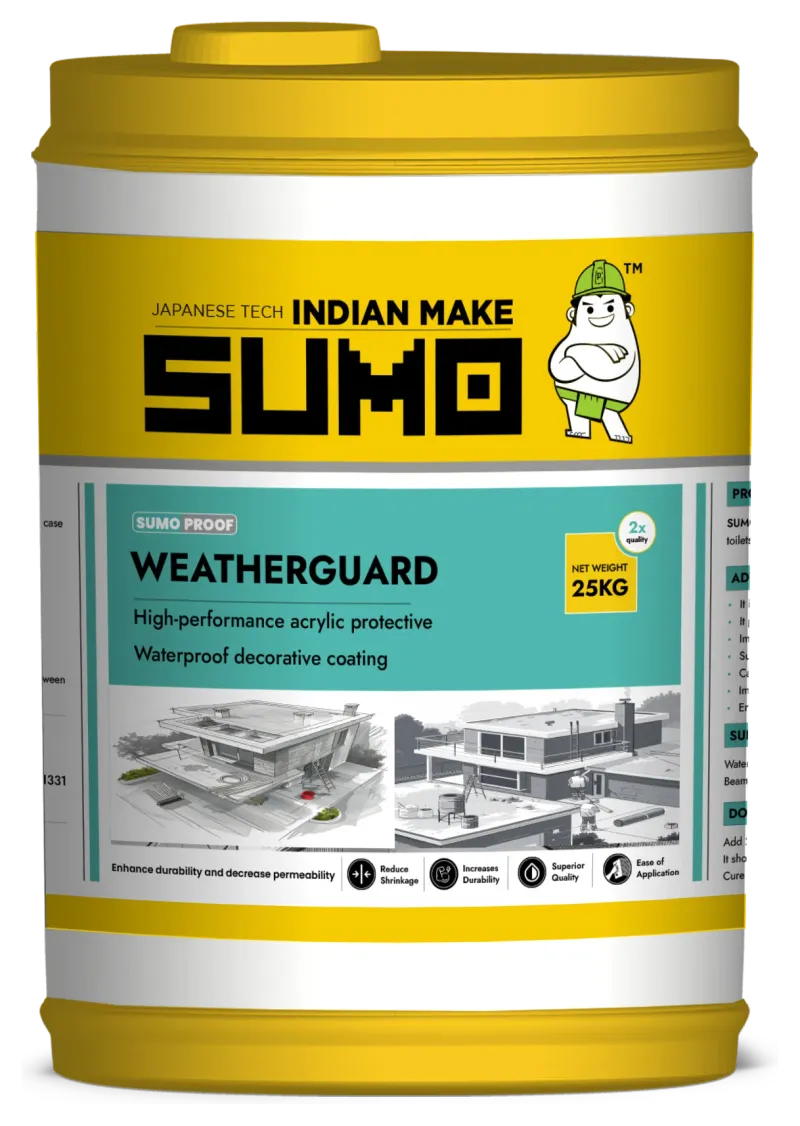
- Seal the outside face if rain is getting in. Fill cracks and open joints, seal around window frames, then coat the external wall with a waterproof exterior coating — SUMO Weatherguard is an acrylic, UV- and algae-resistant coat applied in three coats (about 30–35 sq.ft per kg for the three coats).
- Remove the damaged plaster. Hack off the salt-laden, hollow plaster on the inside, well above the highest point of the stain. Brush the salts off the bare masonry and let the wall dry — properly, for as long as the weather allows. Plastering over a wet, salty wall just moves the seelan to the new plaster.
- Re-plaster with waterproofed plaster. Use a Sealcrete and cement bond coat on the bare masonry, and add LW Plus integral waterproofing to the plaster mix (200 ml per 50 kg bag of cement) so the new plaster itself resists water. Cure the plaster.
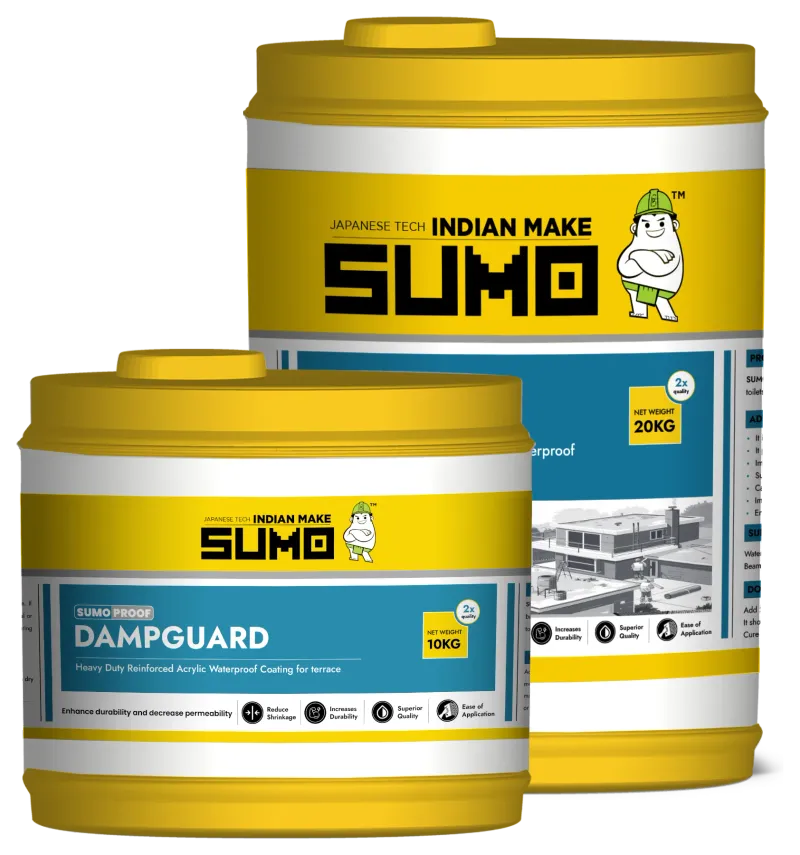
- Apply a damp-proof coat. On the inside face of a wall that has suffered seelan, apply SUMO Dampguard — a fibre-reinforced, elastomeric, self-priming damp-proof coating. Two coats cover about 20–25 sq.ft per kg.
- Only then putty, prime and paint. Putty and paint are the finish, not the treatment.
The full step-by-step method is in how to fix damp walls.
What does not cure seelan
- Waterproof putty or paint over a wet wall. It looks good for a few weeks; then the water lifts the new paint off along with the putty.
- POP or wall putty on salt-damaged plaster. The salts keep crystallising underneath and push it off.
- Sealing the inside face only, when rain is coming through the outside. It holds for a season at most.
- Re-painting every Diwali. If the patch returns every year in the same place, the source has not been fixed.
When to do it
The monsoon is the best time to find seelan — the water shows you exactly where it is coming from. It is the worst time to repair it: walls need to dry before re-plastering and coatings need dry weather to cure. Trace the source during the rains, mark the extent of the patch in pencil with the date, and schedule the repair for the dry months that follow.
The short version
- Seelan (सीलन) means dampness: water moving through the wall and drying out as stains, salt and peeling paint.
- Find the source first: ground, rain, plumbing, roof or condensation.
- Stop the water, seal the outside if needed, hack off damaged plaster, re-plaster with waterproofing, apply Dampguard, then paint.
- Putty and paint over a wet wall never cure seelan; they just hide it until the next monsoon.