Rising damp, seepage or condensation? Diagnosing the wall stain before you treat it
Three damp problems look identical and need opposite fixes. The tide-line, the foil test, and how to treat the right cause instead of repainting forever.

ON THIS PAGE
- Rising damp
- DPC + breathable plaster treatment
- Seepage
- Stop source + external waterproofing
- Condensation
- Ventilation + anti-fungal treatment
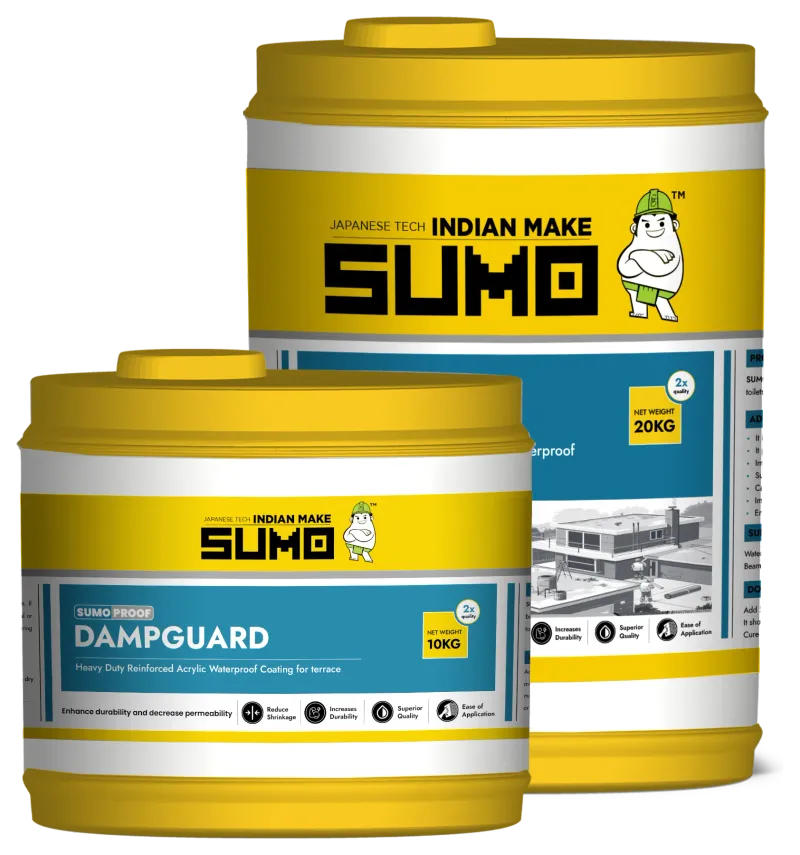
- Dampguard
- 300% elongation, self-prime + 2 coats
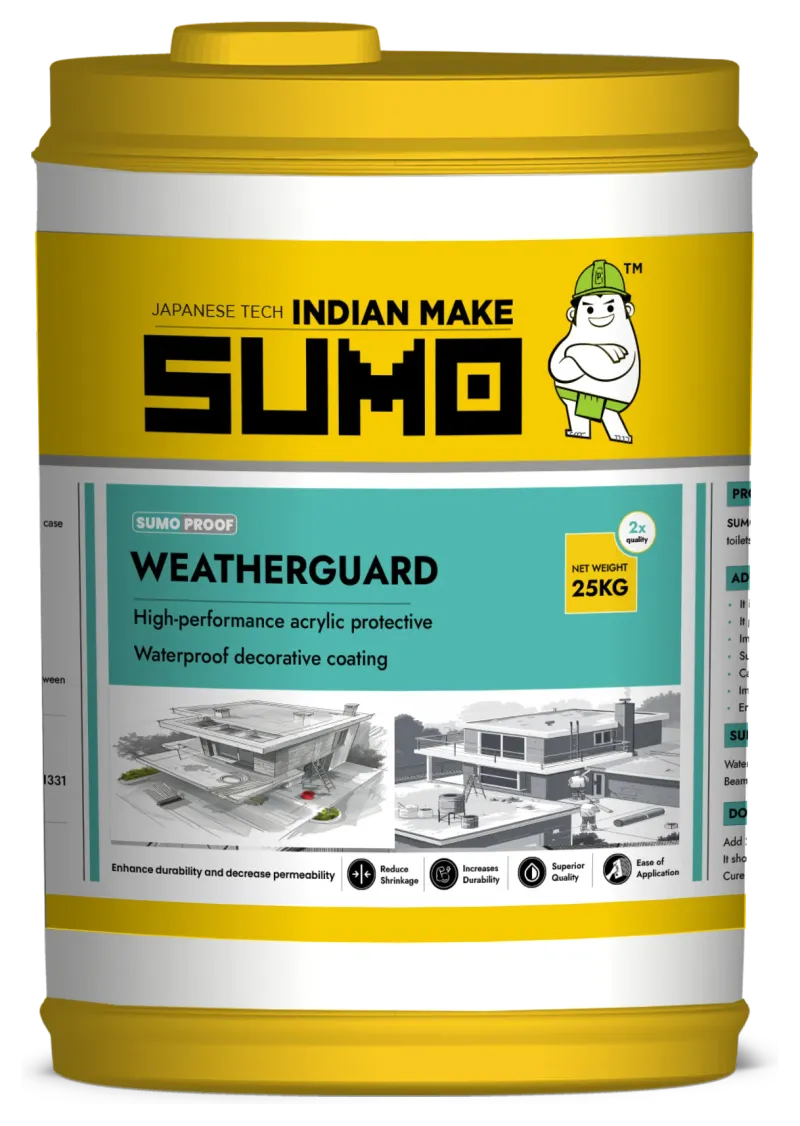
- Weatherguard
- Bond >3.5 N/mm², 3 coats
KEY TAKEAWAYS
- Three damp problems look alike and need opposite fixes: rising damp, seepage and condensation.
- Rising damp = low tide-line plus salts; seepage = a patch tied to rain or pipes; condensation = surface moisture in unventilated spots.
- The foil test tells you which: moisture on the room side means condensation; behind the foil means water through the wall.
- Treat the cause — ventilation, a DPC, or external waterproofing — not just the paint.
A damp patch on an inside wall is one of those problems that gets treated ten times and fixed zero times, because almost everyone skips the only step that matters: working out where the water is actually coming from. Someone slaps on a "damp-proof" paint, it looks fine for a monsoon, and the stain is back the next year, because the paint treated the symptom on the wrong wall.
There are really three different damp problems that all show up looking roughly the same — a discoloured, sometimes flaking patch — and they need three completely different fixes. Get the diagnosis right and the repair is straightforward. Get it wrong and you'll be repainting forever.
The three culprits, and how to tell them apart
Rising damp — water climbing up from the ground through the foundation and lower wall by capillary action, because the damp-proof course is missing, bridged or failed.
- Tell-tale: it starts at the bottom. A stain on the lower part of the wall, up to maybe a metre, with a fairly level "tide mark" where it stops. Often a white salty bloom (efflorescence) along the mark, because the water carries ground salts up with it. Worst near floor level, near the ground outside.
Lateral seepage / penetrating damp — water coming through the wall from outside: a leaking pipe, a cracked external render, a wall that shares with a bathroom or water tank, rain driving into an unprotected façade.
- Tell-tale: it's a patch, not a tide-line, and it sits wherever the water source is — behind a bathroom, along a buried pipe, on the weather-facing wall, under a leaking chajja or window sill. It gets noticeably worse right after rain or when a particular tap or tank is in use.
Condensation — no leak at all. Warm, humid indoor air hitting a cold wall surface and depositing its moisture, exactly like a cold bottle sweating.
- Tell-tale: it's on the surface, not soaking from within. Worst in poorly-ventilated, cooler spots — behind cupboards, in corners, on the coldest external-facing wall, in unventilated bathrooms and kitchens. Often shows as black mould speckling rather than a brown stain, and it comes and goes with the weather and how much the room is aired.
A two-minute field test
Not sure which one you've got? Tape a small square of plastic sheet or aluminium foil tightly over the damp patch, sealed all round, and leave it a day or two:
- Moisture forms on the room side of the foil (facing you) → it's condensation — the water is coming out of the air in the room.
- Moisture forms on the wall side of the foil (or the patch stays wet under it) → the water is coming through the wall — rising damp or seepage, and the position (low tide-line vs. random patch, ground-related vs. rain/pipe-related) tells you which.
That one test saves more wasted "waterproofing" than any product ever will.

Matching the fix to the cause
- Condensation is a ventilation and surface problem, not a leak. Improve airflow, fix the humidity source (unvented bathrooms, drying clothes indoors), and treat the cold surface — an anti-condensation / anti-fungal treatment to stop the mould. Painting a "waterproofer" over it does nothing, because there's no leak to stop.
- Rising damp needs the capillary path broken — re-establishing a damp-proof barrier at the base of the wall and treating the affected plaster, then a breathable finish. A surface coat alone won't hold back water under capillary pressure coming from below.
- Seepage / penetrating damp needs the source fixed first — the cracked render sealed, the pipe repaired, the shared wet wall tanked — and then the wall protected. This is where external waterproofing does the real work: stop the water getting into the wall from outside, and the inside dries out.
What we'd reach for — once you know the cause
- For walls suffering rising or penetrating damp, SUMO DampGuard is a fibre-reinforced elastomeric acrylic damp-and-seepage coating — it's highly flexible (around 300% elongation) with 2.9 N/mm² tensile strength and 2.3 N/mm² adhesion, applied interior or exterior as a self-priming coat plus two coats (roughly 20–25 sq.ft/kg). That crack-bridging film gives you a treated, protectable surface instead of a stain that keeps bleeding through paint.
- For the seepage half — stopping rain getting in from outside — SUMO WeatherGuard waterproofs and finishes external walls in one system: a decorative acrylic coat with bond strength >3.5 N/mm² and tensile >2.5 N/mm², anti-algae/anti-fungal and UV-resistant, at about 30–35 sq.ft/kg over three coats. Treat the outside, and the inside dries out.
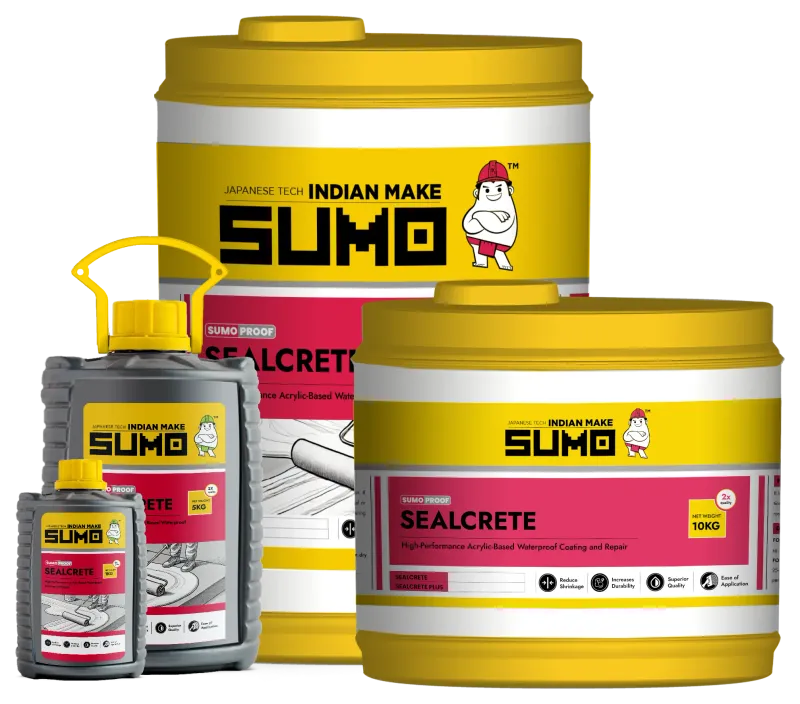
- And for the shared wet walls and junctions that seep — the bathroom-backing wall, the sump side — a flexible tanking coat such as SUMO SealCrete 2K Plus (100–120% elongation) on the wet face keeps the water from ever crossing.
The products all work. But none of them work on the wrong diagnosis. Do the foil test, read the tide-line, notice whether it's tied to rain or to a room being unventilated — and then pick the treatment. A damp wall isn't cured by the strongest coating. It's cured by treating the right cause.
SUMO is a brand of Adheseal India Company. Figures above are from the SUMOPROOF DampGuard, WeatherGuard and SealCrete 2K Plus technical data sheets (Rev 01); confirm the current values on the pack or product page before quoting.
Diagnosed it? Go straight to the fix: rising damp treatment for the level tide mark near the floor, or the six damp proofing methods matched to every other way water gets in.
Once you know the cause, follow the repair order in seelan in walls: the fix that does not come back.