White patches, bubbling paint, damp outer walls: the external problem that keeps coming back
Bubbling paint, white salt patches and damp are one problem — water in the wall — and paint cannot argue with water. Stop the ingress, then finish the surface.

ON THIS PAGE
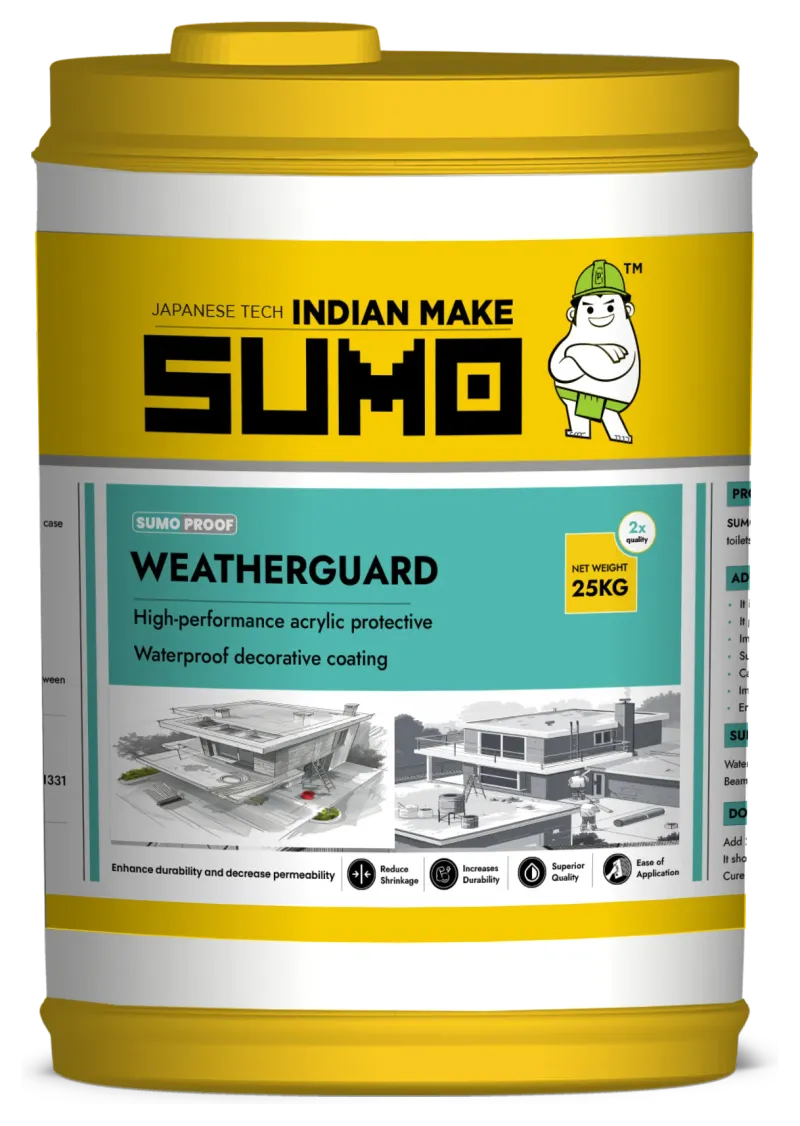
- Weatherguard
- Decorative exterior waterproof coat
- Weatherguard bond
- >3.5 N/mm², 3 coats
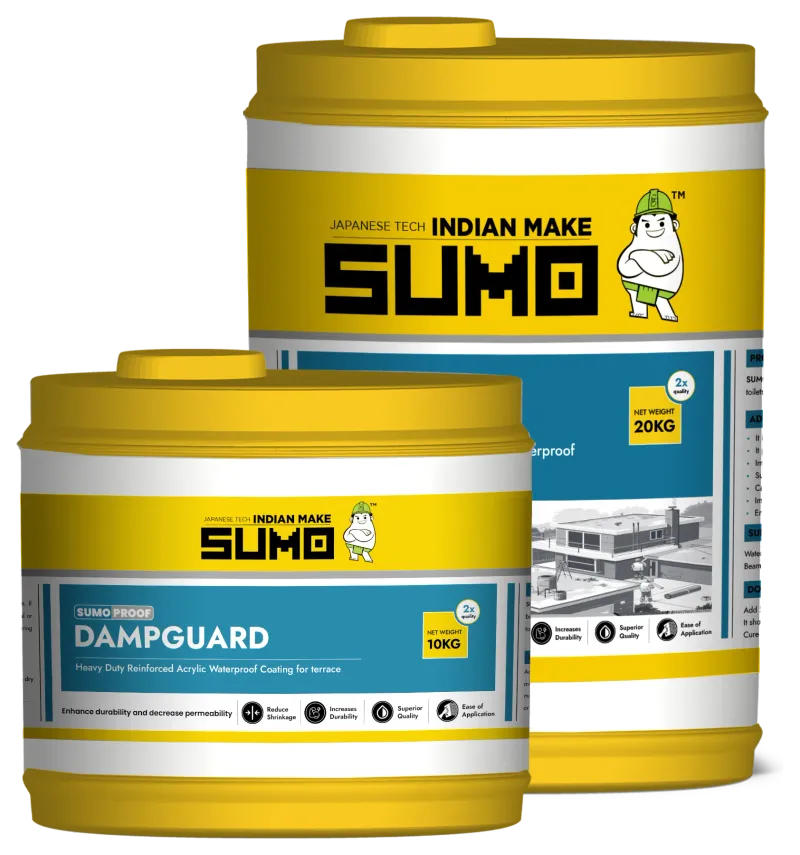
- Dampguard
- Fibre-reinforced, 300% elongation
- WR Guard
- Clear water-repellent, nil-VOC
- First step
- Seal cracks + let wall dry
KEY TAKEAWAYS
- Bubbling paint, white efflorescence and damp patches are one problem: water in the wall.
- Repainting fails because the water keeps arriving — you must stop ingress first.
- Seal render cracks and details, let the wall dry, treat the salts, then apply a real waterproof coating.
- Ordinary emulsion is not waterproofing — use Weatherguard, plus Dampguard or WR Guard as needed.
Every year, after the monsoon, the same thing happens to countless buildings. The external walls develop dark damp patches. The paint starts bubbling and peeling off in sheets. A chalky white powder — efflorescence — blooms across the plaster. The owner repaints, spends good money on "weatherproof" emulsion, and by the next monsoon it's all back, sometimes worse. It's one of the most repeated, most expensive, most misunderstood maintenance problems in Indian housing.
And it keeps coming back for one simple reason: repainting treats the surface while the water keeps arriving from inside the wall. Until you deal with the water, no coat of paint stands a chance.
What those three symptoms are actually telling you
They look like three separate problems. They're three faces of the same one — water in the wall.
Bubbling, peeling paint. Paint peels from below, not above. When water is sitting in the plaster behind the paint film, it pushes outward — as vapour pressure when the wall heats up, and by simply breaking the bond between paint and damp plaster. The paint lifts, blisters and flakes. A "bad paint" complaint is almost always a "wet wall" reality.
White patches (efflorescence). That white bloom is salts. Water moving through the masonry and plaster dissolves natural salts inside them, carries them to the surface, and evaporates — leaving the salt behind as a white crust. Efflorescence is not a stain to be wiped off; it's a signature. It's the wall telling you, in writing, that water is moving through it and out.
Dark damp patches. The water itself, showing through where it's collecting — under a cracked sill, below a leaking parapet, on the weather-facing wall that takes the driving rain, wherever the ingress is worst.
Where the water is getting in
External damp almost always comes from one or more of these, and repainting fixes none of them:
- Porous, unprotected plaster and masonry soaking up driving rain like a sponge, especially on the wind-and-rain-facing side.
- Hairline cracks in the render — even fine ones — funnelling rainwater straight into the wall behind, where it spreads far wider than the crack.
- Failed or missing sealing at the details — window sills and jambs, parapet copings, chajja junctions, pipe penetrations, and cracks at the RCC-to-brick junctions where the two materials meet and part.
- A leaking terrace or parapet feeding water down into the top of the wall.
- Ordinary emulsion used as if it were waterproofing. Standard exterior emulsion is a decorative, breathable paint — it is not a waterproof membrane. Expecting it to hold back water ingress is the fundamental mistake behind the whole repaint-and-repeat cycle.

Fixing it so it actually stays fixed
You have to stop the water first, then finish the surface — in that order.
- Find and kill the sources. Rake out and seal cracks in the render with a flexible crack filler. Re-seal the sills, parapet copings, chajja lines and pipe penetrations. Fix any terrace/parapet leak feeding the wall. This detailing work is unglamorous and it's where the leak actually lives.
- Let the wall dry. A soaked wall needs time to dry back before it's coated, or you seal the water in. Trying to coat a wet wall is why treatments fail.
- Treat the efflorescence. Brush off the salt bloom dry (don't just wash it in), and treat the surface so the salts don't keep pushing through the new finish.
- Waterproof the wall — with an actual waterproof coating, not emulsion. Apply a proper elastomeric exterior waterproof coating over the sound, dry, prepared wall. This is the layer that stops driving rain getting in while still letting the wall breathe out — the layer the repaint jobs never included.
- Then decorate if needed, over a wall that's finally sealed.
What we'd protect it with
- SUMO WeatherGuard is a decorative acrylic exterior-wall coating that waterproofs and finishes the façade in one system — it protects against driving rain and water ingress while colouring the wall, with bond strength >3.5 N/mm², tensile >2.5 N/mm², anti-algae and anti-fungal properties and strong UV resistance, at roughly 30–35 sq.ft/kg over three coats. Over properly sealed cracks and details, it's what turns the repaint-every-year wall into one that stays dry. It's a waterproofing coat, not just a colour — that's the whole difference from ordinary emulsion.
- Where the wall is already suffering damp and efflorescence coming through, SUMO DampGuard — a fibre-reinforced elastomeric coating with around 300% elongation, 2.9 N/mm² tensile and 2.3 N/mm² adhesion — tackles the damp and seepage on the affected face (self-priming coat plus two coats, interior or exterior), so you're treating the wall's condition, not just painting over the symptom.
- For clear, invisible protection of exposed brick, stone and rendered façades, SUMO WR Guard is a nil-VOC, water-based water-repellent impregnation — flood-coated to saturation (about 4.5–9 m²/L depending on porosity) it makes the surface shed water while leaving its appearance unchanged.
The white patches, the peeling paint and the damp are not three jobs and they're not a paint-quality problem. They're one wall letting water in, and paint can't argue with water. Seal the cracks and details, let it dry, treat the salts, and put a real waterproof coating on it — and the wall you fix this monsoon is still clean and dry the next.
SUMO is a brand of Adheseal India Company. Figures above are from the SUMOPROOF WeatherGuard, DampGuard and WR Guard technical data sheets (Rev 01); confirm the current values on the pack or product page before quoting.
To choose the coating itself, see the four types of waterproof coating for exterior walls compared — and if the patch starts at the ground and climbs, treat the rising damp first.
Damp on the inside face as well? See seelan in walls (सीलन) for the full inside-and-outside repair.