Waterproof coatings for exterior walls: the four types, and how to pick the right one
Exterior emulsion is paint, not protection. The four types of waterproof coating for exterior walls — pigmented, transparent, repair-grade and flexible — and how to pick in five minutes.

ON THIS PAGE
- Type 1 — Pigmented acrylic waterproof coatings (the standard answer)
- Type 2 — Transparent water repellents (protection you can't see)
- Type 3 — Fibre-reinforced barrier coats (for walls already in trouble)
- Type 4 — Flexible acrylic multi-surface coats (the horizontal edges of the wall)
- The five-minute decision
- Whatever you choose, the wall decides half the result
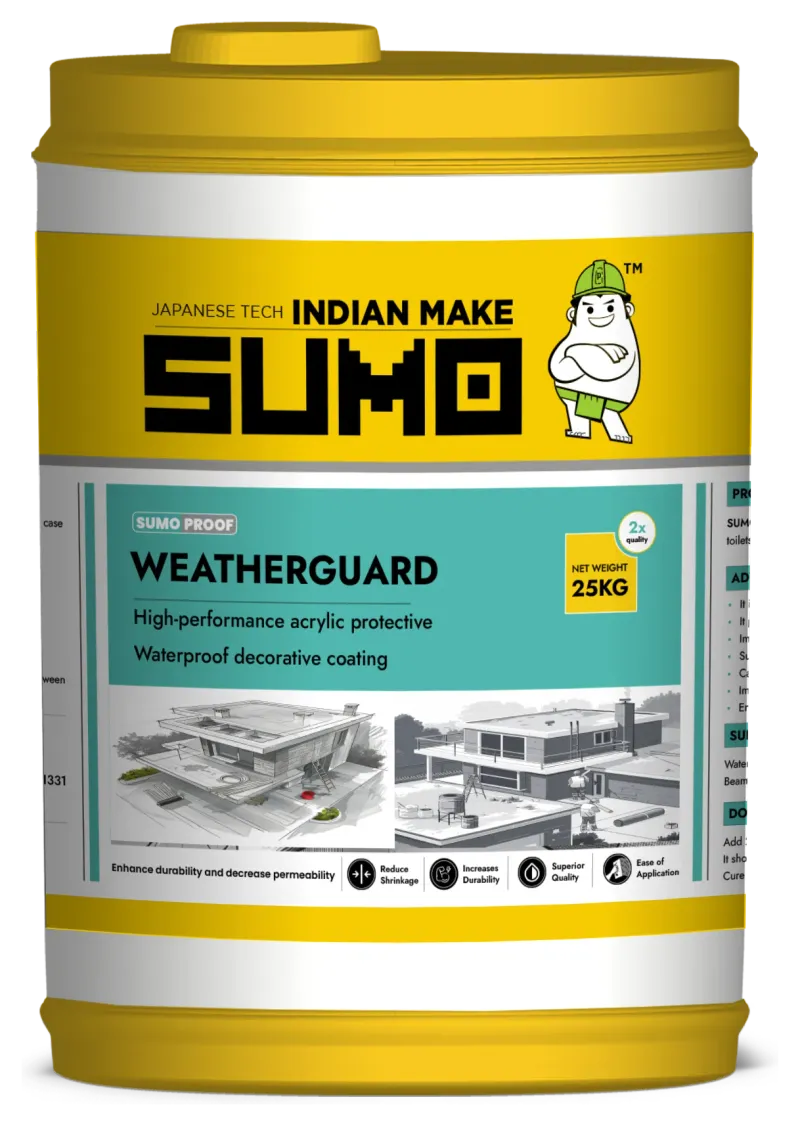
- Weatherguard
- 30–35 sq.ft/kg · 3 coats · anti-algae
- Weatherguard bond
- >3.5 N/mm² · UV resistant
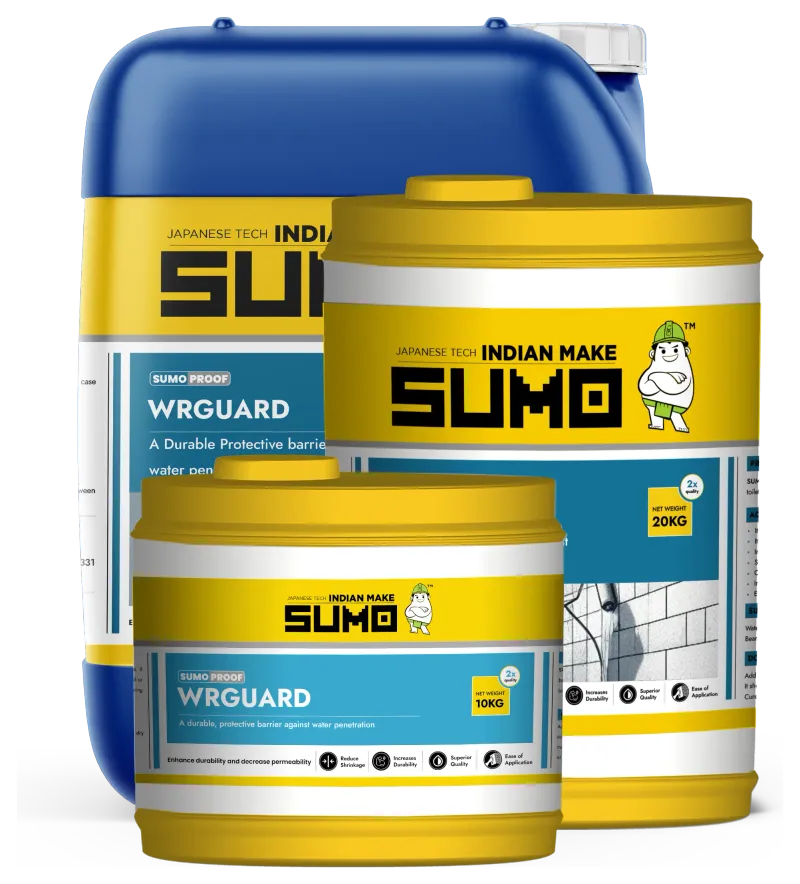
- WR Guard
- Transparent silane · 4.5–9 m²/L
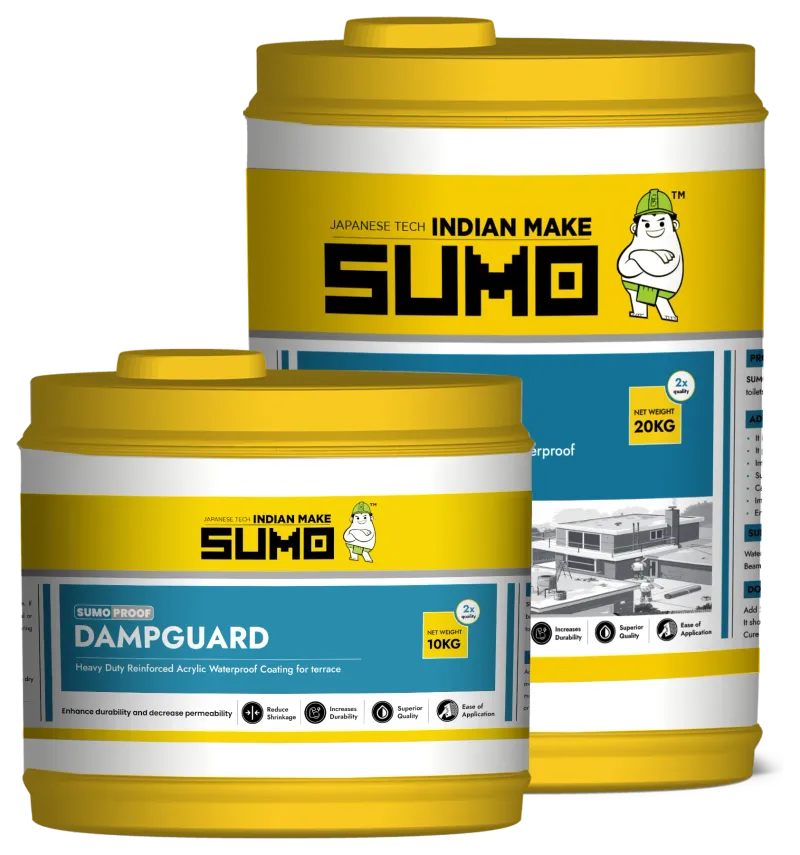
- Dampguard
- 20–25 sq.ft/kg · 300% elongation
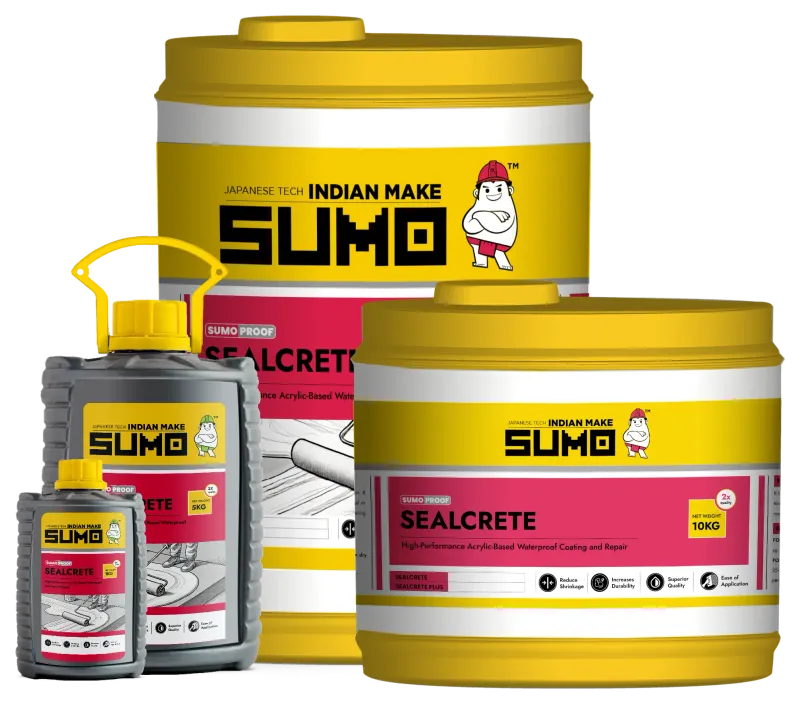
- Sealcrete Plus
- 25–30 sq.ft/kg · 43% solids · UV stable
KEY TAKEAWAYS
- Exterior emulsion is decorative paint, not waterproofing — the repaint-every-monsoon cycle is the proof.
- Four coating types cover every exterior wall: pigmented acrylic (Weatherguard), transparent repellent (WR Guard), fibre-reinforced repair coat (Dampguard), and flexible acrylic for chajjas and parapets (Sealcrete Plus).
- Match the coating to the wall: painted plaster → pigmented; exposed brick or stone → transparent; already damp or cracked → fibre-reinforced.
- A tide mark rising from the ground disqualifies all four until the rising damp is treated.
- Surface preparation — crack repair, drip details, cured render — decides half the coating’s life.
Every monsoon teaches the same lesson at scale: exterior emulsion is paint, not protection. It is a decorative, breathable film, and expecting it to hold back driving rain is why so many buildings cycle through damp patches, bubbling paint and white salt blooms every single year — the full anatomy of that cycle is in our article on damp external walls. The product category that actually stops the cycle is the exterior waterproof coating: a film thick, bonded and flexible enough to be the wall's raincoat.
But "waterproof coating" is a shelf, not a product. There are four distinct types on that shelf, and they suit four different walls. Here is the map.
Type 1 — Pigmented acrylic waterproof coatings (the standard answer)
This is what most exterior walls need: an acrylic coating that goes on like a thick paint and cures into a continuous waterproof film, replacing the decorative topcoat entirely — colour and raincoat in one system.
The SUMOPROOF product here is Weatherguard: a decorative acrylic waterproof coating applied in three coats at 30–35 sq.ft per kg, with a bond strength above 3.5 N/mm², UV resistance for south- and west-facing exposure, and an anti-algae finish — the difference between a wall that stays its colour and one that turns green on the shaded side by the second monsoon. Packs are 5 kg and 25 kg.
Choose it when: you are finishing or re-finishing a plastered exterior and want lasting colour plus protection in one decision.
Type 2 — Transparent water repellents (protection you can't see)
Exposed brick, natural stone and textured renders are chosen for their look — coating them with a pigmented film defeats the point. For these, the answer is a penetrating water repellent: a clear silane treatment that soaks into the surface and makes it shed rain, without forming a visible film or changing the texture.
WR Guard is the transparent, silane-based repellent in the range, for brick, stone and rendered façades. Coverage runs 4.5–9 m² per litre — the spread depends on how porous the surface is, so a thirsty old brick wall drinks more than a dense stone one. Packs are 10, 20 and 50 kg.
Choose it when: the wall's material is the aesthetic — exposed brick, stone cladding, decorative render — and you want it to stay exactly that, minus the soaking.
Type 3 — Fibre-reinforced barrier coats (for walls already in trouble)
A wall that is already seepage-affected — hairline-cracked render, damp patches tracking through from outside, the repaint that keeps failing — needs more than a raincoat. It needs a coating that can bridge the cracks that are letting water in, and keep bridging them as the wall moves.
That is Dampguard: a fibre-reinforced acrylic damp-proof coating for seepage-affected walls, usable inside and out. It self-primes, covers 20–25 sq.ft per kg over two coats, bonds at 2.3 N/mm², and stretches up to 300% — the fibre and elongation are the difference between covering a crack and actually sealing one that is still moving. Packs are 10 kg and 25 kg.
Choose it when: the wall already shows damp — this is the repair-grade coating. (If the damp starts at the floor with a tide mark, stop: that is rising damp, and it needs a different cure before any coating.)
Type 4 — Flexible acrylic multi-surface coats (the horizontal edges of the wall)
The wall's worst leaks are often not on the wall at all but on its horizontal accessories — chajjas, parapet tops, sills and small projections that hold rainwater rather than shedding it. These want a flexible waterproof coat made for standing exposure: Sealcrete Plus, a UV-stable acrylic waterproof and bond coat (43% solids) covering 25–30 sq.ft per kg in two coats, handles exactly these transitional surfaces, and doubles as the bond-coat workhorse of the range. For full terraces, step up to the dedicated systems in the terrace waterproofing guide.
Choose it when: the leak line is a chajja, parapet or sill rather than the wall face itself.
The five-minute decision
The wall | The coating |
|---|---|
Plastered, being painted or repainted | Weatherguard (colour + waterproofing in one) |
Exposed brick / stone / decorative render | WR Guard (transparent, invisible) |
Already damp, cracked or seepage-hit | Dampguard (fibre-reinforced repair coat) |
Chajjas, parapets, sills | Sealcrete Plus (flexible, UV-stable) |
Tide mark rising from the ground | None yet — treat the rising damp first |
Whatever you choose, the wall decides half the result
A coating is only as good as the surface under it. Before any of the four: repair cracks and open joints properly (not with a smear of the coating itself), deal with the details that concentrate water — sill drips, parapet copings, pipe penetrations — and let fresh render cure before coating. The application sequence for a full exterior job is covered step-by-step in how to waterproof exterior walls; the wider decision of which walls need which damp-proofing method at all is in damp proofing walls: the six methods.