Why your 'epoxy' grout faded — and how to keep the colour for years
Real epoxy grout holds its colour for years. If yours faded, one of a few specific things went wrong — usually starting with whether it was epoxy at all.

ON THIS PAGE
- Genuine epoxy
- Sumoxy 2/3-Part — EN 13888 RG
- Compressive strength
- ~50 N/mm²
- Porosity
- Non-porous, stain-proof
- Decorative
- Sumoxy Sparkle (metallic)
- Everyday cleaning
- Mild pH-neutral cleaner
KEY TAKEAWAYS
- The commonest reason "epoxy" fades is it was not real epoxy — cement grout sold with an epoxy label.
- Genuine epoxy is a 2- or 3-part reaction resin (RG) — non-porous, stain-proof and colour-stable.
- Real epoxy still dulls if hazed at install or scrubbed with harsh acid or bleach.
- Buy true RG epoxy, install it clean, and clean it gently with a pH-neutral cleaner.
A customer pays extra for epoxy grout specifically because they were told it never stains and never fades. Eighteen months later the joints in their kitchen have gone patchy, the crisp grey has drifted to a dirty yellow-brown near the stove, and the whole selling point has collapsed. They're upset, and fairly so — they paid for permanence and got the same tired joints cement would have given them.
Nine times out of ten, one of a small number of things went wrong. Real epoxy grout, installed correctly, genuinely does hold its colour for years. So let's separate what actually causes fading from the myth, because the fixes are specific.
First: was it actually epoxy?
This is the uncomfortable one. The most common reason "epoxy grout" fades is that it wasn't epoxy grout. The market is full of cement grouts sold with an "epoxy" sticker, and of part-epoxy or "epoxy-fortified" cement products that behave like cement, not resin. A true epoxy grout is a reaction-resin system — you mix a resin part and a hardener part (two-part), sometimes with a coloured filler (three-part), and it chemically cures into a solid, non-porous, chemical-resistant plastic. If what went into the joints was a powder you mixed with water, it was cement grout wearing an epoxy label, and cement grout is porous — it will absorb, stain and lighten.
Check what you're actually buying. A genuine epoxy grout comes as two or three separate components you mix on site, carries a reaction-resin (RG) classification, and is priced accordingly. If it's a single bag of powder and water, it isn't epoxy, whatever the front of the pack says.

The real causes of fading — even with genuine epoxy
Assuming it was real epoxy, here's what still makes it go off-colour:
1. Wrong cleaning chemicals. This is the big one. Harsh acidic cleaners, strong bleach, and abrasive scouring powders attack the resin surface over time — etching it, dulling it, and letting dirt key in. People use aggressive bathroom acid to "deep clean," and slowly sandpaper their own grout. Epoxy resists chemicals far better than cement, but far better isn't invincible.
2. Residue and haze left on at installation. Epoxy is unforgiving on clean-up. If the installer didn't wash off the epoxy film thoroughly while it was fresh — with the correct pads and a proper epoxy emulsifying cleaner — a thin haze of resin cures across the joint and the tile. That residue layer is what dulls, yellows and collects grime later. A "faded" joint is very often a hazed joint: the colour underneath is fine; it's the film on top that's discoloured.
3. UV on the wrong pigment, in the wrong place. Some cheaper coloured epoxies, and especially some cheap glitter/metallic ones, use pigments that aren't UV-stable. On a sunlit windowsill or a bright balcony they can shift over time. A quality epoxy uses stable pigments; a bargain one may not.
4. Under-mixing or wrong ratio. Epoxy only reaches its full, sealed, colour-fast cure if the components are mixed thoroughly in the correct ratio. Skimp on mixing or eyeball the proportions and you get a soft, under-cured, porous-ish surface that behaves — and fades — more like cement.
How to keep the colour for years
- Buy genuine two- or three-part epoxy with a reaction-resin (RG) rating. Don't pay epoxy prices for "epoxy-fortified" cement.
- Insist on proper installation — correct ratio, thorough mixing, and above all a complete fresh clean-up so no haze cures onto the surface.
- Clean it with the right things. For everyday cleaning, a mild pH-neutral cleaner and water is all a good epoxy joint needs. Skip the harsh acids, strong bleach and gritty scouring powders — you don't need them, and they're what does the long-term damage.
- Use it where its strengths pay off — wet areas, kitchens, backsplashes, high-traffic and commercial floors — and pick UV-stable products for sunlit spots.
The product that actually delivers the promise
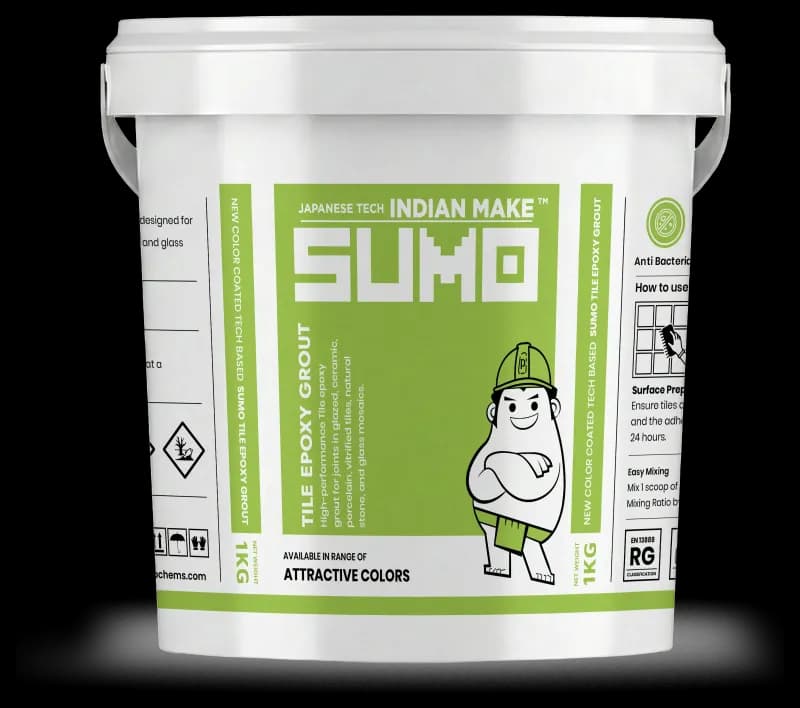
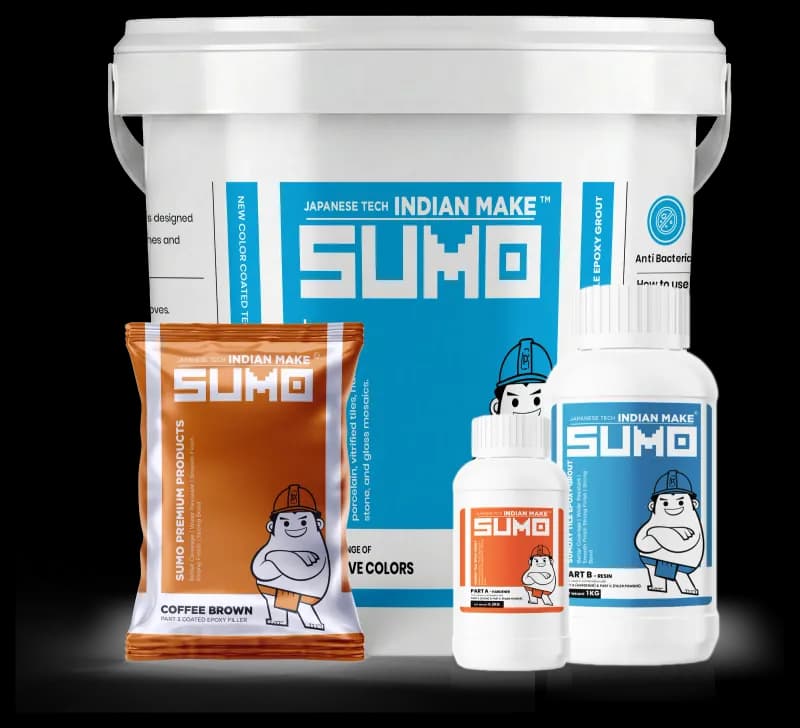
- SUMO Sumoxy 2-Part Tile Epoxy Grout is a true reaction-resin grout (RG, ~50 N/mm² compressive) — non-porous, essentially stain-proof, waterproof and chemical-resistant. Because water and staining agents can't soak in, the colour you grout with is the colour you keep: no efflorescence, no absorbing chai or oil, no lightening. This is what "epoxy that holds its colour" is supposed to mean.
- For larger or more demanding installs, SUMO Sumoxy 3-Part Tile Epoxy Grout adds a graded filler component for the same stain-free, waterproof, chemical-resistant performance across bigger joints and commercial floors.
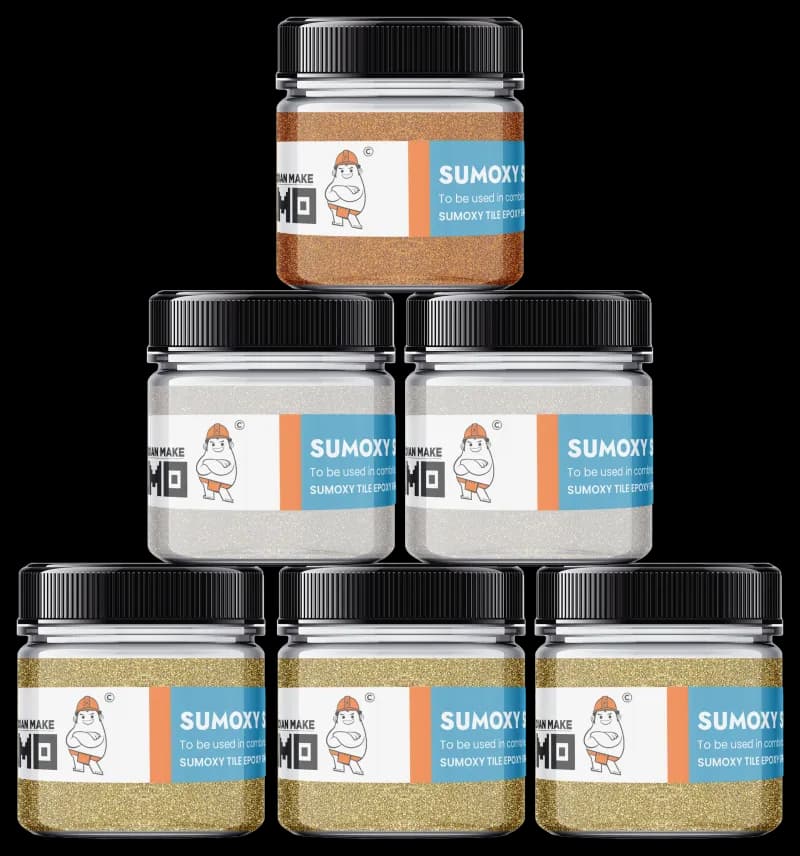
- And where the joint is a design feature, SUMO Sumoxy Sparkle delivers a decorative metallic/glitter epoxy finish with the same non-porous, colour-stable body — the look that stays looking new.
Epoxy grout doesn't fade because epoxy is a lie. It fades because something cheaper got sold as epoxy, or a good epoxy got hazed at install and scrubbed with acid afterwards. Buy the real thing, install it clean, clean it gently — and the joints look identical in year five to the day they were laid.
SUMO is a brand of Adheseal India Company. Grout classifications and strengths are from SUMO's technical data; confirm the current figures on the pack or product page.