White cement: what it's actually for — and when wall putty is the better buy
White cement gets bought for everything and is right for only some of it. What it is actually for, when wall putty is the better buy, and why tile joints deserve a real grout.

ON THIS PAGE
- Whiteness
- >85%
- Compressive strength
- >7 MPa
- Packs
- 1 kg & 5 kg
- Use zone
- Interior & exterior finishing
- Putty coverage (contrast)
- ~200 sq.ft/40 kg · 1–1.5 mm double coat
KEY TAKEAWAYS
- White cement is real portland cement made white — it hydrates and hardens like cement because it is cement.
- Its jobs: bright decorative finish coats, hard-wearing white washes, small fills and touch-ups, and craft or terrazzo-style work.
- Wall putty is the engineered base under paint — polymer-modified, 1–1.5 mm double coat, ~200 sq.ft per 40 kg bag; plain cement skims under paint are why paint flakes.
- For tile joints, use a real grout: plain white cement joints dust, absorb water and stain.
- The 1 kg and 5 kg packs are the honest clue — this is a finishing material bought by the kilo.
White cement is one of the most bought and least understood bags in the paint shop. It gets purchased for everything — filling cracks, finishing walls, sticking tiles, whitewashing a ceiling — and it is genuinely right for some of those jobs and genuinely wrong for others. The confusion costs money in both directions: white cement used where putty belonged flakes under the paint, and putty bought where a kilo of white cement would have done the job wastes a 40 kg bag on a touch-up.
Here is what the material actually is, the jobs it is best at, and the honest comparison with its two look-alike neighbours on the shelf.
What white cement actually is
White cement is portland cement manufactured to be white — made from raw materials low in the iron and manganese that give ordinary grey cement its colour. Chemically it behaves like cement, because it is cement: mix it with water and it hydrates and hardens the same way. What you are paying extra for is purity and brightness.
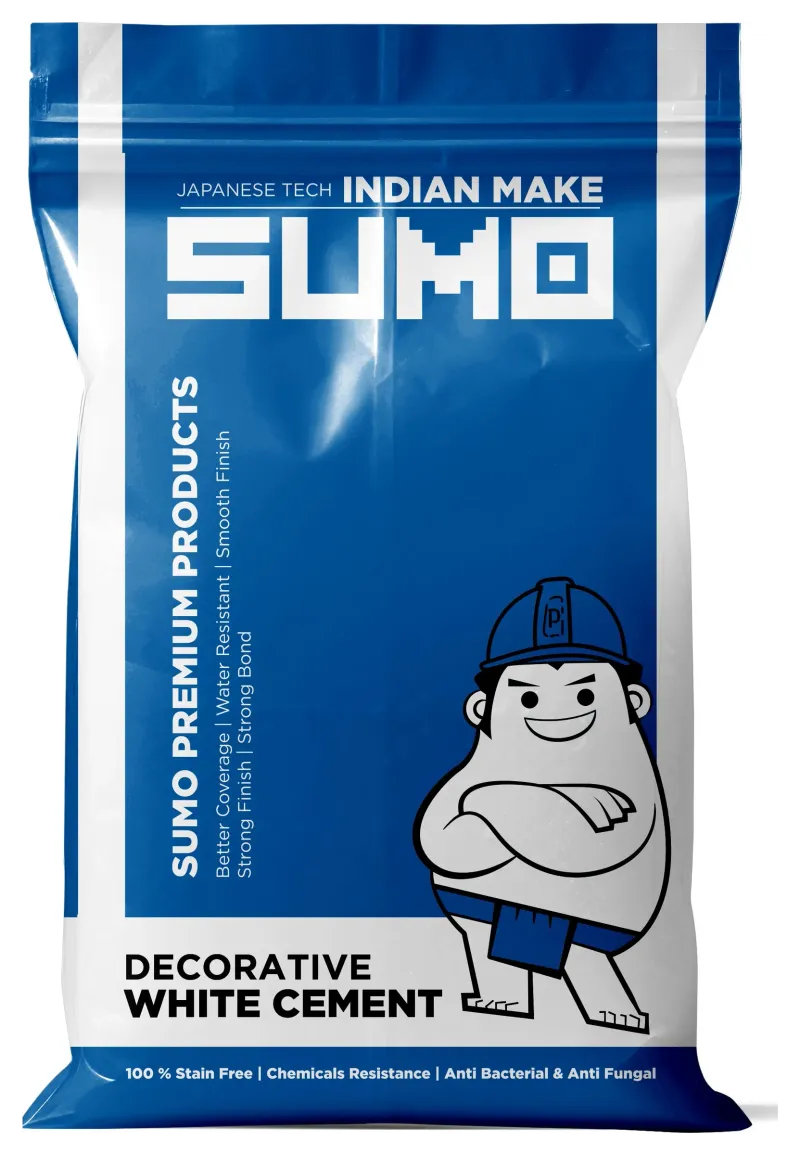
SUMO Decorative White Cement is the range's finishing-grade white cement: whiteness above 85%, compressive strength above 7 MPa, suitable for interior and exterior use, and sold in 1 kg and 5 kg packs — pack sizes that tell you something honest about the product: this is a finishing and touch-up material, bought by the kilo, not a bulk construction binder bought by the tonne.
The jobs white cement is actually for
- Decorative finish coats. Its headline job: a bright white, cement-hard finishing layer over plaster, and the classic base for tinted finishes — because pigments added to a white base give clean, true colours that grey cement would muddy.
- Whitewash-style finishes that need to survive. A white cement wash is harder-wearing than traditional lime whitewash and bonds like cement, because it is cement.
- Small filling and touch-up jobs. Nail holes, hairline surface blemishes, chipped edges, the gap where a fitting came out — a few hundred grams of white cement mixed to a paste handles the small repair jobs of a finished house, which is exactly why the 1 kg pack exists.
- Craft, moulding and terrazzo-style decorative work. Wherever a white, hard, mouldable cementitious material is wanted.
White cement vs wall putty: the comparison that actually matters
The two products sit side by side, both white powders, both "for walls before painting" — but they are engineered for different layers of the wall.
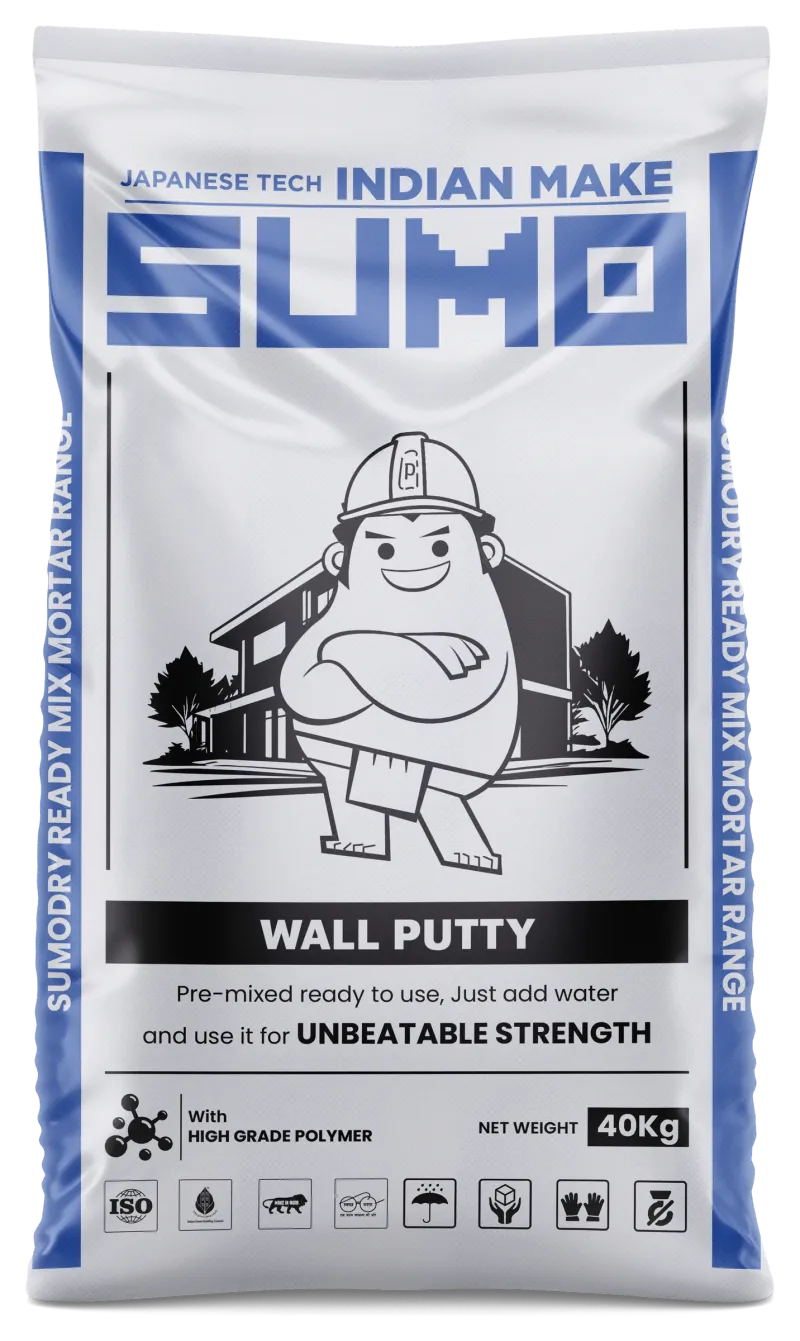
Wall putty is the base; white cement is a finish. SUMO Wall Putty is a polymer-modified white powder designed to be applied over plaster in a thin double coat of 1–1.5 mm, sanding to an ultra-smooth surface that primer and paint grip onto. The polymers are the point: they give the thin coat its adhesion and flexibility, and a 40 kg bag covers roughly 200 sq.ft in a double coat. If the goal is smooth walls under paint, putty is the engineered answer — plain white cement skimmed thin lacks those polymers, which is why cement-skimmed walls are a common culprit behind paint that flakes in sheets.
White cement is the finish; putty is not one. Putty is meant to be painted over, not left exposed. Where the white surface itself is the final finish — a decorative coat, a wash, a moulded element — white cement is the material for the job.
For the small stuff, the small pack wins. Filling a dozen nail holes needs 200 grams of paste, not a 40 kg bag. This is white cement's quiet everyday role in a finished home.
And the third look-alike: tile joints
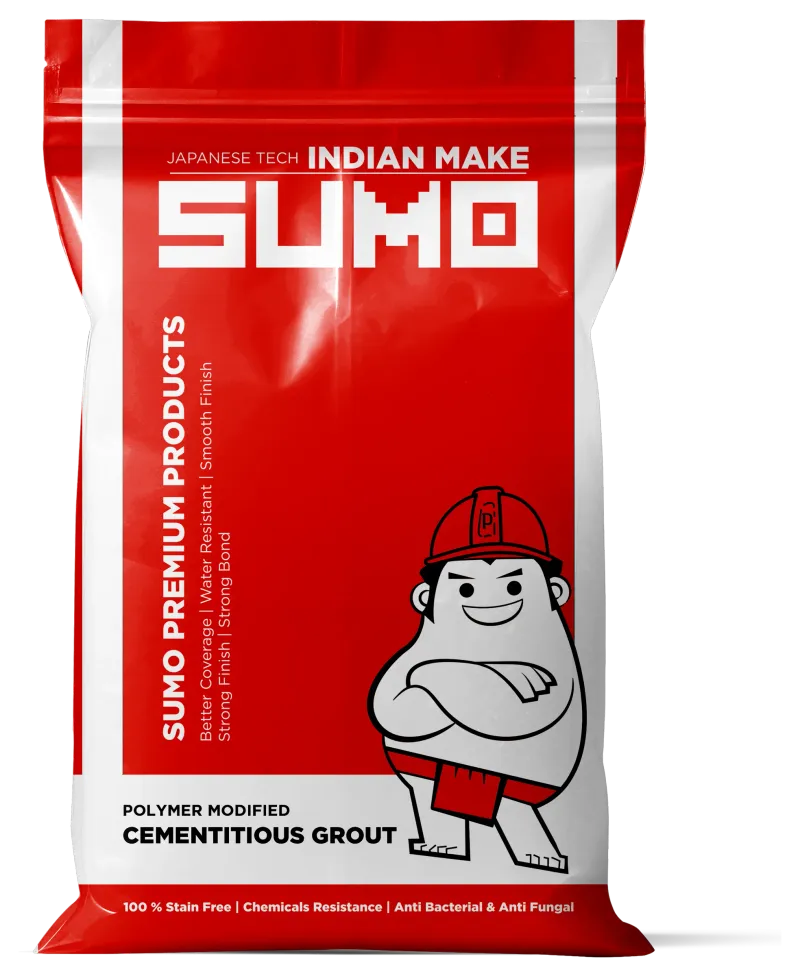
The other job white cement gets bought for is filling tile joints — the traditional practice on Indian sites for decades. It works, in the way that all traditional practice works: adequately, for a while. A joint filled with plain white cement has no polymers, so it dusts, absorbs water, and stains over time. A purpose-made grout like Sumotg Cement Tile Grout is polymer-modified specifically for joints of 1–6 mm — water-resistant and non-dusting — and for wet areas and stain-critical surfaces the range steps up to epoxy grout, which is a different chemistry altogether. If you are grouting more than a repair joint, use a grout.
The one-line buying guide
- Walls being prepared for paint → Wall Putty (the polymers earn their keep under every painted wall).
- A white finish, wash, mould or touch-up → Decorative White Cement, in the pack size the job actually needs.
- Tile joints → a real grout, cement-based for dry, regular joints, epoxy where water and stains are the enemy.
Three white powders, three different layers of the job. Buy the one engineered for yours.