Waterproofing explained: coatings, membranes and admixtures
Not all waterproofing works the same way. Understanding the three types — surface coatings, liquid membranes and integral admixtures — helps you pick the right one.
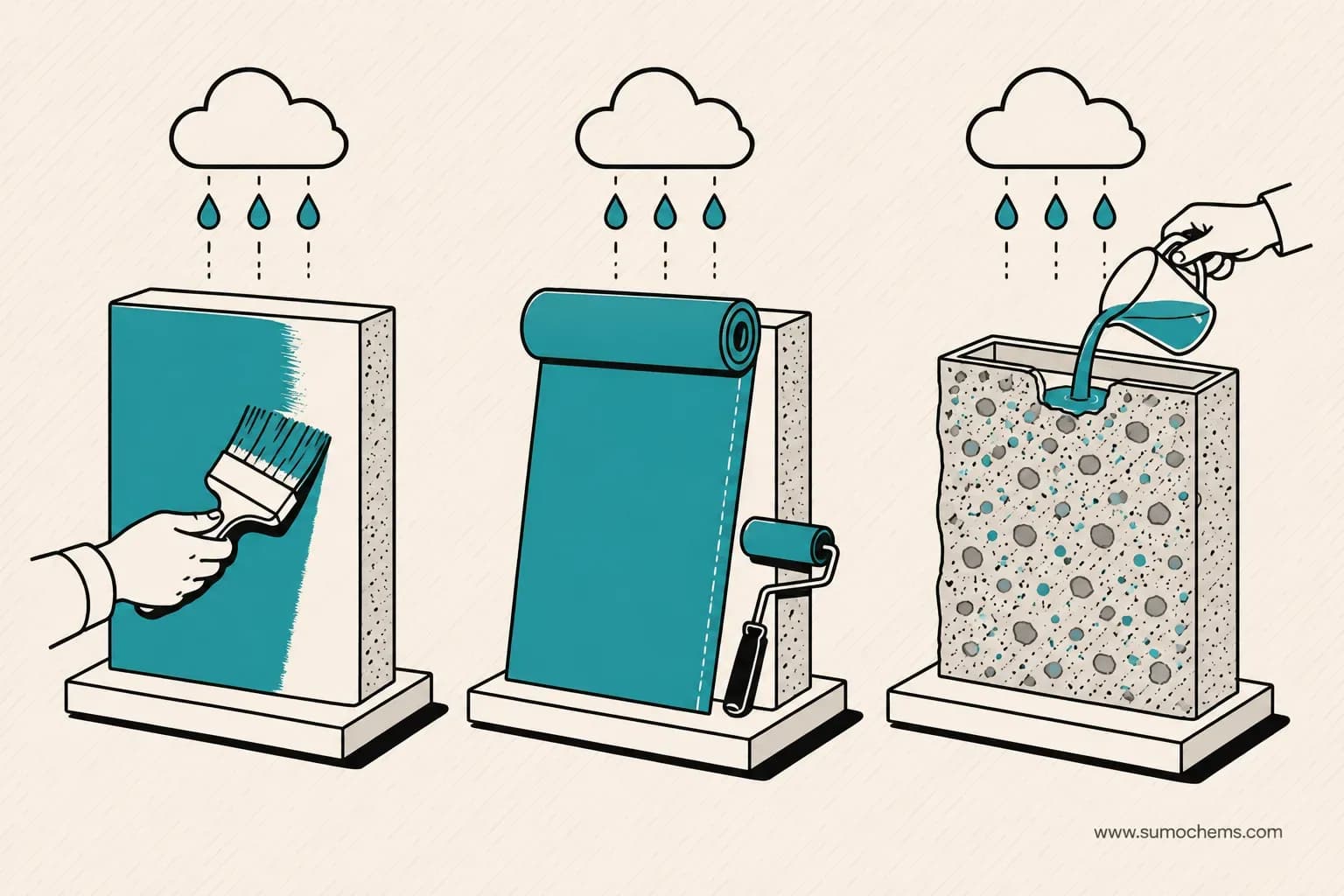
“Waterproofing” covers three quite different families of product, and picking the wrong one is why so many treatments fail. Here is how coatings, membranes and admixtures differ, and where each belongs.
1 — Coatings
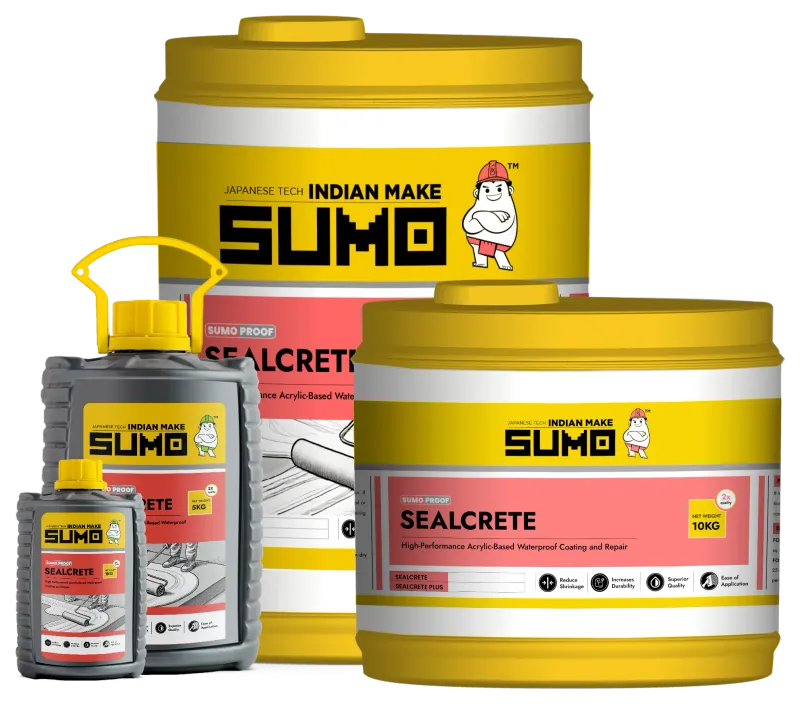
Coatings are brushed or rolled onto a surface to form a water-resistant film. Acrylic coatings like SUMO Sealcrete, Weatherguard (exterior walls) and Dampguard (damp/seepage walls) are quick and versatile; two-component cementitious coatings like Sealcrete 2K Plus add flexibility for wet areas, tanks and terraces. Use coatings for walls, wet rooms and general surface protection.
2 — Liquid membranes
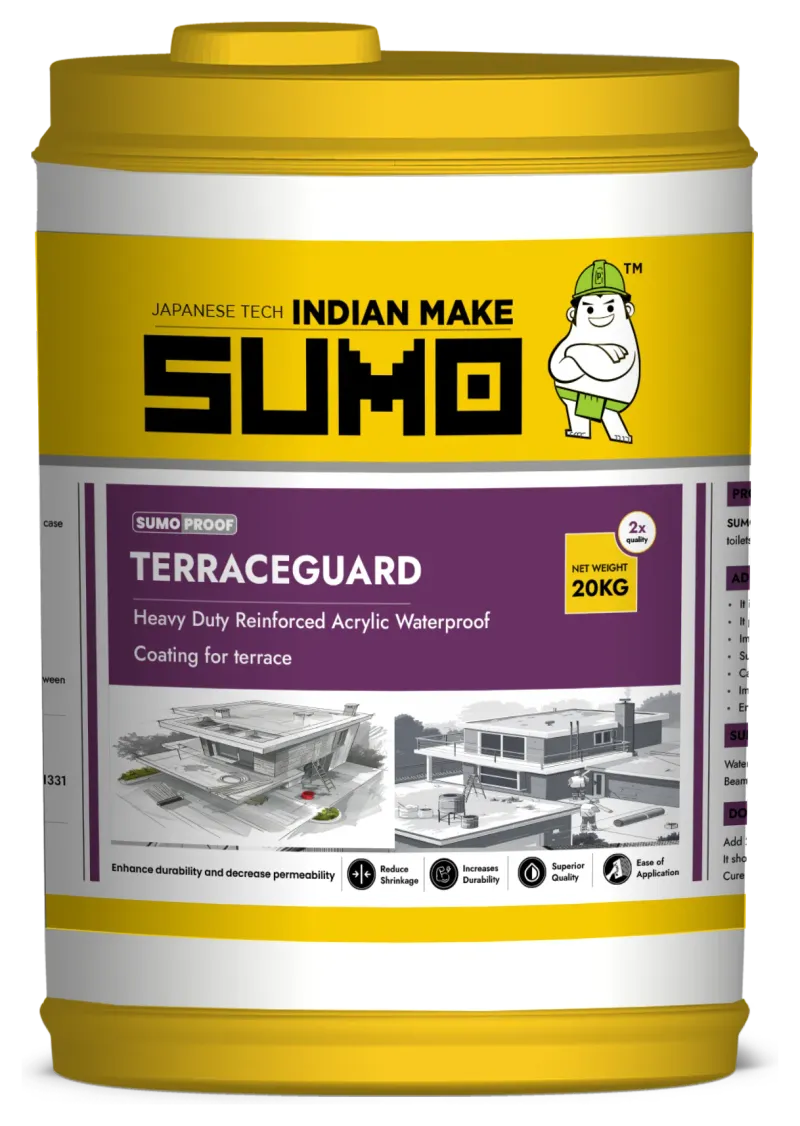
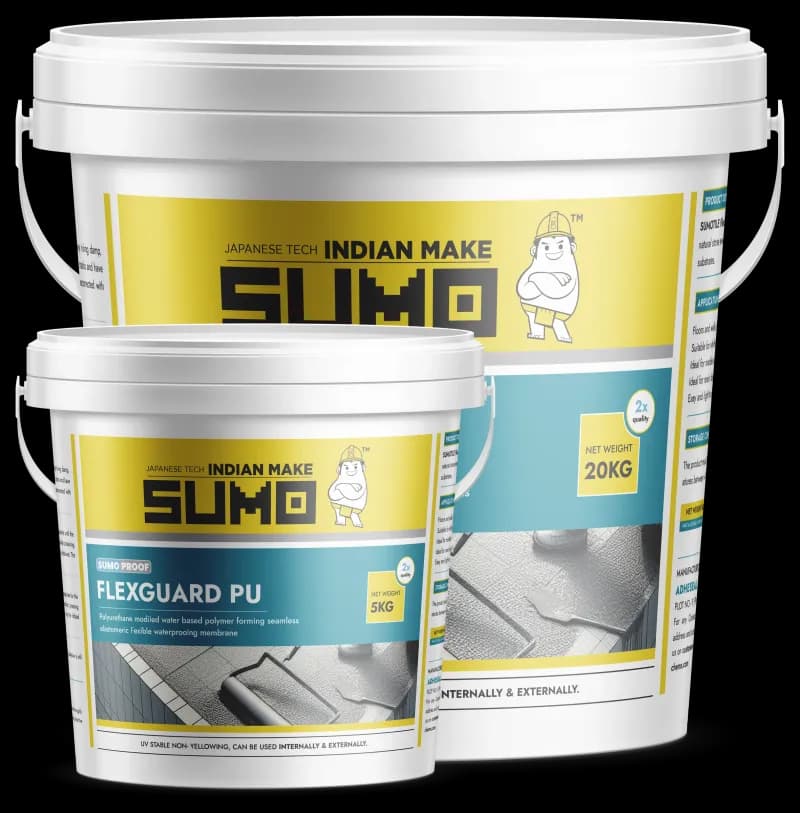
Membranes build a thicker, seamless, elastic layer that bridges cracks and takes movement — ideal for roofs and terraces exposed to sun, rain and thermal cycling. SUMO Flexguard PU (single-component polyurethane) and Terraceguard (reinforced acrylic + microfibre) are membrane systems for terrace and roof waterproofing.
3 — Integral admixtures
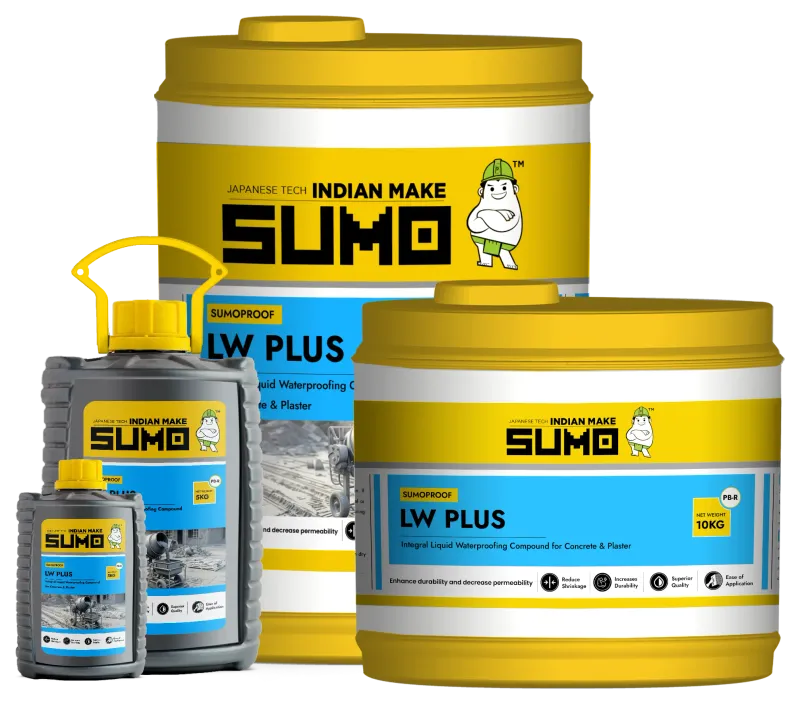
Admixtures are dosed into the concrete or mortar itself so the whole mass resists water from within, by pore-blocking. SUMO LW Plus is an integral liquid admixture for concrete and mortar — used in foundations, structures and plasters where you want the material, not just the surface, to be waterproof. SBR Latex similarly boosts bond and water resistance in repair mortars and coats.
Choosing between them
- Walls, damp, general surfaces: acrylic coating (Sealcrete / Weatherguard / Dampguard).
- Wet areas, tanks, under-tile: 2K flexible cementitious coating (Sealcrete 2K Plus).
- Roofs & terraces (movement, UV): liquid membrane (Flexguard PU / Terraceguard).
- Concrete & foundations from within: integral admixture (LW Plus).
- Façades against rain: transparent water repellent (WR Guard).
Most real projects combine them — an admixture in the structure, a 2K coating in the wet area, a membrane on the terrace. Match the product to the zone and the water stays out for good.