Tile Adhesive Coverage: How Much Area Does a 20 kg Bag Really Cover?
A 20 kg bag covers anywhere from 16 to 50 sq.ft — and the difference is almost entirely bed thickness. The real datasheet numbers, the formula, and a worked example.
ON THIS PAGE
- Consumption (datasheet)
- 4.3 kg/m² at a 3 mm bed (S01–S04)
- Coverage @ 3 mm bed
- ≈ 4.7 m² / 45–50 sq.ft per 20 kg bag
- Coverage @ 12 mm bed
- ≈ 2.4 m² / 26 sq.ft per 20 kg bag
- Pack size
- 20 kg bag (Flexit 2K: 4 kg bucket)
- Wastage to allow
- 10% standard · 15% large-format
KEY TAKEAWAYS
- At a 3 mm thin bed, a 20 kg bag of SUMO S-series covers about 45–50 sq.ft (≈ 4.7 m²).
- At the 10–12 mm beds that 600 mm+ vitrified tiles need, the same bag covers 26–32 sq.ft.
- Bed thickness — set by your tile size and trowel notch — changes coverage 3×. Brand does not.
- Datasheet consumption for the S-series is 4.3 kg/m² at a 3 mm bed; everything scales from that.
- Buy 10% extra (15% for large-format). A short bag on day two costs more than a spare bag.
Ask three shopkeepers how much a 20 kg bag of tile adhesive covers and you will get three answers — 40, 50, 60 sq.ft. None of them is wrong, and none of them is the whole truth. Coverage is not a property of the bag; it is a property of how thick you spread it. This guide gives the real numbers from the SUMO datasheets, the formula behind them, and a worked example you can copy for your own room.
The honest answer: it depends on the bed
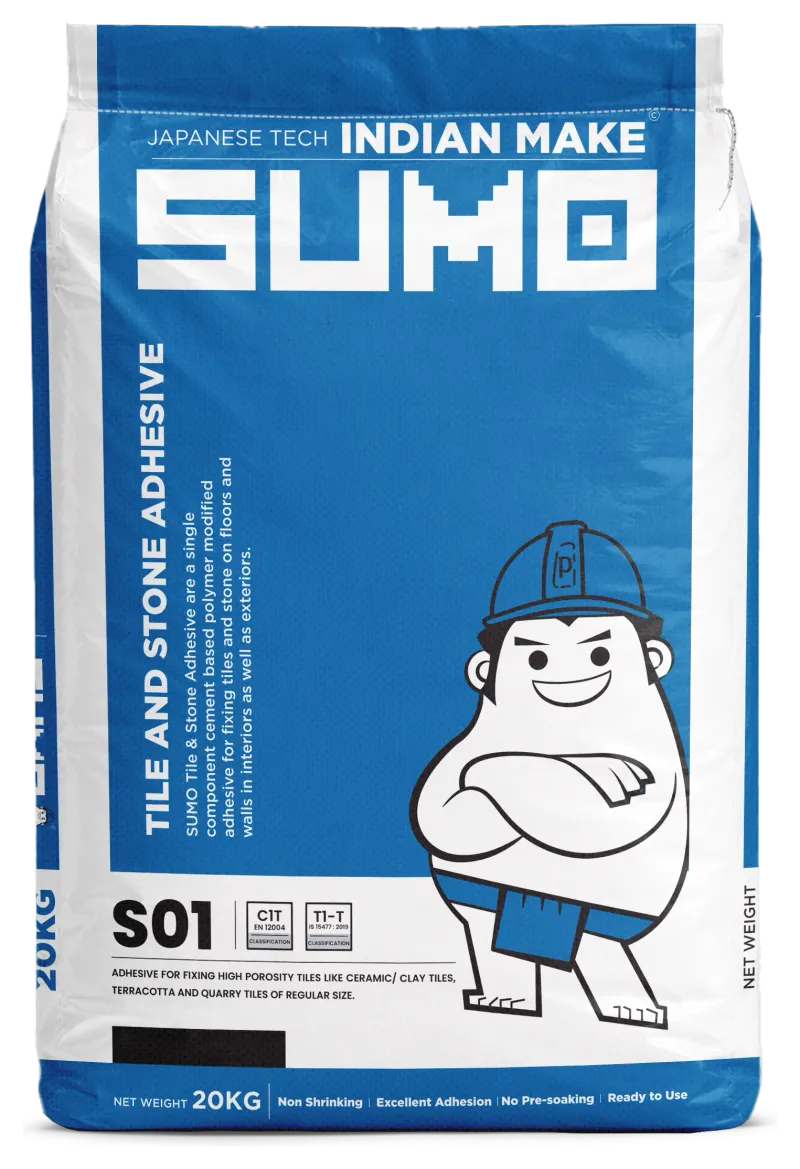
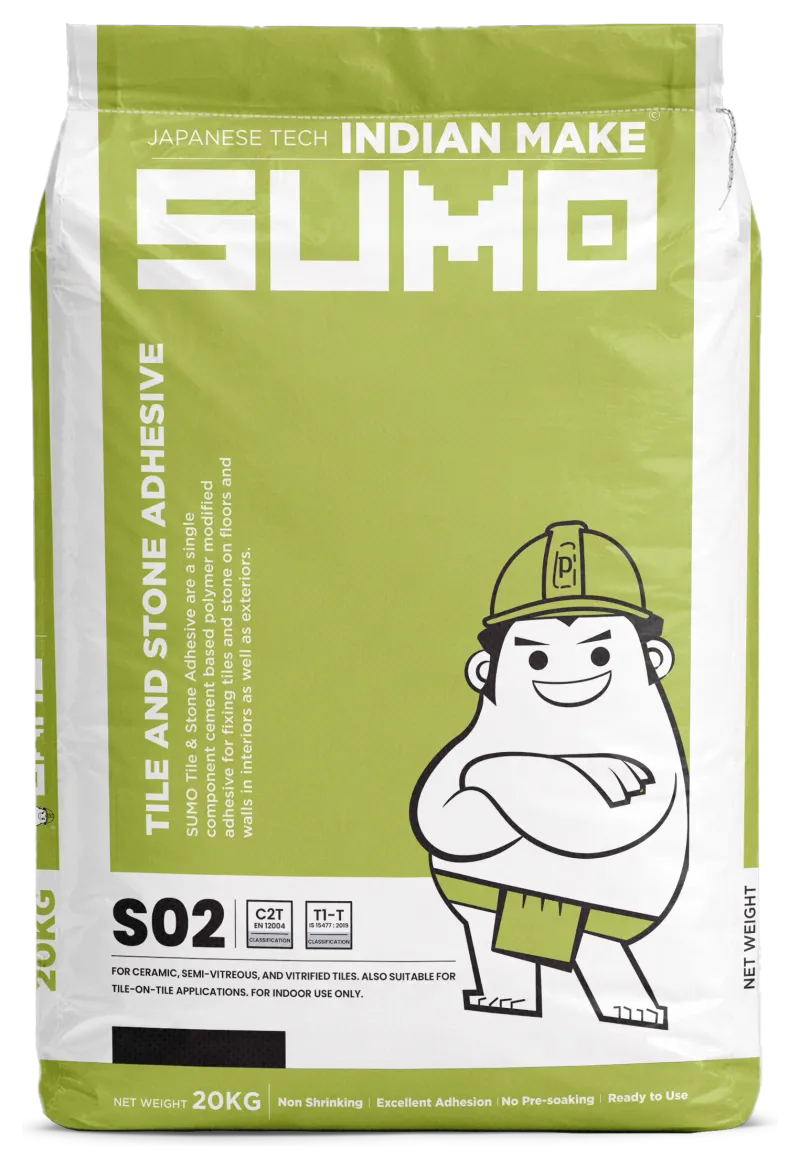
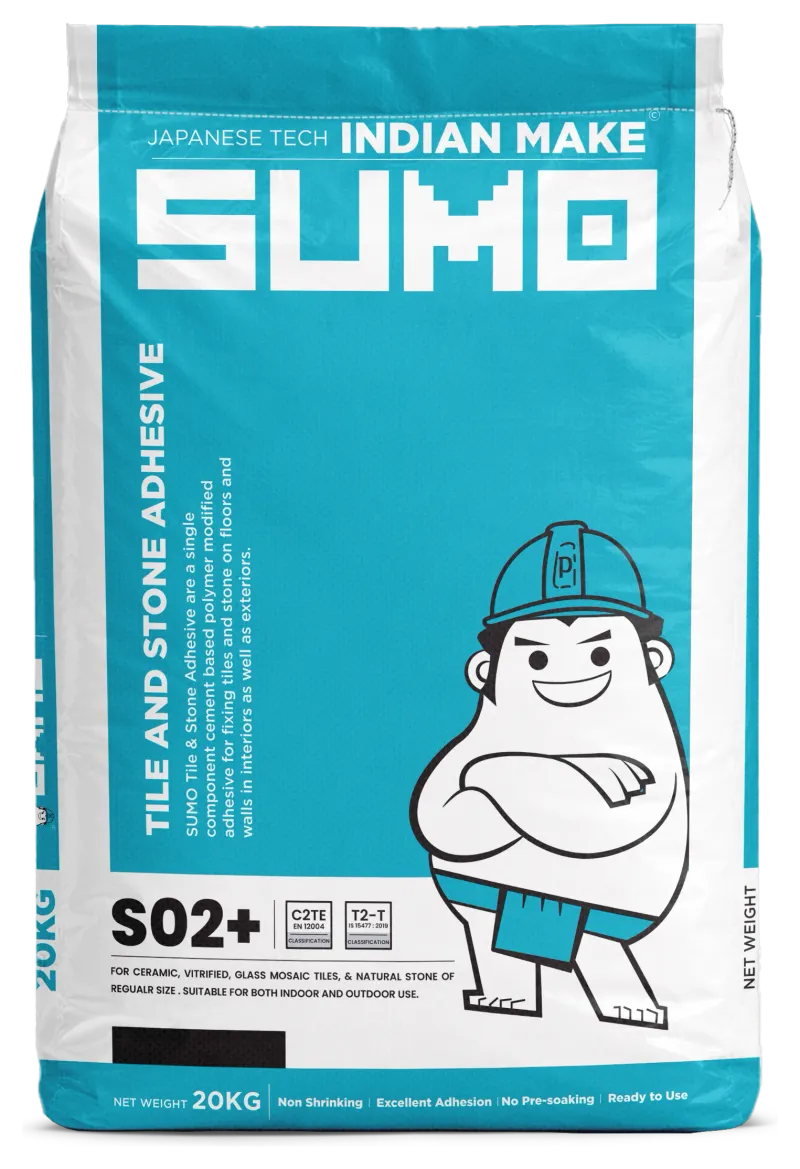
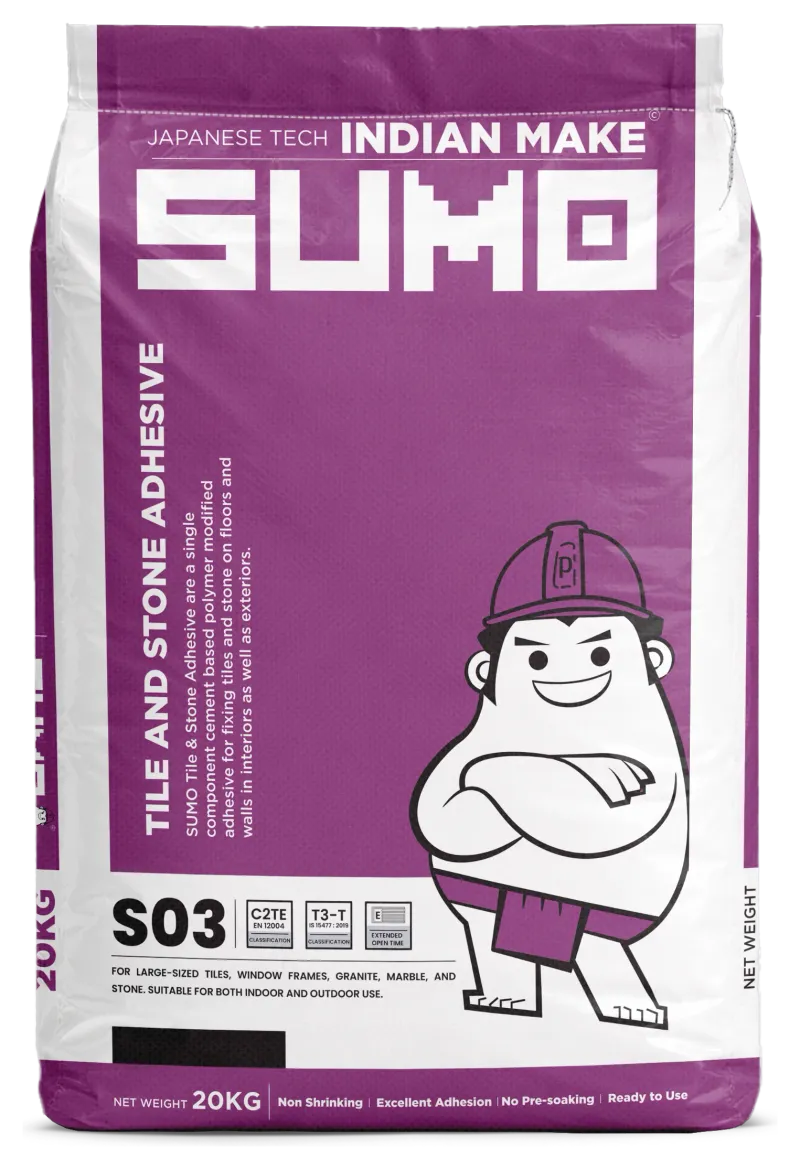
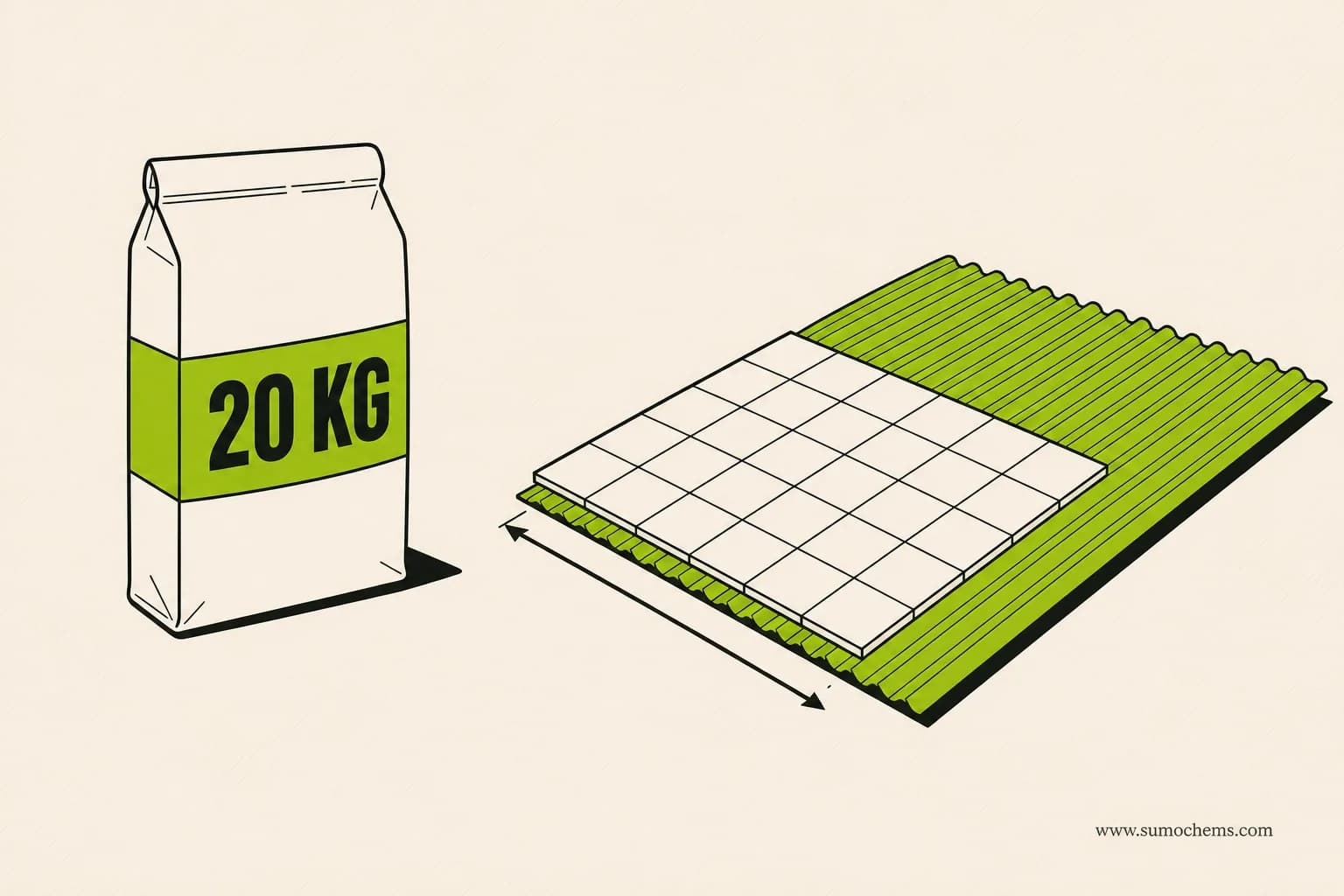
Every SUMO S-series adhesive (S01, S02, S02+, S03, S04) consumes 4.3 kg per m² at a 3 mm bed — that is the datasheet figure the number on the bag comes from. Spread it thicker and consumption rises almost in proportion. Here is what one 20 kg bag actually covers:
- 3 mm bed (small ceramic, thin-set): ≈ 4.7 m² — 50 sq.ft
- 6 mm bed (tiles up to 150 mm): ≈ 4.2 m² — 45 sq.ft
- 8 mm bed (150–300 mm tiles): ≈ 3.5 m² — 38 sq.ft
- 10 mm bed (300–600 mm tiles): ≈ 3.0 m² — 32 sq.ft
- 12 mm bed (600 mm+ tiles, floors): ≈ 2.4 m² — 26 sq.ft
- 15 mm bed (large format, back-buttered): ≈ 1.9 m² — 21 sq.ft
So when someone says "a bag covers 50 square feet", they are describing a small ceramic wall tile on a flat wall. Lay 600 × 600 vitrified on a floor and the true figure is roughly half that. Neither number is a defect — it is geometry.
Why bed thickness dominates everything
The adhesive bed does two jobs: it grips the tile, and it absorbs the difference between a not-perfectly-flat floor and a perfectly rigid tile. Small tiles bridge small irregularities, so a 3 mm bed laid with a 6 mm notch trowel is enough. A 600 mm tile spans bigger dips — it needs a 10–12 mm combined bed (trowel ridges plus back-buttering) so the whole back of the tile makes contact. Voids under a big tile are where cracks start, which is why skimping on bed thickness to stretch a bag is the most expensive saving in tiling.
Calculate it yourself in three lines
kg needed = area (m²) × 4.3 × bed factor × 1.10 wastage — where the bed factor is 1.0 at 3 mm, about 1.56 at 10 mm and 1.93 at 12 mm. Then divide by 20 and round up to whole bags.
Worked example: a 10 × 12 ft room in 600 × 600 vitrified
- 120 sq.ft = 11.15 m² of floor.
- 600 mm tiles want a ~12 mm combined bed → factor 1.93.
- 11.15 × 4.3 × 1.93 ≈ 92.5 kg → plus 10% wastage ≈ 102 kg.
- 102 ÷ 20 = 5.1 → buy 6 bags of S03.
Prefer not to do arithmetic on site? The Tile Adhesive Calculator under Tools & Support on this site runs exactly this formula with every S-series product and bed thickness built in — enter the area, get bags.
Large-format tiles: plan for the back-butter
From 600 × 1200 upward, full contact needs adhesive on both the floor and the tile back. That is the 15 mm combined-bed case: ≈ 21 sq.ft per bag, and 15% wastage instead of 10 — angled cuts and edge losses are bigger with big tiles. Use S03 (C2TE) as the baseline large-format grade, or S04 (C2TES1) where deformability matters: heavy traffic, facades, pools.
Buying the right amount
Under-buying is the expensive mistake: a mid-job trip for one bag stalls the tiler, and a different production batch of tiles or adhesive on day two is how shade and cure inconsistencies creep in. The 10% wastage in the formula is not padding — it is the mixing bucket residue, the comb-off at edges, and the last half-bag you cannot split. Buy it upfront.
Still weighing adhesive against a sand-cement bed? The bag count above is only half the comparison — tile adhesive vs cement mortar puts bed thickness, curing time, labour and the rated bond side by side.