Thin-bed block jointing vs thick sand-cement: the case for BJM
AAC blocks are precise, so why bury them in a thick, uneven mortar bed? Thin-bed block jointing mortar lays them faster, straighter and stronger.
ON THIS PAGE
AAC and concrete blocks changed how walls go up — but many sites still bed them in thick sand-cement, throwing away most of the benefit. Thin-bed block jointing mortar (BJM) is the modern method, and the case for it is strong.
The two methods
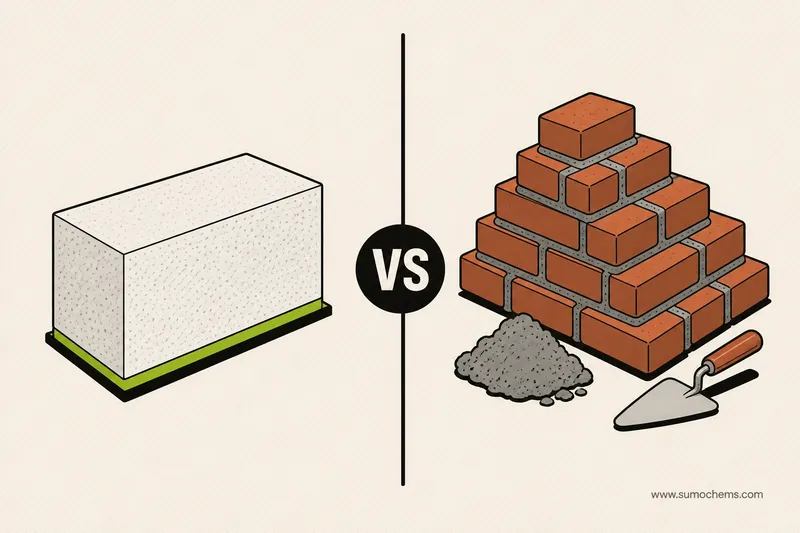
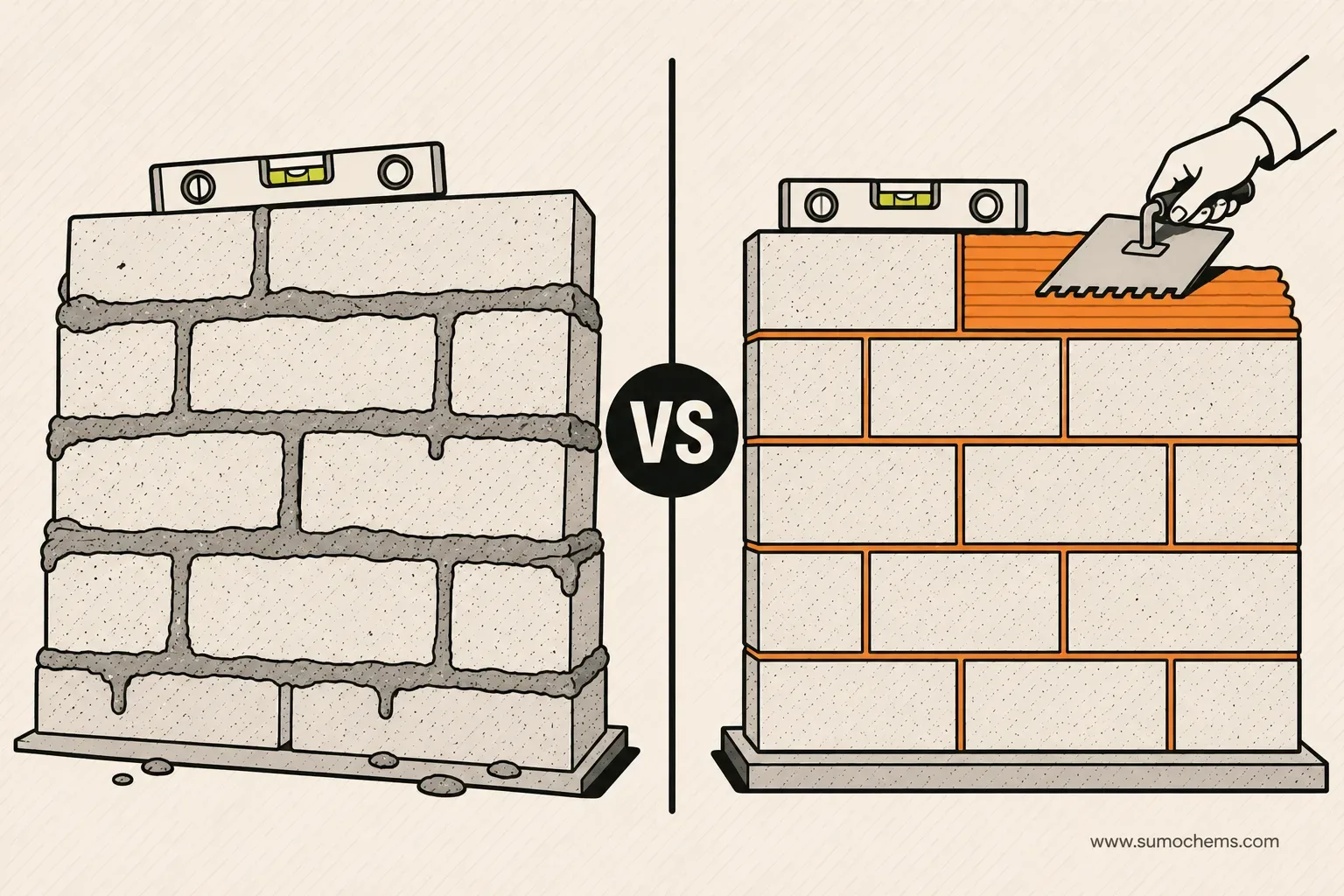
Traditional masonry uses a thick 10–12 mm sand-cement bed mixed on site. Thin-bed block jointing mortar like SUMO BJM is a factory-blended, polymer-modified mortar laid in a controlled 2–3 mm joint — just enough to bond block to block with a high-strength, water-resistant seam.
Why thin-bed wins
- Strength: SUMO BJM develops over 15 MPa compressive strength — a stronger, more consistent joint than site-mixed sand-cement.
- Speed: thin joints and a ready-to-use mix let masons lay blocks far faster, with less waiting.
- Less material and waste: a 2–3 mm joint uses a fraction of the mortar of a 10–12 mm bed.
- Straighter, truer walls: thin uniform joints keep courses level and plumb, saving plaster later.
- Consistency: a factory blend removes the batch-to-batch variation of hand-mixed sand-cement.
When to use it
BJM is the right choice for AAC blocks, concrete blocks and fly-ash bricks in load-bearing and partition walls, internal and external. On highly absorbent AAC in particular, the water-retaining polymer mortar bonds far better than sand-cement, which the block drinks dry. For everyday block-work at scale, thin-bed jointing is faster, stronger and cleaner.