Efflorescence: why white patches appear on tiles and walls
Those chalky white deposits on new tiling or masonry are efflorescence — salts carried out by water. Here is what causes it and how to keep it away.
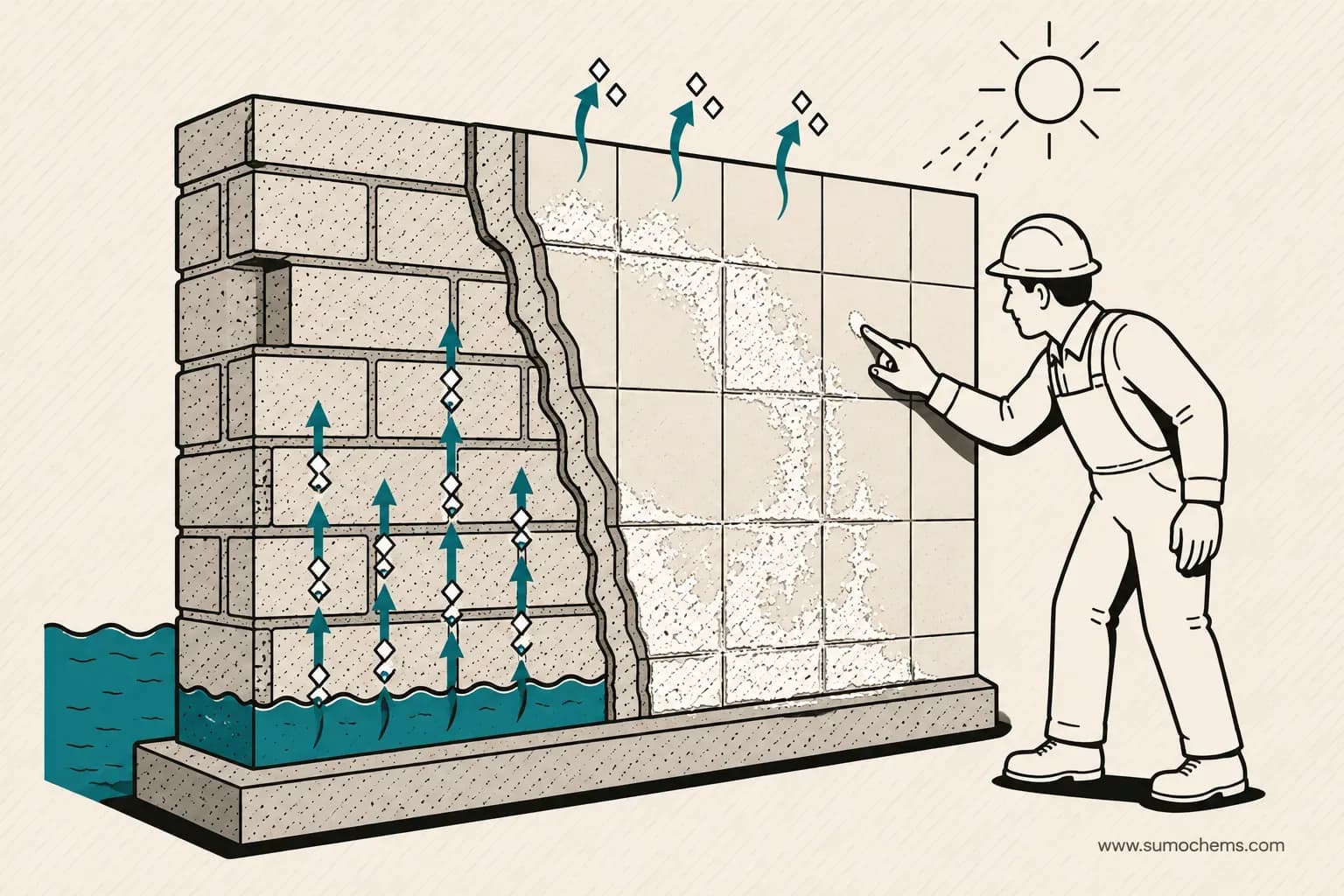
Those chalky white patches that appear on tiles, grout and walls have a name — efflorescence — and a clear cause. It looks like a stain but it is actually salt, and understanding where it comes from tells you exactly how to stop it.
What efflorescence is
Efflorescence is a deposit of soluble salts left behind when water moves through cementitious material and evaporates at the surface. The water dissolves salts inside the concrete, screed, adhesive or grout, carries them out, then evaporates — leaving the salt as a white bloom on the tile or joint.
What causes it
- Moisture behind or below the tiles — no waterproofing, or water tracking in from a wet area, terrace or ground.
- High water content in the bedding mortar or grout, giving salts an easy path out.
- Porous, unsealed cement grout that absorbs and wicks water.
- Continuous damp exposure — bathrooms, balconies, planters and monsoon-soaked walls.
How to prevent it
- Waterproof wet areas and terraces before tiling so water never reaches the tile bed.
- Keep the water:powder ratio correct — over-watering adhesive and grout is a direct cause.
- Use a low-absorption joint: polymer-modified cement grout (Sumotg), or epoxy grout (Sumoxy) in wet zones where it is effectively impervious.
- Ensure drainage and falls so water leaves the surface instead of sitting in the assembly.
How to remove it
Light efflorescence often brushes off dry. Persistent deposits can be cleaned with a proprietary tile cleaner such as SUMO Rapidclean, following the label. But cleaning only treats the symptom — if the moisture source remains, it will return. Fix the waterproofing and the white patches stop for good.