Curing is not drying: the week that makes or breaks every cementitious job
Hard is not the same as cured. The unglamorous week — keeping cement moist, not just dry — that decides whether a job that looks finished actually is.

ON THIS PAGE
- Dampen substrate
- Surface-dry, no puddles
- Water-cure
- Keep moist 3–7 days
- Adhesive before grout
- ~24 hours (longer if cold)
- Extended open time
- S03 / S04 (E class)
- S04 deformability
- C2TES1, flex 2.5 mm
KEY TAKEAWAYS
- Drying is water evaporating; curing is the chemical reaction that builds strength — and they compete.
- If the surface dries before it cures (hot sun, wind, thirsty substrate), the work stays weak, dusty and cracks.
- Dampen the substrate, keep fresh work moist for days, and shade it from sun and wind.
- Respect waiting times — cure adhesive before grouting, screeds before tiling.
Here's a belief that quietly wrecks more cement work than any bad material: the idea that once something has gone hard, it's done. The screed feels solid, so it gets walked on. The plaster looks dry, so it gets painted. The tile bed has stiffened, so the grouting starts. In every case, someone confused dry with cured — and those are not the same thing at all.
Understanding the difference is probably the single highest-value bit of knowledge on a construction site, because it costs nothing and it prevents cracks, hollowness, weak floors and leaks across every product you use.
Drying and curing are two different chemistries
When you mix cement with water, two things start happening.
Drying is just water evaporating off the surface. It's physical. It can happen in hours.
Curing is the chemical reaction — hydration — where cement grains and water combine and grow interlocking crystals that give the material its strength. It's slow. It needs water present to keep going, and it keeps going for days and weeks, not hours.
Here's the trap: drying and curing compete. If the surface dries out too fast — hot sun, dry wind, a thirsty substrate pulling water out from below — the water evaporates before the cement has used it to build strength. The reaction stalls. You're left with something that feels hard on top but is weak, dusty and under-strength all through, because it never got the water it needed to finish curing.
A cement job that dried fast didn't cure well. It just stopped early.
What early drying actually does to your work
- Screeds and plaster that dry too fast shrink and crack — that crazing map of hairline cracks is a curing failure, not a mix fault. And they stay powdery and weak, so tiles and finishes bond to a poor surface.
- Tile adhesive that dries before it cures never reaches its rated bond strength. The tile is stuck to a bed that's weaker than it should be — a slow debond waiting for a bit of movement or moisture to finish the job.
- Grout that dries too fast goes powdery, cracks out of the joints, and turns patchy and pale — often blamed on the product when it was really a curing problem.
- Waterproofing that dries too fast forms a weak, brittle, sometimes pinholed film instead of the tough, continuous membrane it's meant to be — so it fails early exactly where you needed it most.
Same root cause every time: the water left before the chemistry finished.
How to actually cure — the boring, decisive part
None of this is difficult. It's just discipline, especially in Indian heat where the sun is trying to flash-dry everything you lay.
- Start with a damp — not wet — substrate. A bone-dry, thirsty surface sucks the water straight out of your fresh mix from below. Dampen it first (surface-dry, no puddles) so it doesn't rob the cure. This alone fixes a lot of "it went powdery" complaints.
- Keep it moist while it cures. For screeds, plasters and renders, that means water-curing — misting or ponding, or covering with wet hessian or plastic sheet — for at least the first few days, ideally up to a week for structural work. The surface should never be allowed to go bone dry during this window.
- Protect it from sun and wind. Shade fresh work and shield it from drying wind; both accelerate evaporation dramatically. Avoid pouring screeds and plastering walls in the harshest midday heat if you can.
- Respect the waiting times. Let tile adhesive cure before grouting (typically around 24 hours, longer in cold or damp conditions). Let a screed cure and dry back before you tile it. Let waterproofing cure to full film before you flood-test or tile over it. Rushing the next trade onto green work is how the whole build-up fails.
- Don't load it early. Foot traffic, furniture, water — all of it too soon interrupts a cure that hadn't finished.

Where the product helps you win the week
A better-formulated cementitious product buys you margin against fast drying — and two SUMO grades are worth naming because their spec directly answers this problem:
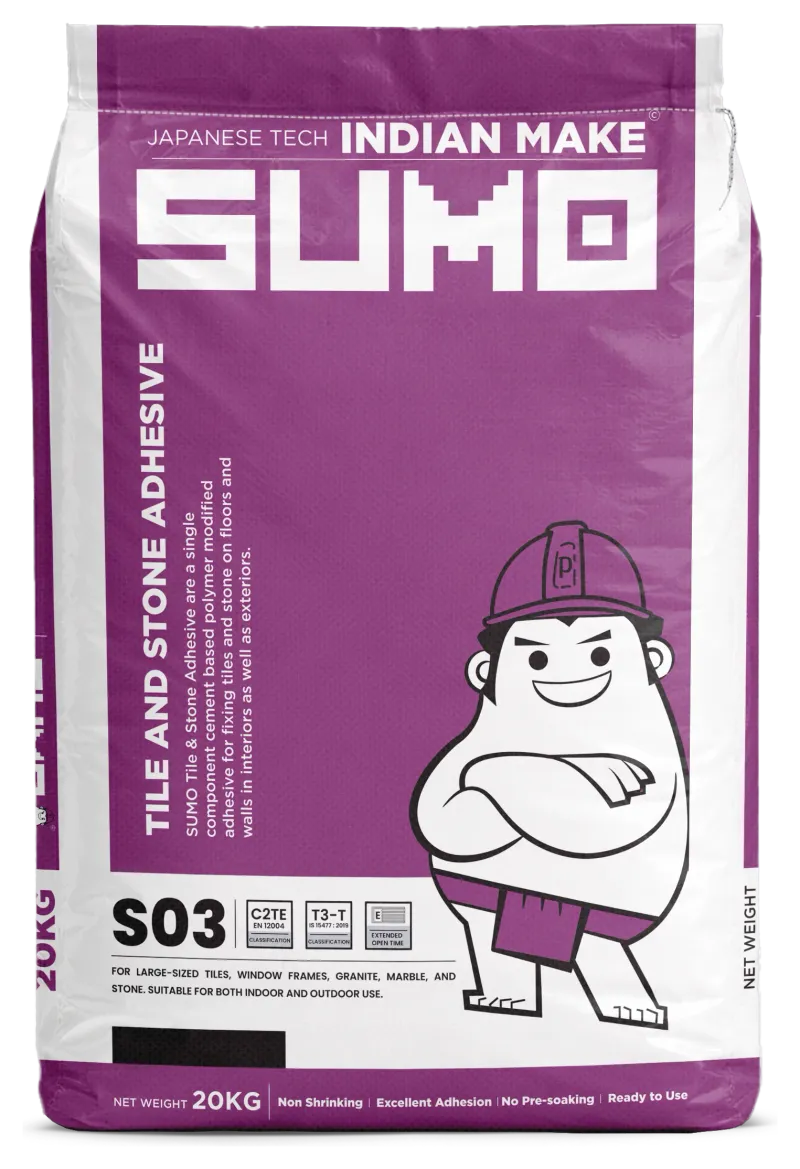
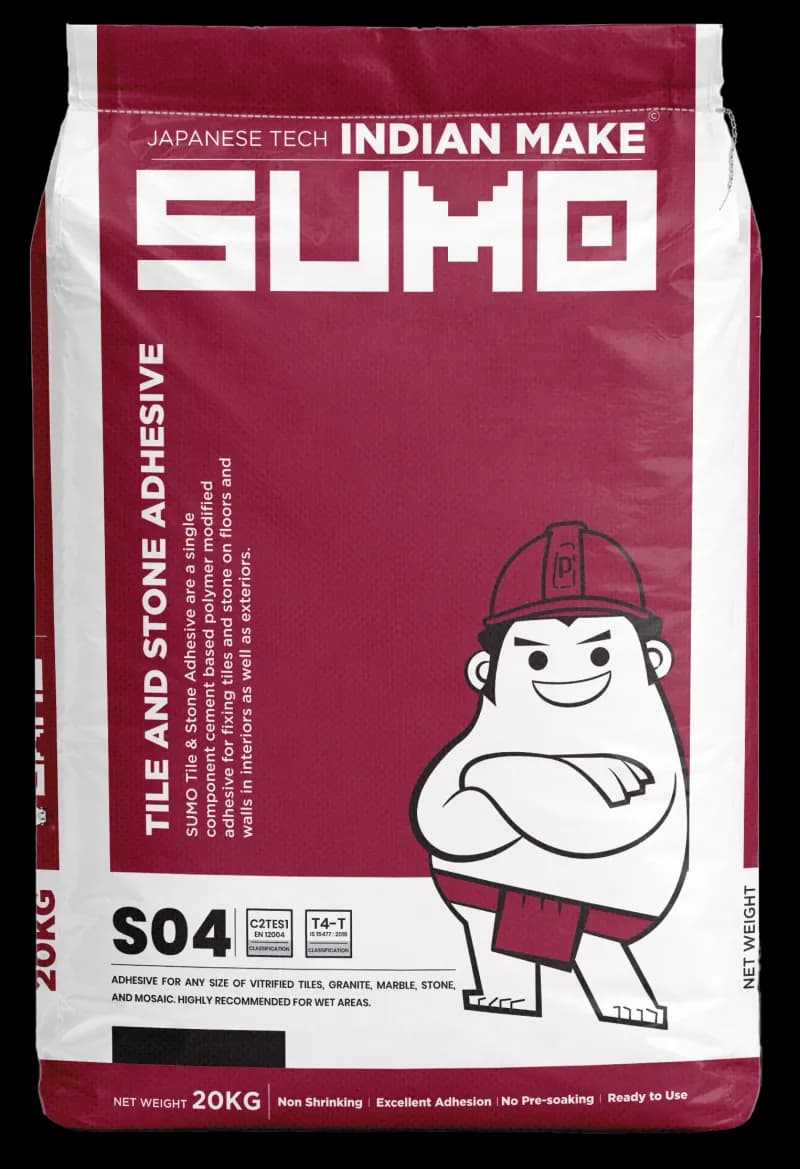
- SUMO S03 and SUMO S04 carry the E — extended open time classification (C2TE and C2TES1). Extended open time means a longer working window before the bed skins in the heat, which is the front end of the same battle: it gives you time to get the tile in and get proper contact before the surface dries out on you.
- S04's deformability (C2TES1, flex to 2.5 mm) also means that when a slab isn't fully cured and dried and moves a little as it finishes, the adhesive can absorb that movement instead of cracking — a real advantage when the programme won't give you the ideal drying time.
But no product removes the need to cure. The best adhesive in the country still needs water and time to reach the strength printed on the bag. Dampen the substrate, keep it moist, keep it out of the harshest sun, and give each layer its days before you load the next one. That unglamorous week — curing, not drying — is what turns a job that looks finished into one that actually is.
SUMO is a brand of Adheseal India Company. Open-time, curing and recoat times are from SUMO's technical data; confirm the current figures on the pack or product page.