What SBR latex actually does to a mortar — and when you're just wasting it
SBR is one of the most useful — and most wasted — cans on site. What it actually does to a mortar, and the jobs where you are just tipping money in.

ON THIS PAGE
- Base
- SBR (styrene-butadiene) emulsion
- SBR Latex dose
- ~6–7.5 kg / 50 kg cement
- Super Latex bond
- 5 N/mm²
- Super Latex mix
- 1:4:7 (latex:water:cement)
- Best use
- Bond coats, repairs, tanking
KEY TAKEAWAYS
- SBR latex adds bond, flexibility and water resistance to a cement mortar via a rubber-polymer film.
- Best for bonding coats, repairs, thin screeds, tanking and rendering onto smooth or old surfaces.
- Do not tip it into bagged tile adhesive — that is already polymer-engineered; use Flexiaddmix with S03 instead.
- More latex is not better; over-dosing gives a weak, gummy, slow-setting mortar.
Walk onto ten sites and you'll see SBR latex used ten different ways. One mason swears by it and pours a splash into every mix. Another keeps a can for "important" jobs. A third has been told to use it, doesn't know why, and adds a random amount. Somewhere in all that is a genuinely useful material being both under-used and wasted at the same time.
So here's what SBR actually does, in a mortar, and the handful of jobs where it earns its cost — versus the ones where you're just tipping money into the bucket.
What it is, without the chemistry lecture
SBR stands for styrene-butadiene rubber. The latex is a milky liquid — tiny rubber particles suspended in water. You add it to a cement mix either neat or cut with water, in place of some of the gauging water.
As the mortar sets and dries, the water leaves and those rubber particles knit together into a thin, flexible polymer film woven all through the cement. That film is the whole point. It changes the mortar in three ways that matter on site.
The three things it genuinely does
1. It massively improves bond — especially to smooth or old surfaces. Plain cement mortar grips by keying into a rough, porous surface. Put it on something smooth, dense or already cured — an old concrete floor, a polished slab, a repair patch — and it barely holds. The SBR film is sticky in a way cement isn't; it bonds the new mortar to the old surface chemically, not just mechanically. This is the single best reason to reach for it. Brush a neat SBR-cement slurry onto an old floor as a bonding coat and lay fresh mortar over it while it's tacky, and you get a joint that actually holds.
2. It adds flexibility and cuts cracking. Cement is strong but brittle. The rubber film gives the mortar a little give, so it's far less likely to shrink-crack or craze as it cures. On thin repairs and screeds — where plain mortar loves to crack — that flexibility is worth a lot.
3. It cuts water absorption and boosts durability. The polymer film fills and blocks some of the fine pores, so an SBR-modified mortar takes up less water, resists abrasion better and stands up to wetting and drying cycles. Useful anywhere that's damp, trafficked, or exposed.
Where SBR earns its money
These are the jobs where it's genuinely worth it:
- Bonding coats / bonding slurry — new concrete or plaster onto old, patch repairs, screed onto a cured slab. This is SBR's best trick.
- Concrete and structural repairs — mixing a neat SBR-cement mortar to patch spalled concrete, fill honeycombing, or rebuild a broken edge, so the repair grips and doesn't shrink away.
- Thin screeds and toppings — where a plain mix would crack.
- As an additive in waterproofing mortars and plasters for damp-prone walls, tanking of sumps and water tanks, and repair of leaking surfaces.
- Rendering onto difficult substrates — dense blockwork, RCC, anywhere plain plaster wants to let go.
Where you're just wasting it
And here's the part nobody says out loud. SBR is not magic dust for every bucket.
- In a standard tile-fixing job, you don't need SBR in the mix. A proper polymer-modified tile adhesive already has its bonding polymer built in and balanced by the factory. Splashing SBR into a bag adhesive doesn't improve it — you're changing a formulation that was already engineered, and you may soften the mix or mess up its open time.
- Over-dosing does not mean "more better." Past the recommended ratio you don't get more bond; you get a weaker, gummier, slower-setting mortar that stays soft. More is worse.

- On a fresh, rough, porous surface that plain mortar already keys into fine, SBR is often money you didn't need to spend.
The test is simple: reach for SBR when the surface is smooth, old, dense, damp, or the section is thin and prone to cracking. If none of those are true, plain mortar — or the right pre-formulated product — is doing the job already.
The products, and the honest alternative
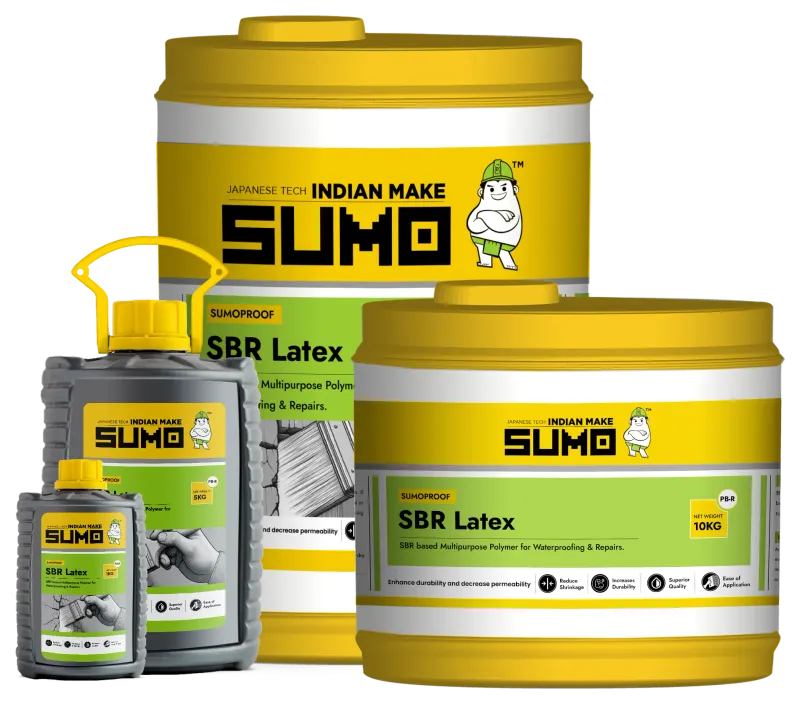
- SUMO SBR Latex is your general-purpose styrene-butadiene bonding and modifying agent — the can you keep for bonding coats, screeds, plaster on difficult surfaces, and small repairs. A typical dose is around 6–7.5 kg of latex per 50 kg of cement; brush it neat as a bonding slurry (roughly 4.2–4.5 m²/kg over two coats) or gauge it into the mix for waterproofing and repair mortars.
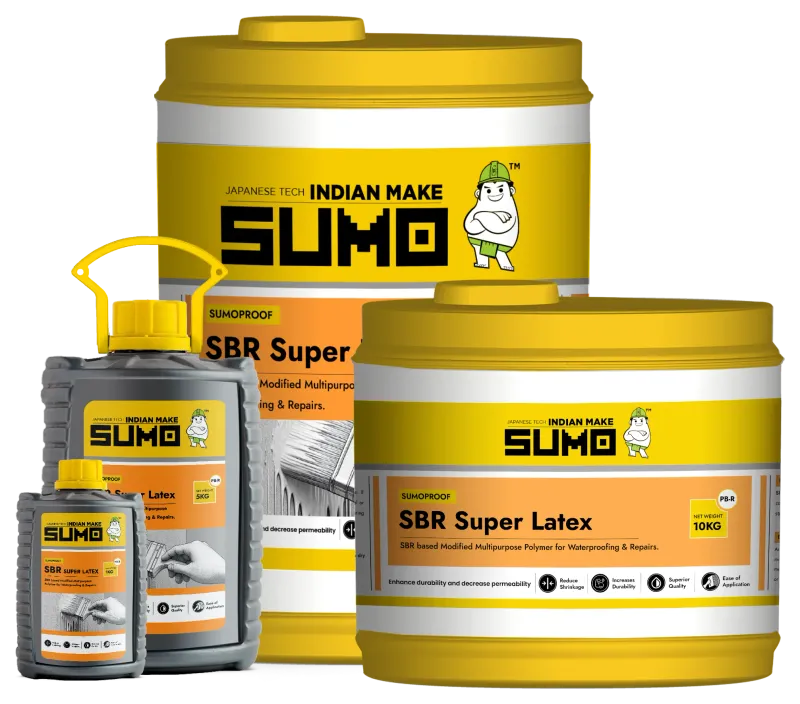
- SUMO SBR Super Latex is the concentrated, dilutable version for the demanding jobs — it develops a 5 N/mm² bond strength and is typically mixed 1:4:7 (latex:water:cement) for screed and plaster bond coats, giving maximum bond, density and water resistance where a standard latex isn't enough.
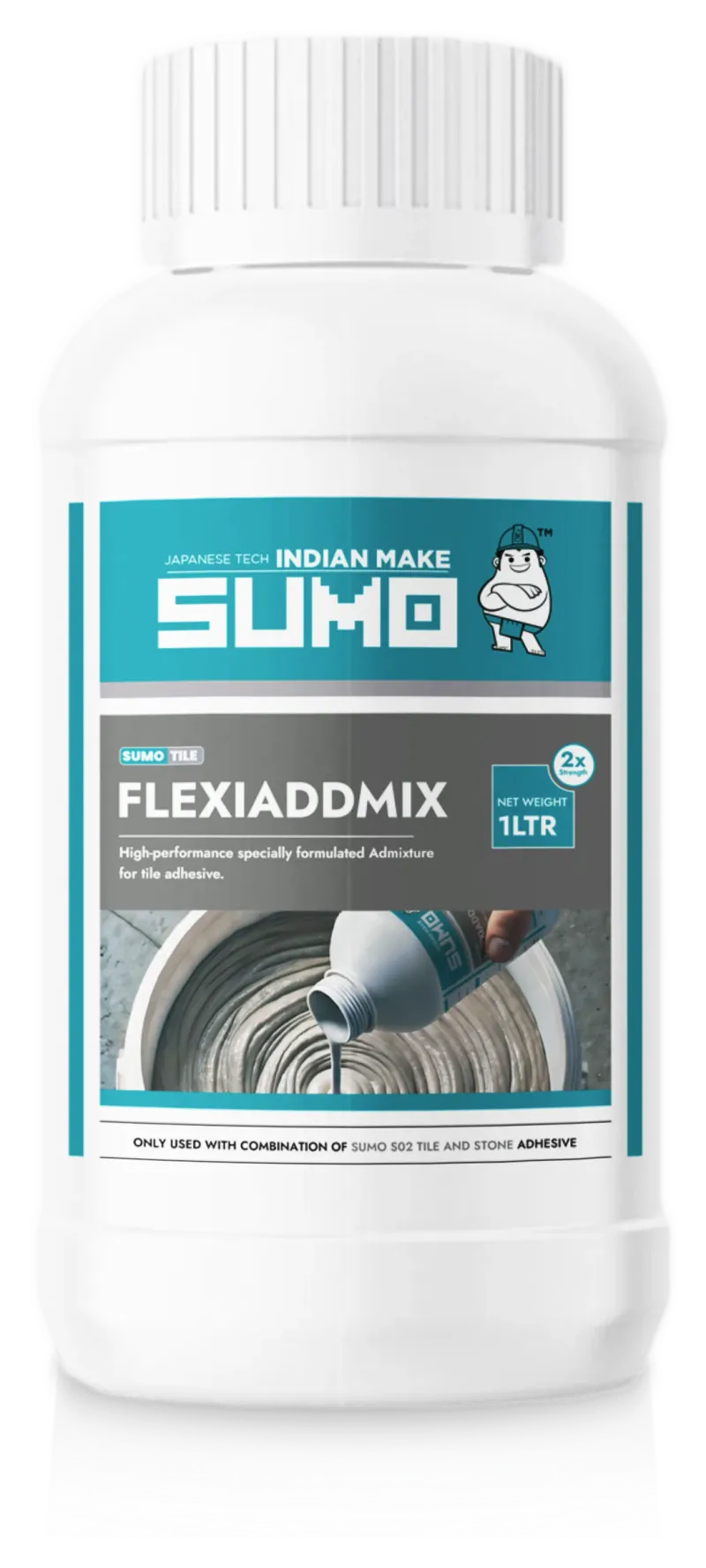
One important pairing, though: for fixing tiles, don't home-brew an SBR mortar — use a graded adhesive where the polymer is already engineered in. If you need a site mix to flex more, the correct route is a purpose-made latex booster like SUMO Flexiaddmix added to S03, which lifts the system to a highly-deformable C2TES2 in a controlled, tested ratio — not a guessed splash of SBR.
Used where it belongs — bonding, repairing, screeding, tanking — SBR latex is one of the most useful cans on the site. Tipped blindly into every mix, it's just an expensive habit. Know which job you're on.
SUMO is a brand of Adheseal India Company. Dosages above are from the SUMO SBR Latex and SBR Super Latex technical data sheets (Rev 01); confirm the current values on the pack before use.
For bonding coats, repair mortars and wet-area waterproofing, SUMO SBR Latex comes in 1, 5, 10 and 20 kg packs — dose it as its datasheet gives for the job.