Reading a bag: how to decode EN 12004 / IS 15477 grades before you buy adhesive
C2TE, C1T, C2TES1 — that little code is the whole spec of the bag. Learn to read it and you will never overpay for grade, or under-spec a job, again.

ON THIS PAGE
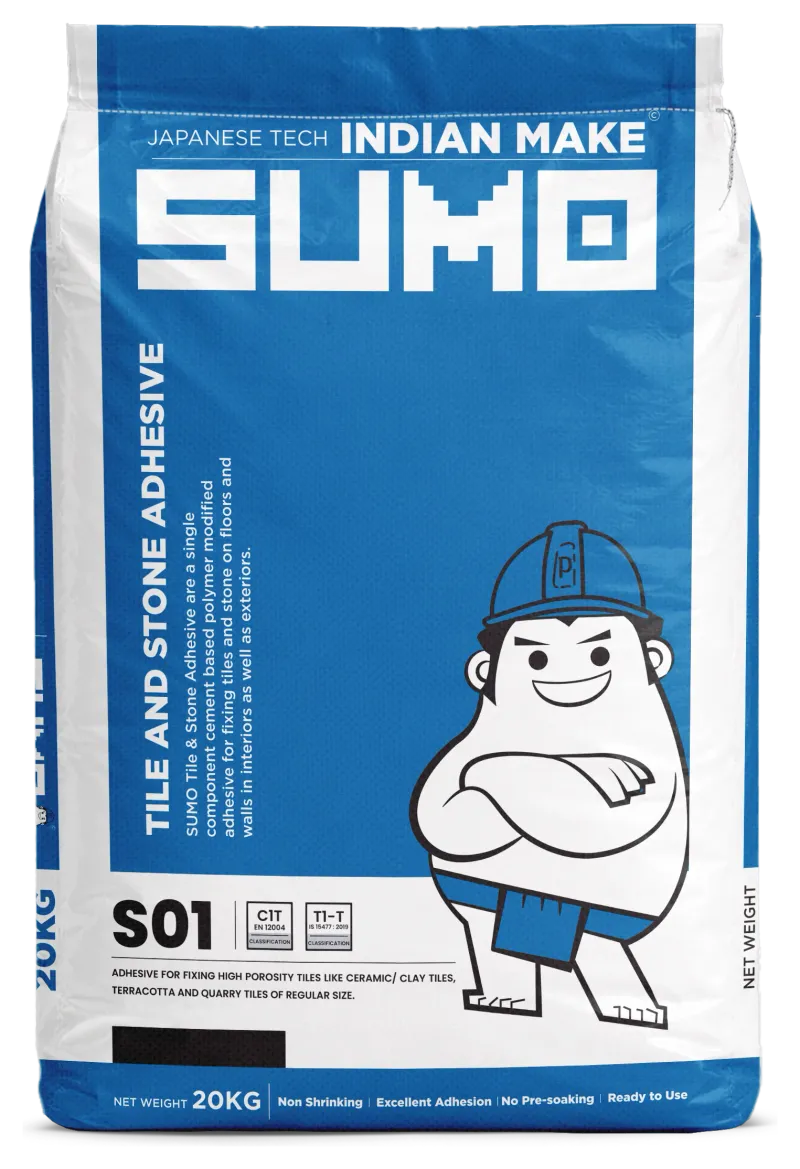
- S01
- C1T — economy ceramic
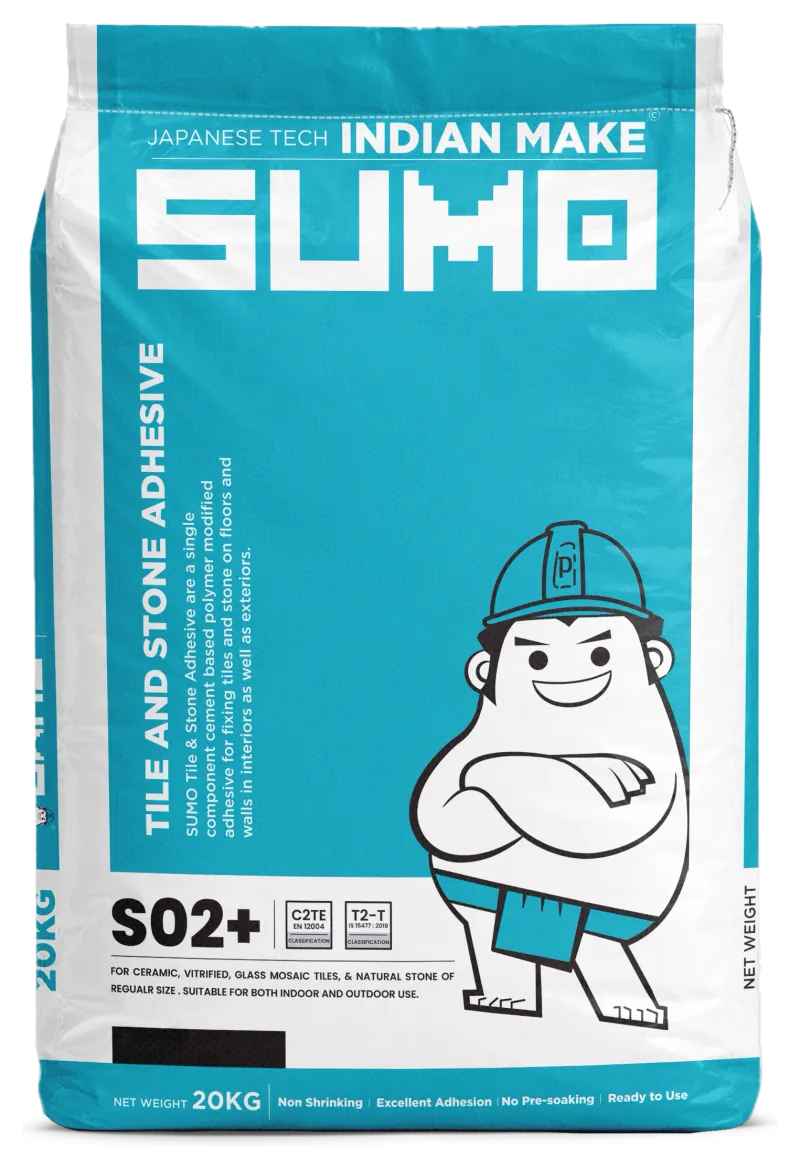
- S02 Plus
- C2TE — bond + extended open
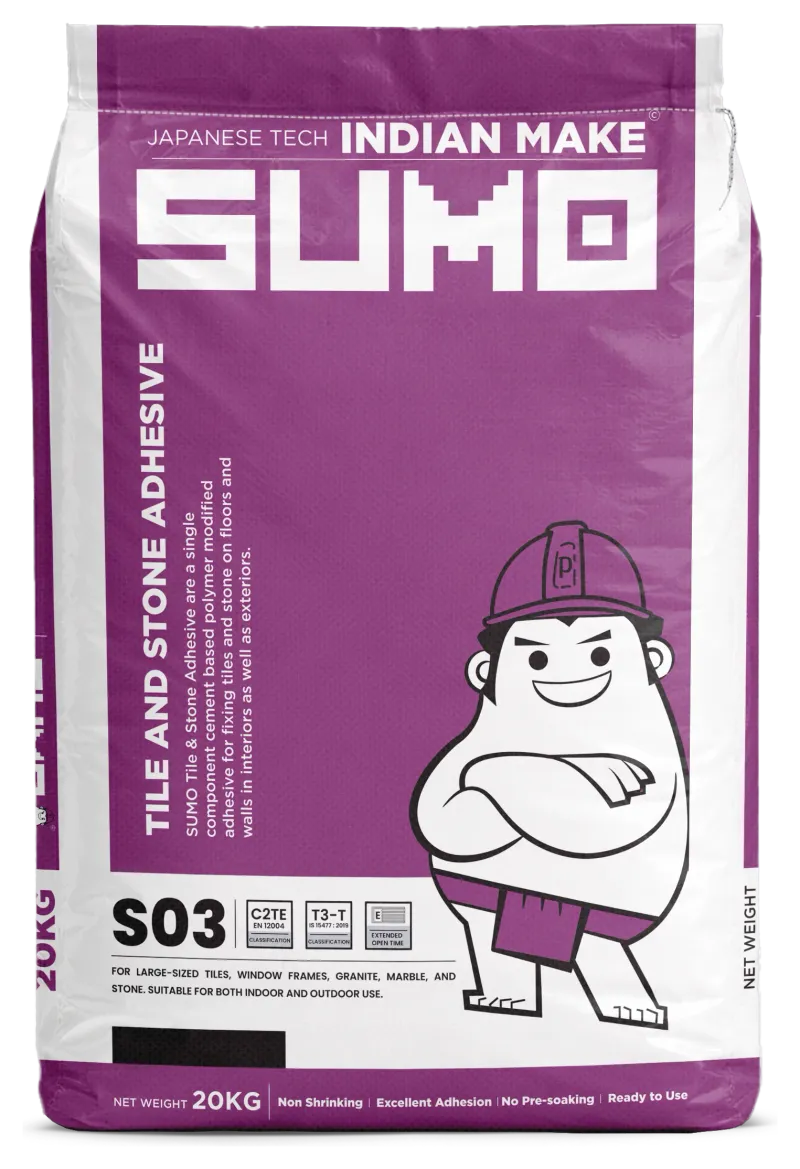
- S03
- C2TE / T3 — large format
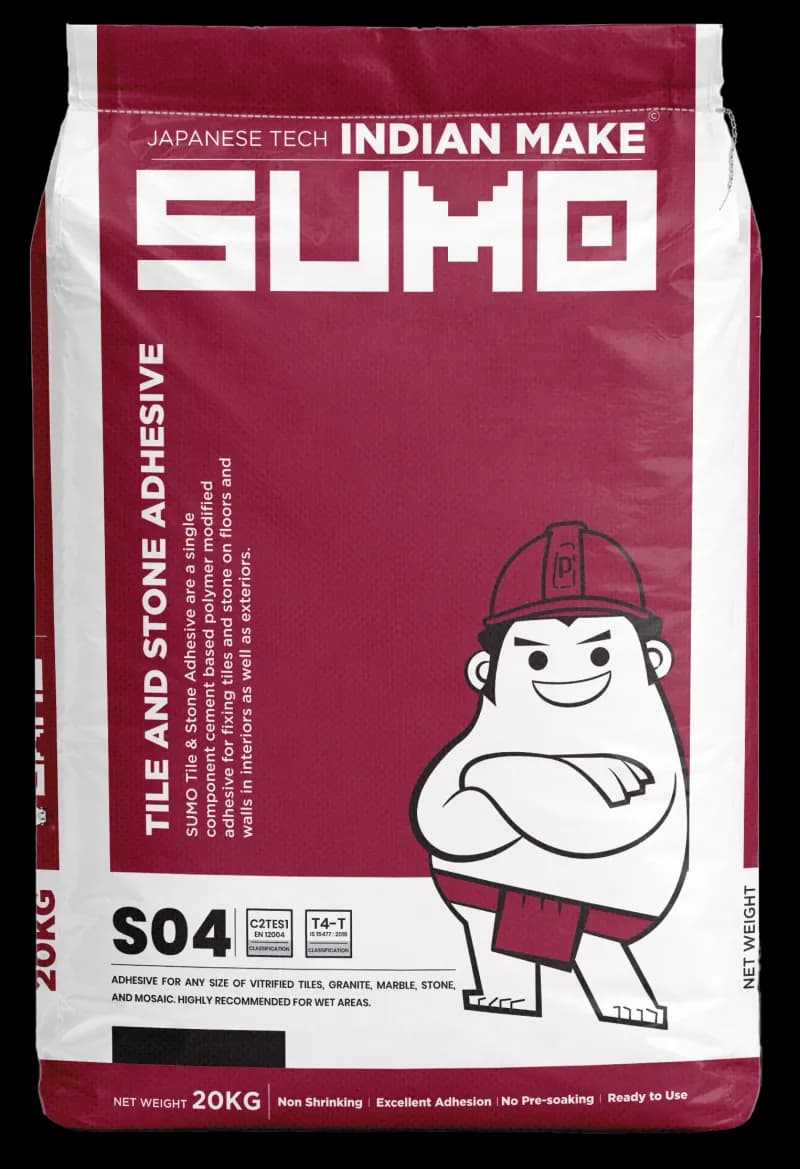
- S04
- C2TES1 — deformable (1.75 N/mm²)
- Flexit 2K
- R2T / T5-TS2 — PU, highest flex
KEY TAKEAWAYS
- The code is the full spec: C = cementitious, 1/2 = normal/improved bond, T = slip-resistant, E = extended open, S1/S2 = deformable.
- IS 15477 mirrors it with T1–T5 and TS1/TS2 for deformability.
- Check three things: 2 (better bond), E (more time in heat), S (ability to flex).
- Anything external, large-format or over movement needs at least C2, ideally S1.
Pick up any decent bag of tile adhesive and somewhere on it you'll find a little cluster of letters and numbers — C2TE, or C1T, or C2TES1. Most buyers skip straight past it. Contractors quote "tile adhesive" as if it's one thing, the way you'd buy cement. It isn't. That code is the entire specification of what's in the bag, and once you can read it you'll never again pay C2 money for a C1 bag, or worse, put a C1 bag on a job that needed C2.
Here's how to read it, in plain language.
The two standards you'll see
You'll usually see one or both of these:
- EN 12004 — the European standard, the one most global brands quote. This is the C-and-letters code.
- IS 15477 — the Indian Standard, which does the same job with a T-numbering system.
They're describing the same adhesive against slightly different test benchmarks. A good SUMO bag carries both, so you can match whichever your architect or client specifies.
Cracking the EN 12004 code
Read it left to right. Each part is a separate claim the adhesive has to pass a test to make.
First the type letter:
- C — cementitious. A powder you mix with water. The everyday workhorse for tiles.
- R — reaction resin. Epoxy or polyurethane based, two or three parts. Used where you need chemical resistance or extreme grip.
- D — dispersion, a ready-mixed paste. Rare on Indian sites.
Then the bond-strength class:
- 1 — normal. Meets the baseline bond (0.5 N/mm² tensile for cementitious).
- 2 — improved. At least double the bond (1.0 N/mm² and up). This is what you want under anything vitrified, external, or heavy.
Then the optional extra letters, each one an added ability:
- T — slip resistance. The tile stays where you put it on a wall instead of sliding down. Non-negotiable for wall tiling.
- E — extended open time. The bed stays workable longer before it skins — a real advantage in Indian heat, where open time evaporates.
- F — fast setting, for quick turnarounds.
- S1 / S2 — deformability. This is the big one. S1 means the set adhesive can flex up to 2.5 mm without cracking; S2 means 5 mm or more. Deformability is what lets a tile ride out thermal movement, a heated screed, or a slightly green slab instead of popping off.
So C2TES1 reads as: cementitious, improved bond, slip-resistant, extended open time, and deformable. That's a premium adhesive, and now you know exactly why.

The IS 15477 side, quickly
The Indian Standard uses T1 to T5 for the type and adhesion, and adds TS1 / TS2 for deformability, the same way EN uses S1/S2. So an adhesive marked T3-TS1 on the IS side is roughly the Indian-standard equivalent of a deformable C2 — improved bond plus flex. When both are printed, you're seeing the same product certified twice.
Reading it back onto the SUMO range
This is where the code stops being trivia and starts saving you money. Line the codes up against the actual range and the choice makes itself:
- SUMO S01 — C1T / IS T1. Normal cementitious, slip-resistant. The honest economy choice for ceramic in dry interior areas. Don't overpay for more than the job needs.
- SUMO S02 / S02 Plus — C2T / C2TE. Improved bond (1.0 N/mm²), and the "Plus" adds E, extended open time. The sensible default for vitrified floors and walls across most Indian homes.
- SUMO S03 — C2TE / IS T3. Improved bond of 1.2 N/mm² with extended open time — built for large-format tiles and external walls where you need grip and a longer working window.
- SUMO S04 — C2TES1 / IS T3-TS1. Improved, slip-resistant, extended open, and deformable — tensile adhesion 1.75 N/mm² and flex up to 2.5 mm. This is the grade for big porcelain slabs, balconies, terraces and over-heated screeds: it moves with the structure instead of debonding.
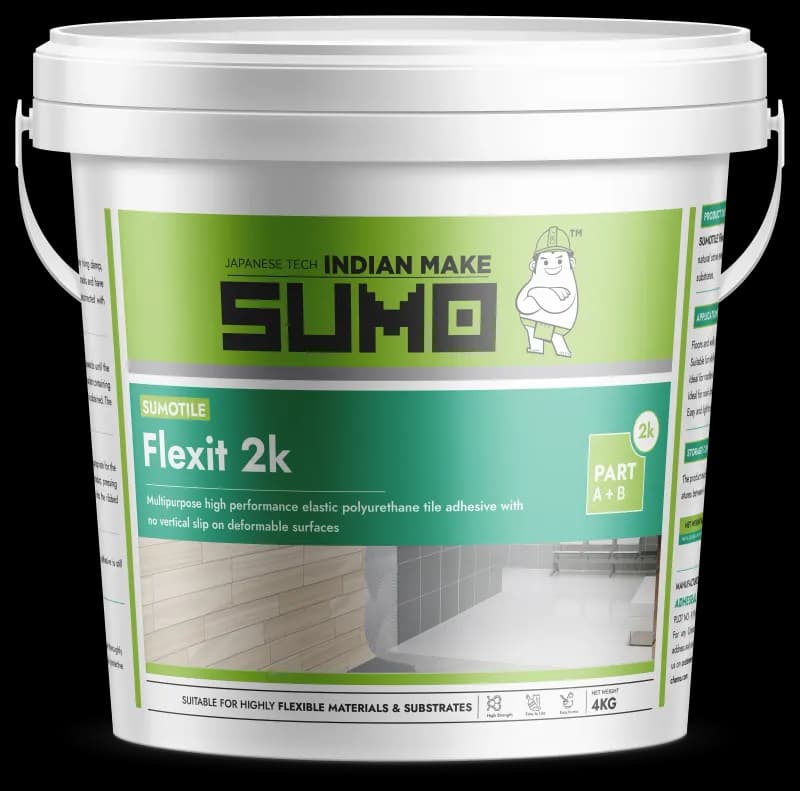
- SUMO Flexit 2K — R2T / IS T5-TS2. A two-part polyurethane reaction-resin adhesive with the highest deformability class and huge grip (3.5 N/mm² tensile, 6 N/mm² shear). This is your answer for the hard cases: tile on metal, on ply, on old membranes, on surfaces that move.
Notice the pattern: the code climbs exactly as the demand on the adhesive climbs. Bigger tile, external exposure, movement, difficult substrate — every one of those pushes you up the letters.
The one mistake the code prevents
The single most common and most expensive tiling mistake in India is using a normal C1 adhesive — or worse, plain cement slurry — on external walls, large-format tiles, or over a fresh screed, and then wondering why the tiles start drumming and popping off after a couple of seasons. Those jobs move. A C1 adhesive can't flex, so it lets go.
Read the bag first. If the job has size, sun, or movement in it, you want at least a C2 and ideally an S1. The extra couple of hundred rupees a bag is nothing next to re-doing a façade.
You don't need to memorise the whole table. Just remember: 2 is better bond, E buys you time in the heat, S means it can flex. Match those three to your job, check both standards are actually printed on the bag, and you're buying on spec instead of on trust.
SUMO is a brand of Adheseal India Company. Grade classifications and adhesion values are from SUMO's technical data; always confirm the figure printed on the current bag or product page.