Grout haze: the 30-minute window that decides whether your tiles look clean or cloudy
That cloudy film over fresh tiles is not a bad grout — it is a late clean-up. The 30-minute window that decides whether the floor looks clean or hazy.

ON THIS PAGE
- Cement grout
- Sumotg — EN 13888 CG1
- Epoxy grout
- Sumoxy 2-Part — RG, ~50 N/mm²
- First clean
- ~15–20 min after filling
- Sponge
- Barely damp, rinse constantly
- Haze buff
- Dry cloth once surface dries
KEY TAKEAWAYS
- Haze is set grout film left on the tile too long — a timing fault, not a bad grout.
- Fill, wait ~15–20 min to thumbprint-firm, then clean with a barely-damp sponge, rinsing often.
- Too much water floods and weakens joints; cleaning too slowly lets the film set.
- Epoxy grout stays stain-free for years but must be cleaned of residue while fresh.
You've seen it, even if you didn't know the name. A freshly grouted floor that looks slightly milky, a thin cloudy film sitting over tiles that should be glossy. That's grout haze, and it's one of those things that looks like a product fault and is almost always a timing fault. The grout was fine. The clean-up was late.
The good news is that once you understand the window, haze is completely avoidable — and mostly rescuable even after it's set, if you catch it in time.
Where the haze comes from
When you fill the joints and then wipe the tiles down, you never get every trace of grout off the face — there's always a thin smear of grout water and fine cement particles left across the surface. If you sponge it off while it's still wet, it comes away with the water and the tile is clean.
But grout starts to harden fast. Leave that smear on the tile too long and the cement in it sets right there on the glaze, as a hard, cloudy film bonded to the surface. Now it won't wipe off with water — it's not a smear anymore, it's a thin layer of set cement. That's the haze.
So the whole game is: fill, let the joints firm up just enough, then clean the faces before the film on them sets.
The window, in real numbers
For a normal cementitious grout in Indian conditions, you're working with roughly this:
- Fill the joints, pressing the grout fully in with a rubber float held diagonally so you don't drag it back out.
- Wait about 15–20 minutes — until the grout in the joint has firmed from wet to "thumbprint" stage: press it and it dents but doesn't smear. Clean too early and you pull grout out of the joints and leave them hollow; clean too late and the face film sets.
- First clean: a well-wrung damp sponge — barely damp, not dripping — wiped gently across the tiles in a circular motion, rinsing the sponge constantly in clean water. Shape the joints as you go.
- Second pass, a bit later, with a clean damp sponge or cloth to lift the last of the film.
- The final haze buff: once the surface is dry and you can see the light cloudiness, a dry clean cloth or a bit of dry jute takes it straight off.
The two mistakes that cause haze: too much water (which floods the joints, weakens them and spreads more cement film around) and cleaning too slowly (so the film sets before you reach it). Barely-damp sponge, rinse often, keep moving.

In hot weather the whole window shrinks — grout a smaller area at a time so you're never chasing a floor that's setting faster than you can clean it.
If it's already hazed
Caught the next morning, light cement haze usually still comes off with a dry buff or a mildly acidic tile-and-grout cleaner used per its instructions — never neat acid, which burns grout out of the joints and can etch some stones. Test a corner first. On natural stone, skip acid entirely and use a stone-safe cleaner.
The product half of the story
Which grout you chose also decides how forgiving that window is — and how the joints look and last:
The grout you choose decides whether the joint stays clean after that first clean-up — and this is where epoxy wins decisively:
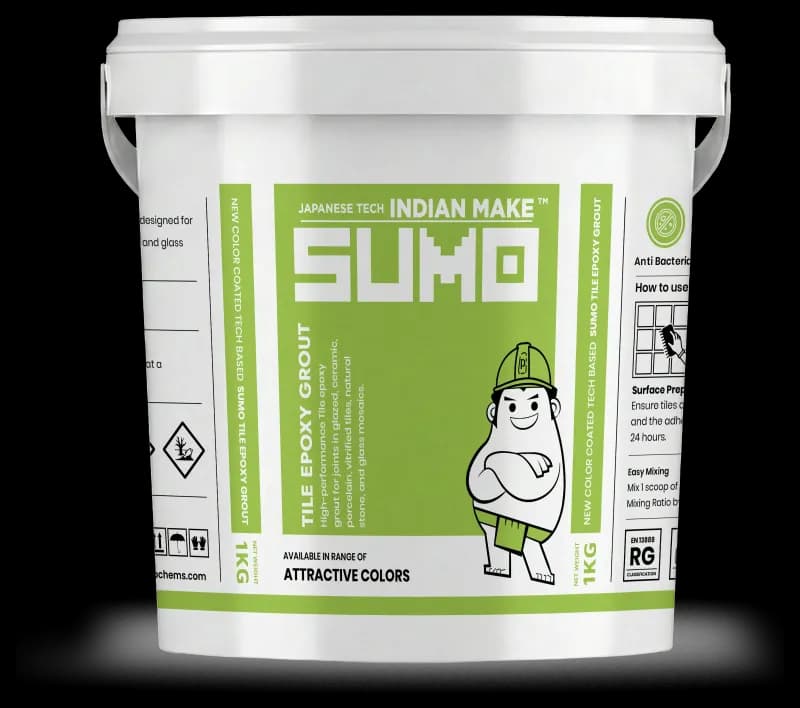
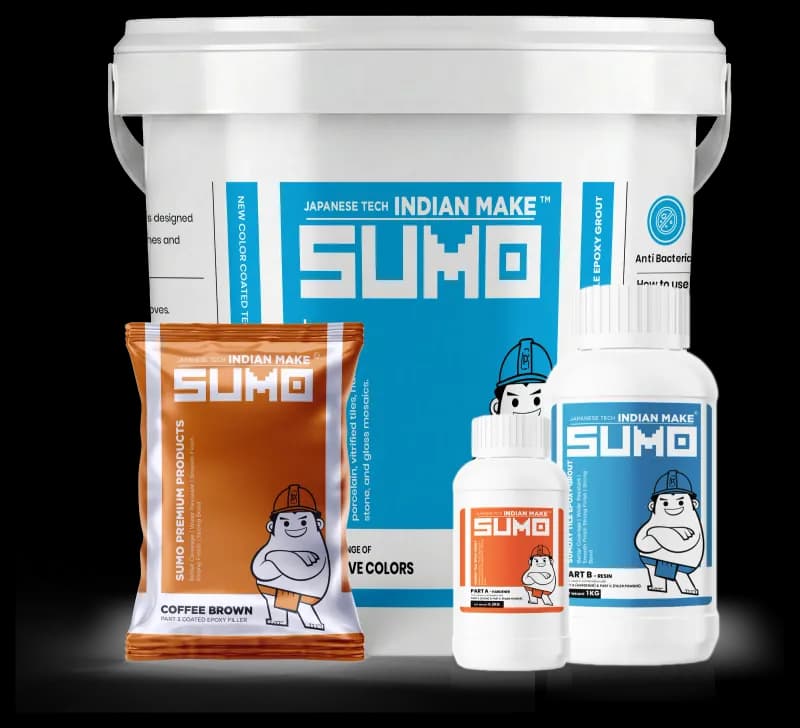
- SUMO Sumoxy 2-Part Tile Epoxy Grout (RG, ~50 N/mm² compressive) is the joint that looks the same in five years as it did on day one — essentially stain-proof and waterproof, so it never absorbs coffee, chai or bathroom grime, never blooms efflorescence, and shrugs off cleaning chemicals in kitchens and bathrooms. It asks for a prompt, proper clean-up while the resin is fresh — do that and the colour is locked in for good.
- SUMO Sumoxy 3-Part Tile Epoxy Grout gives the same waterproof, stain-free, chemical-resistant joint with a graded filler for larger joints, heavy-traffic and commercial floors.
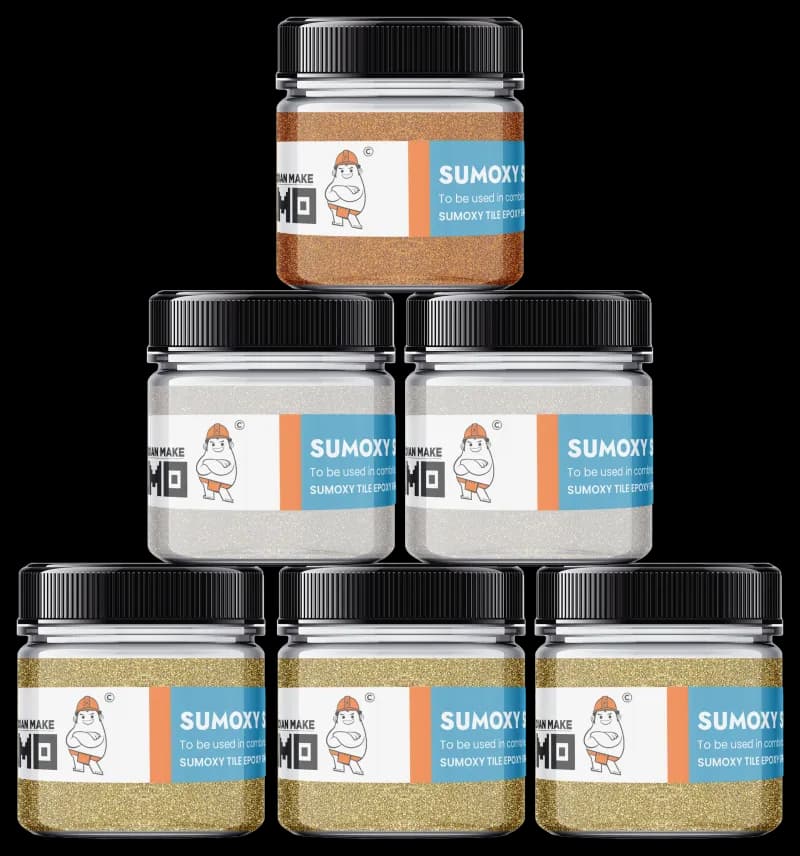
- And where the look is the whole point, SUMO Sumoxy Sparkle brings a decorative metallic/glitter epoxy joint for feature walls and premium interiors — same non-porous, colour-stable body, with a finish clients actually notice.
Epoxy for joints that stay clean and waterproof, sparkle where they need to show off. Whatever you fill with, the rule that keeps the tiles clean is the same: watch the window, clean barely-damp, and buff the haze before it ever gets the chance to set.
SUMO is a brand of Adheseal India Company. Grout grades and strengths are from SUMO's technical data; confirm the current figures on the pack or product page.