Fixing tile-on-tile without ripping out the old floor
You can tile over old tiles — if you respect why the old surface is hard to bond to. The prep and the adhesive grade that make an overlay actually hold.

ON THIS PAGE
- Primer
- SUMO Tile Bonder
- Adhesive
- S03 (C2TE) / S04 (C2TES1)
- Tough cases
- Flexit 2K PU (R2T)
- Added height
- ~10–15 mm — check thresholds
- Coverage
- ≥95% on floors
KEY TAKEAWAYS
- You can tile over old tiles — the prep, not the demolition, is the whole job.
- Old glaze is smooth, sealed and dirty; degrease, sound for hollow tiles, then key or prime it.
- Tile Bonder turns slick glaze into a grippable surface for the adhesive.
- Use a C2 (S03) or deformable (S04) adhesive; mind the added floor height at doors and drains.
There's a moment on every renovation where someone asks the obvious question: do we really have to break out all the old tiles first? Demolition is the dirtiest, slowest, most expensive part of a retile — the dust, the debris, the damaged screed underneath, the extra days. So the temptation to just lay the new tiles straight over the old ones is strong.
The honest answer is: yes, you can tile over existing tiles — it's a completely legitimate method — but only if you respect why the old surface is difficult and prep it accordingly. Skip that and you've built a beautiful new floor on a trapdoor.
Why an old tiled surface is a hard surface to bond to
A normal adhesive grips a floor partly by keying into its texture and pores. An existing tiled floor gives it neither. A glazed or vitrified tile is dense, smooth and non-absorbent — there's nothing for a plain adhesive to bite into, and nothing to draw it into a bond. Put ordinary adhesive on old glaze and it can sit there like butter on glass.
On top of that, the old floor is carrying years of contamination — grease, wax, soap film, polish, dust in the joints — every bit of which is a bond-breaker. And it may have hollow or drummy tiles of its own; anything loose underneath will take your new floor down with it.
So tile-on-tile isn't hard because of the new tiles. It's hard because of the old surface: smooth, sealed and dirty. Prep is the entire job.
The prep that makes it hold
Do these in order and tile-on-tile is reliable. Skip any one and it's a gamble:
- Check the existing floor is sound. Tap every tile with a wooden handle. Anything that sounds hollow or drums is already debonded — lift those, and either re-fix them solidly or fill the void, so your new floor isn't riding on loose tiles.
- Degrease and clean, properly. Scrub the whole surface to cut through grease, soap, wax and polish, then rinse and let it dry. This is the step everyone under-does. A clean surface or a filthy one looks identical under adhesive — until it lets go.
- Key the glaze. The smooth glaze needs to become something an adhesive can grab. Mechanically abrade it — a diamond pad or grinder to dull the shine and open the surface — so the adhesive gets a real mechanical key. This is the step that makes tile-on-tile hold.
- Dust off and set out. Vacuum the keyed surface clean, then dry-lay and plan your cuts before you mix any adhesive.
- Use a high-grip, deformable adhesive and the right notch, back-buttering the new tiles, and check coverage on the first few.
- Mind the new floor height — you're adding 10–15 mm — so doors, thresholds, drain levels and the skirting all need to account for it. Sort this before you start, not after.

Why the adhesive grade matters more here
Two floors bonded together move more than one — you've got the old bed, the old tiles, your new bed and the new tiles all stacked up, and any movement or slight flex has to be absorbed by adhesive that grips a surface it can barely key into. This is not a job for a basic C1. You want improved bond and, ideally, some flex:
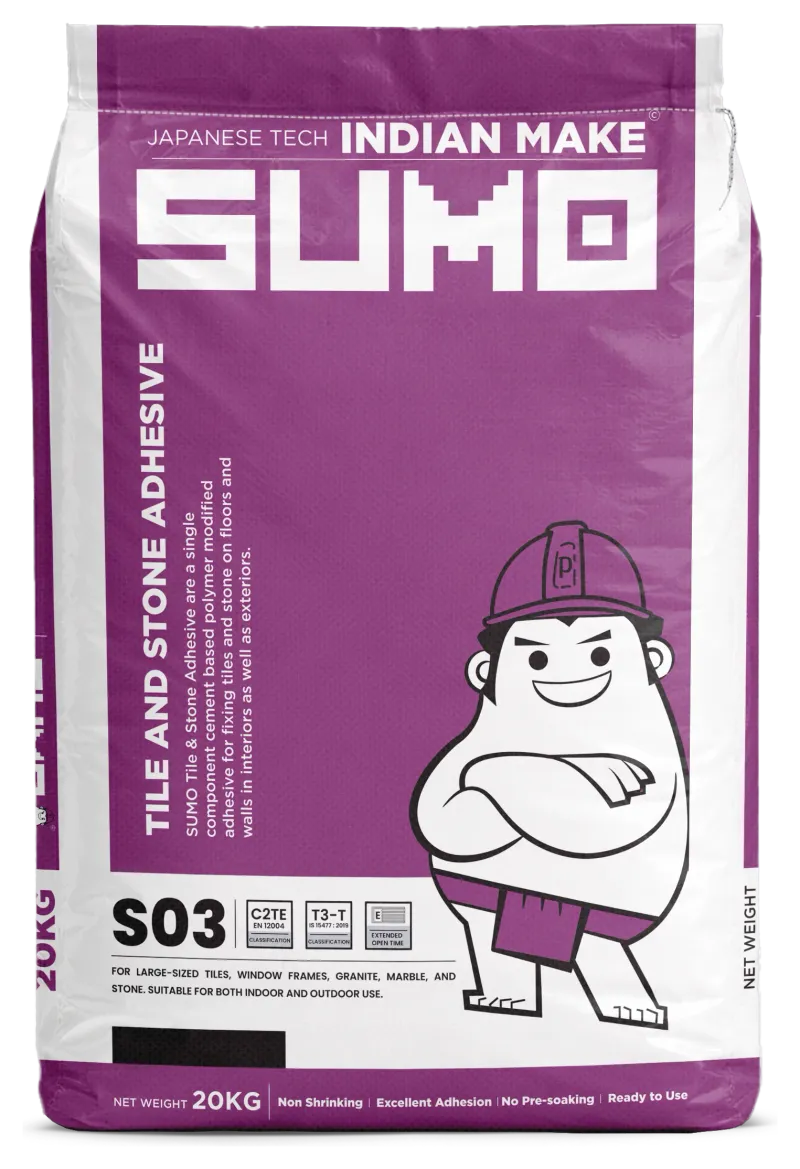
- SUMO S03 (C2TE, 1.2 N/mm²) is a strong, extended-open-time adhesive for standard tile-over-tile floors — improved bond and a longer working window for a job where you're managing keying, buttering and levels at once.
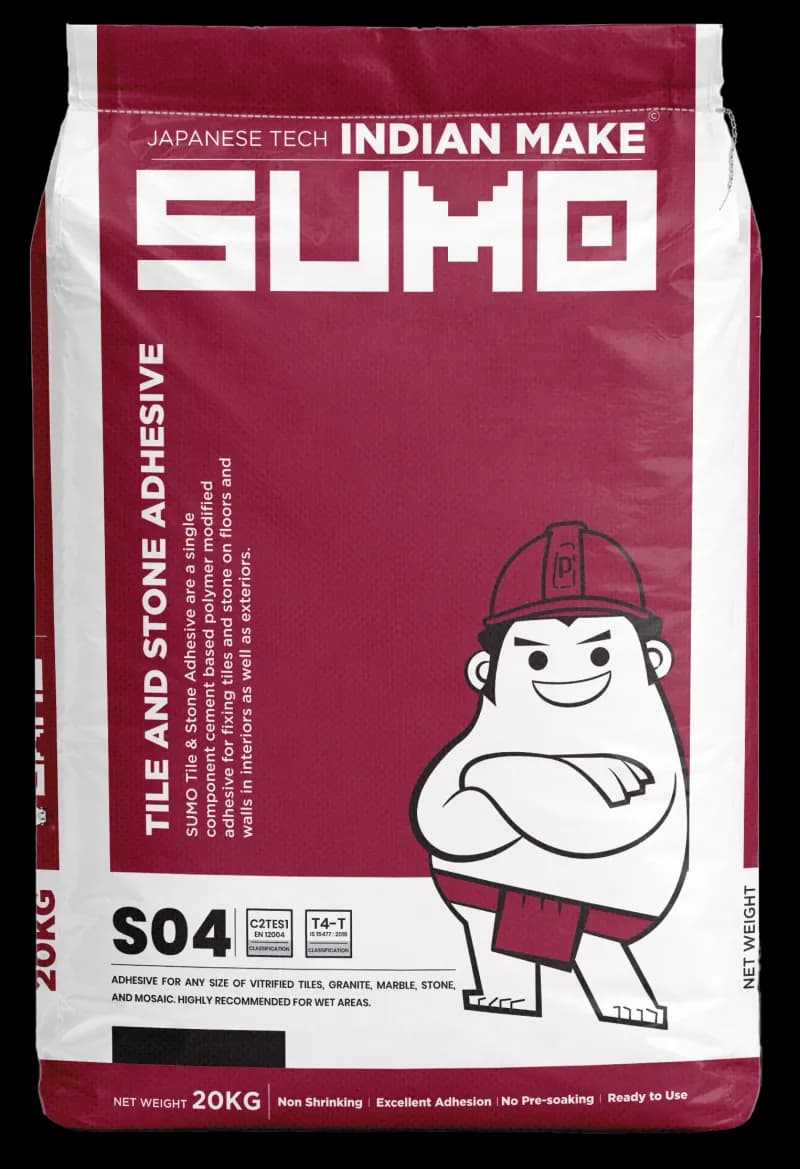
- Where the floor is large-format, heavily trafficked, or over anything that moves, step up to SUMO S04 (C2TES1, 1.75 N/mm², deformable to 2.5 mm) so the stack can flex without debonding.
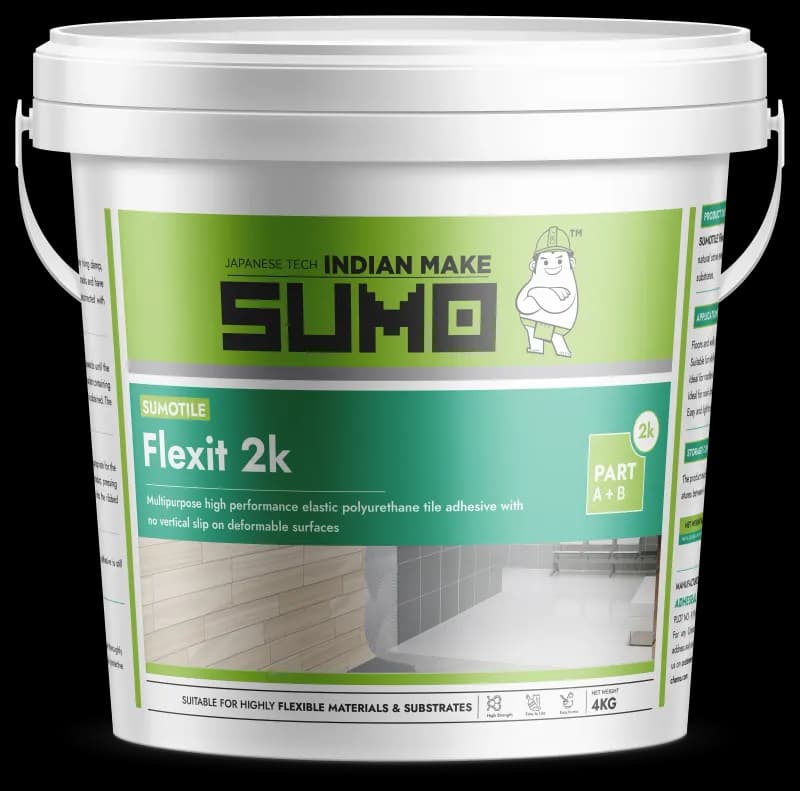
- And for the genuinely awkward overlays — tile onto tile onto a substrate that moves, or mixed surfaces — SUMO Flexit 2K, a two-part PU adhesive (R2T / T5-TS2), gives you the highest grip and deformability when nothing cementitious feels safe.
Tiling over the old floor can save you days and a mountain of debris. It just moves the work from the demolition to the prep. Tap it, clean it, key the glaze, and put a strong deformable adhesive on top — and the new floor holds as well as one laid on bare screed.
SUMO is a brand of Adheseal India Company. Grades and adhesion values are from SUMO's technical data; confirm the current figure on the bag or product page.