Choosing the right tile adhesive grade
C1T to C2TES1 — what the EN 12004 classes actually mean on site, and how to pick the SUMO S-series grade your tile and substrate need.
ON THIS PAGE
Picking the right tile adhesive grade is the single biggest decision behind a tile job that lasts. Use too basic a grade and tiles sound hollow or pop off; over-spec and you spend more than you need. This guide explains how adhesive grades work and how to match one to your tile, surface and area.
What an adhesive “grade” actually means
Every cementitious tile adhesive is classified under two standards: the European EN 12004 and the Indian IS 15477. The grade is a shorthand for how strong the bond is and what it can handle — bond strength, slip resistance, open time and flexibility. The higher the class, the more demanding the job it is built for.
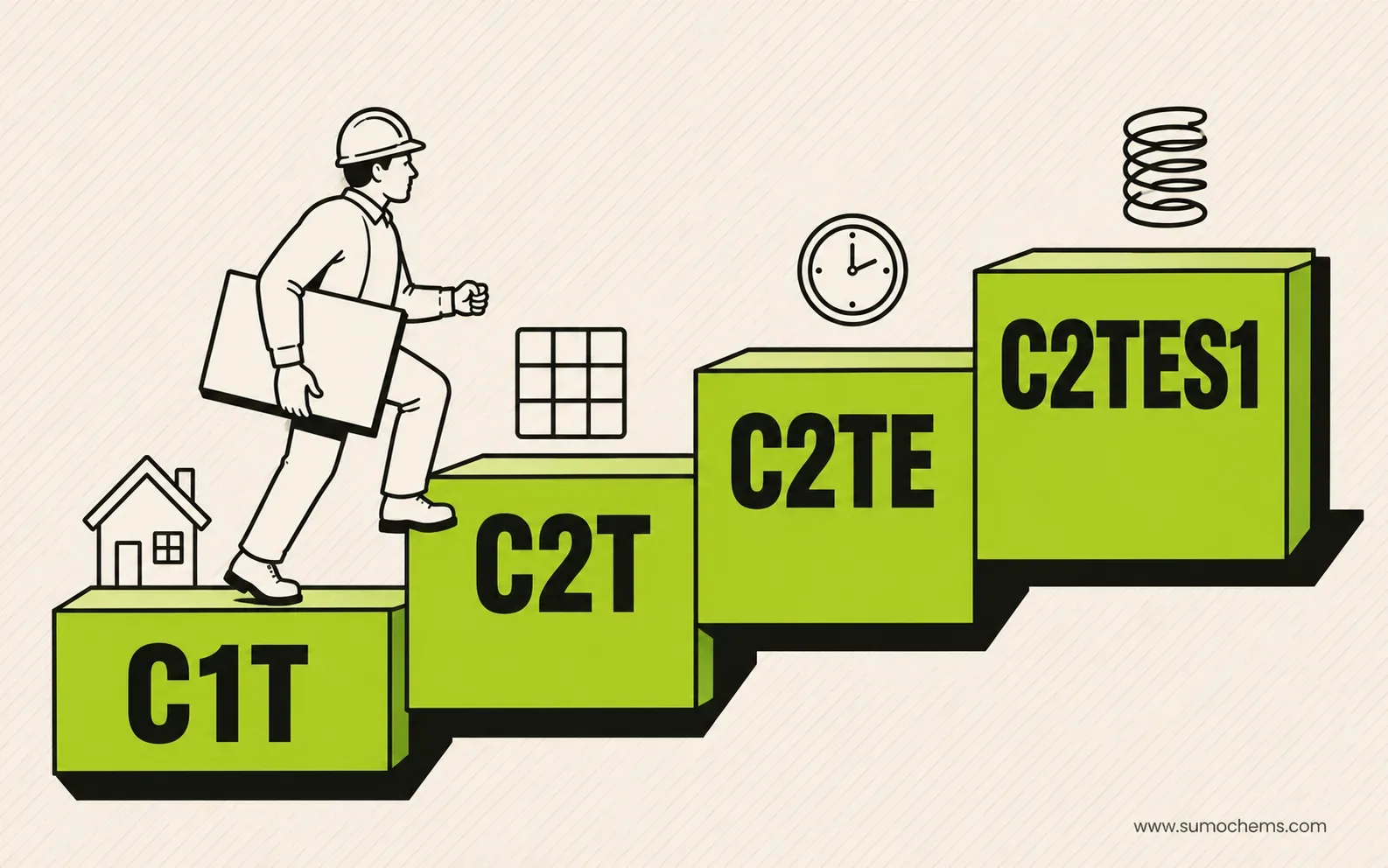
The SUMO grade ladder
SUMO’s tile-adhesive range steps up cleanly from everyday interiors to pools and difficult substrates:
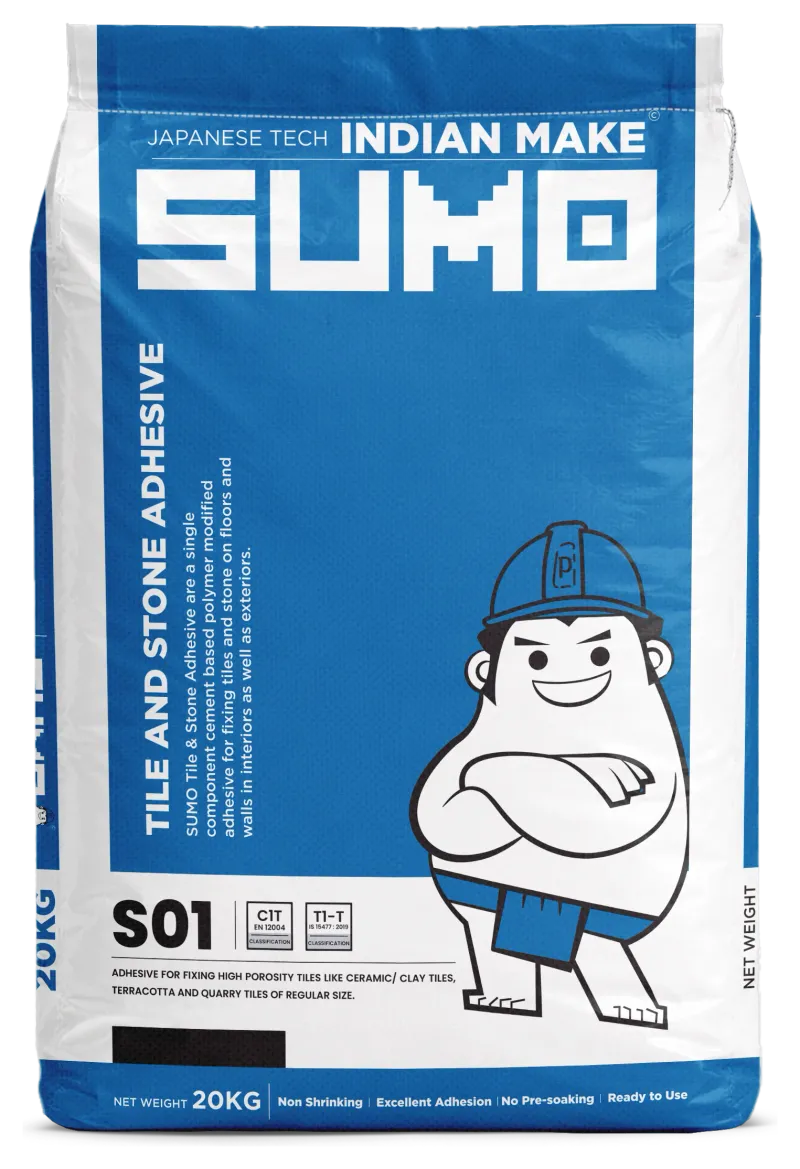
- S01 — C1T: basic interior thin-set for high-porosity ceramic, terracotta and quarry tiles.
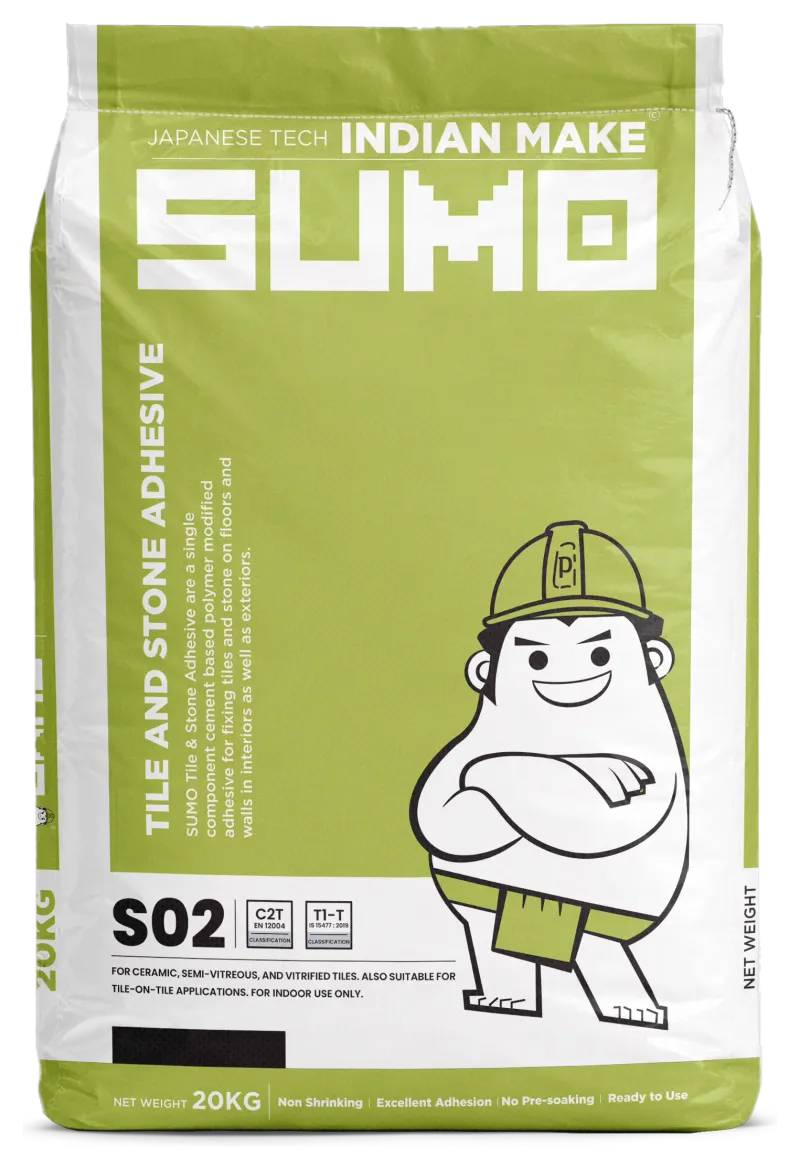
- S02 — C2T: improved bond for ceramic and vitrified tiles, including tile-on-tile, indoors.
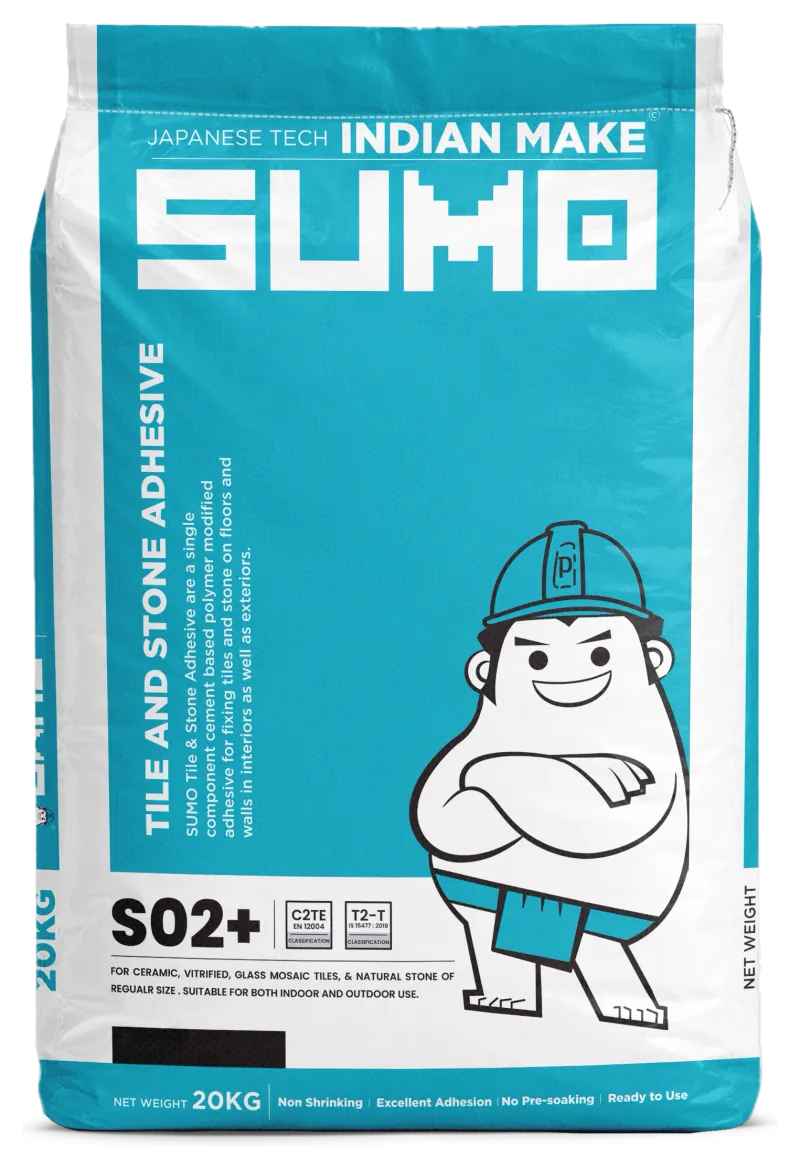
- S02+ — C2TE: exterior-grade bond for vitrified, natural stone and glass mosaic, inside and out.
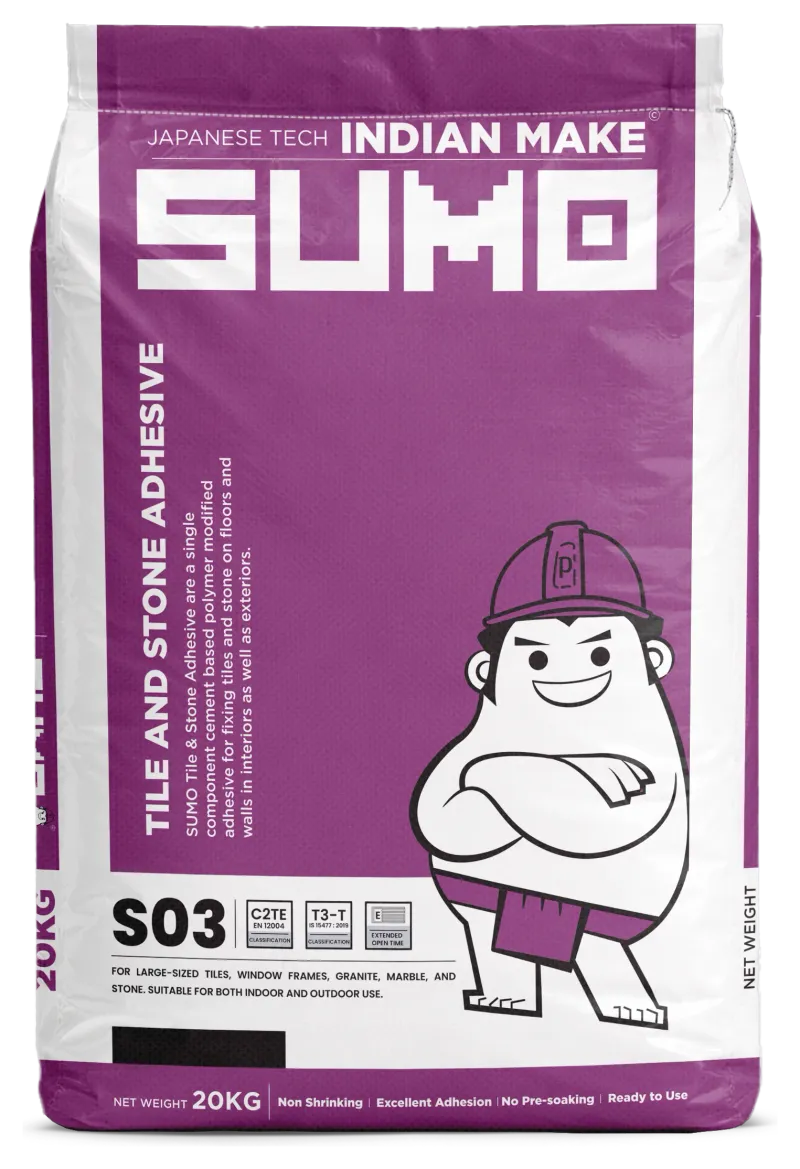
- S03 — C2TE: high grip plus extended open time for large-format tiles and stone.
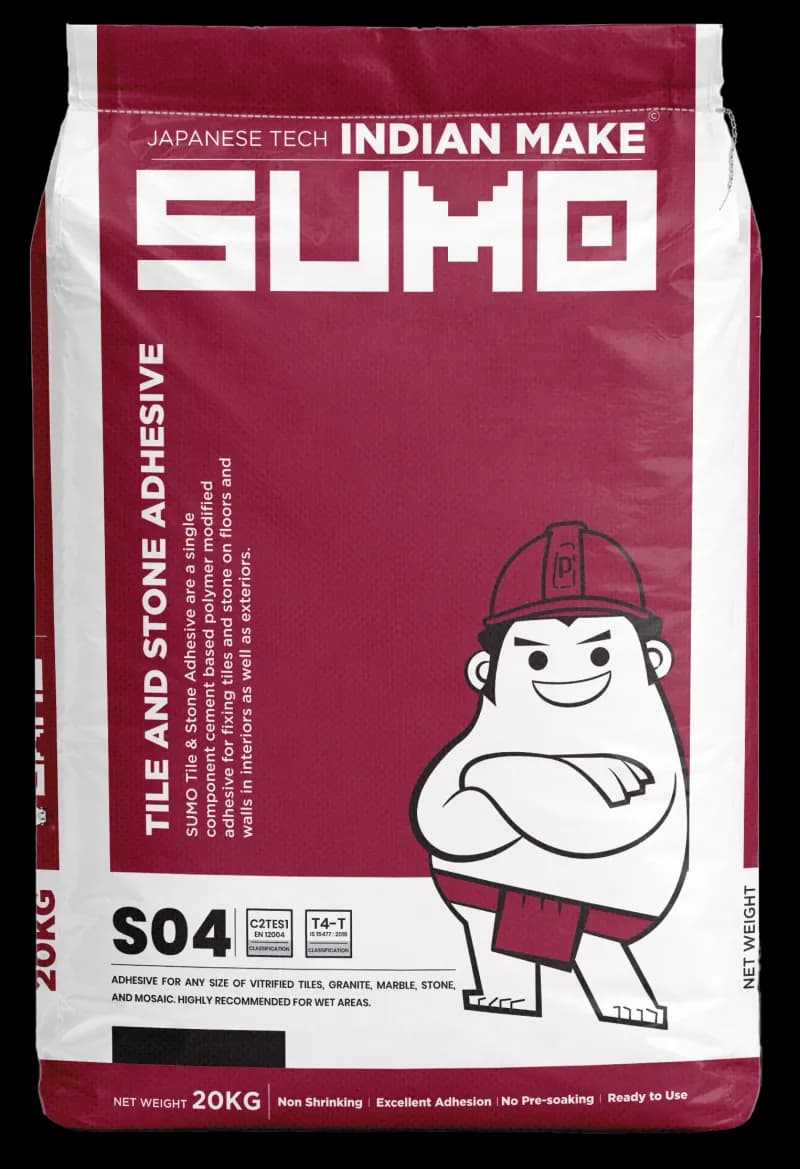
- S04 — C2TES1: deformable, heavy-duty fix for wet areas, swimming pools and high-traffic floors.
- Flexit 2K — R2T: reaction-resin PU adhesive that bonds where cement can’t — metal, plywood, cement board and engineered stone.
How to choose in three questions
Narrow it down by answering three things about the job:
- What is the tile? Porous ceramic needs less grip (S01/S02); dense vitrified, large-format and natural stone need C2 and up (S02+/S03/S04).
- Where is it going? Dry interior is fine with S01/S02; exterior needs S02+ or higher; permanently wet areas and pools need the deformable S04.
- What is the substrate? Standard concrete and plaster take any cementitious grade; metal, ply, cement board and other non-cementitious surfaces need Flexit 2K.
Common mistakes
Using an interior grade outdoors, skipping the step up to a deformable adhesive for large formats over 600×600 mm, or trying to fix vitrified tiles with a basic C1 are the usual causes of debonding. When in doubt, step up one grade — the cost difference per bag is small next to the cost of re-tiling.
Still unsure? Match your job on the product pages, or ask the SUMO technical team for a spec.