
Choosing Grout Colour: A Room-by-Room Guide
Matching flatters the tile, contrast flatters the layout. The rules designers actually use, room by room — and why epoxy keeps the colour you chose.
ON THIS PAGE
- White / light tiles
- Light grey (safe) · charcoal (graphic)
- Wood-look planks
- Warm beige/brown near the grain
- Grey / cement-look
- One shade darker, tone-on-tone
- Kitchens & traffic
- Mid-grey / greige hides most
- Colour permanence
- Epoxy (SUMOXY) — impervious, stain-free
- Metallic joints
- SUMOXY Sparkle — gold / silver / copper
KEY TAKEAWAYS
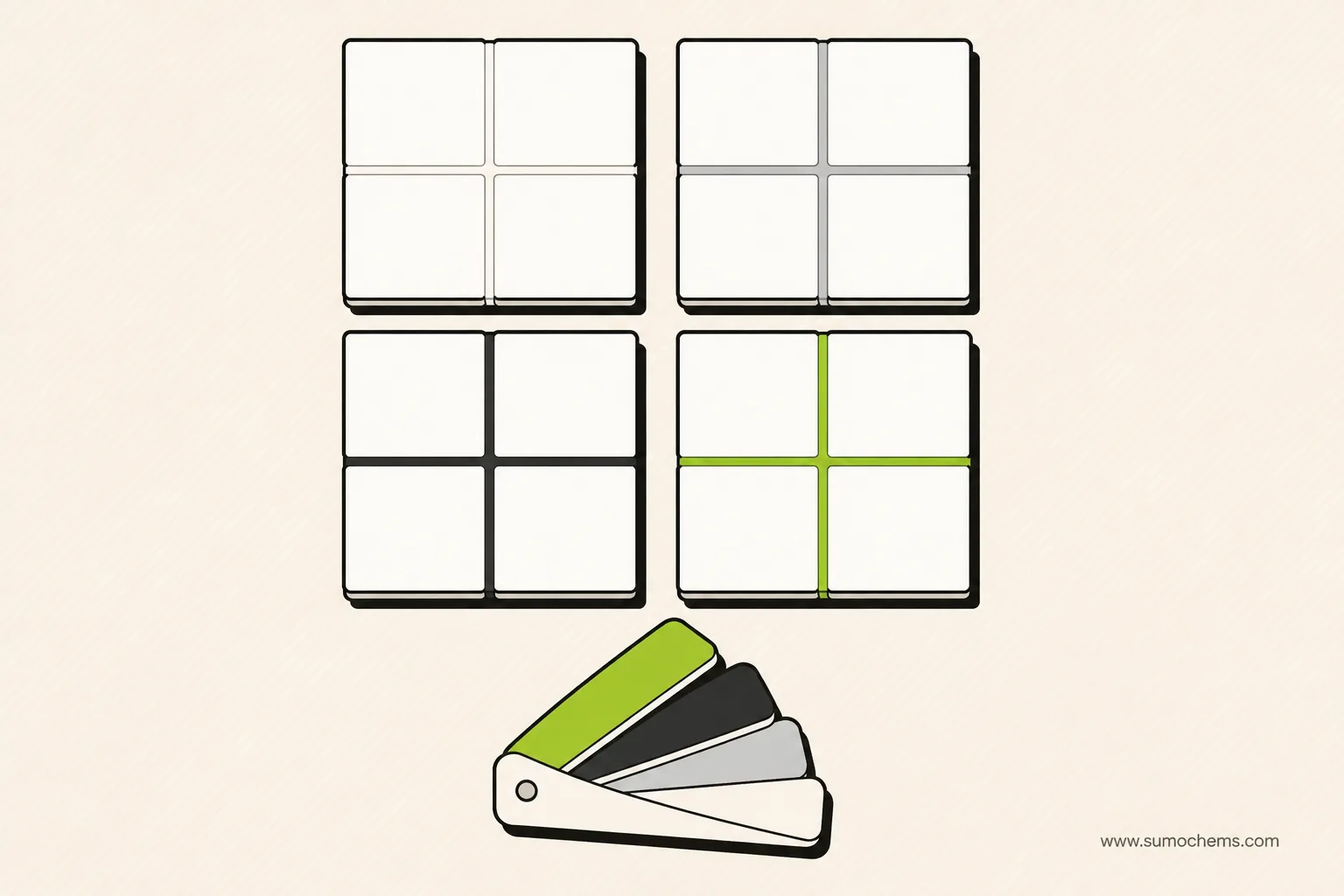
- One rule covers most decisions: matching grout flatters the tile; contrasting grout flatters the layout.
- Mid-greys and greige are the most forgiving colours on floors — they hide both dust and dark stains.
- Light joints in cement grout are high-maintenance; in epoxy they stay the colour you installed.
- Joint width changes the look as much as colour — decide both together.
- Never bright white joints on wood-look tiles — it breaks the plank illusion.
Grout is 2–3 millimetres of visible decision that runs through every square metre of the surface — and unlike paint, you do not repaint it next season. The good news: the choice reduces to a few rules that professionals apply almost mechanically.
The one rule to start from
Matching grout flatters the tile; contrasting grout flatters the layout. A near-match makes the surface read as one plane — right for large-format minimal floors and stone. A contrast draws the grid — right for patterns, mosaic, handmade-look and metro tiles where the layout is the design. Decide which one you actually paid for, and the colour family picks itself.
Room by room
Kitchens
Floors and counters live with turmeric, oil and foot traffic. Mid-grey and greige joints hide the evidence between cleans; bright white cement joints in a kitchen floor is a weekly scrubbing commitment. If the design demands light joints, make them epoxy — the joint is impervious, so the colour survives the kitchen.
Bathrooms
Wet, soap and hard water. Epoxy is the sensible chemistry here regardless of colour; on colour, mid-tones age best — very dark joints show soap scum and water marks sooner than people expect. Matching shades keep small bathrooms visually larger; a strong grid shrinks them.
Living rooms and bedrooms
Low staining risk frees the choice to pure aesthetics: tone-on-tone for large vitrified and marble-look floors, one shade darker than the tile for definition without a grid. Wood-look planks take warm beige or brown pulled from the grain — never white, which reads as gaps between boards.
Exteriors and feature walls
Facades collect dust and rain streaks: mid-to-dark joints stay presentable. On feature walls and mosaic, the joint is part of the artwork — this is where contrast, and metallics like SUMOXY Sparkle (gold, silver, copper mixed into epoxy grout), earn their place.
Joint width is part of the colour decision
The same charcoal reads as a fine pencil line at 2 mm and as a bold frame at 5 mm. Rectified tiles at narrow joints make matching shades almost disappear; wider rustic joints amplify whatever colour sits in them. Pick spacer and shade together — and preview both in the Grout Visualiser under Tools & Support before committing a floor to twenty years of the choice.
Why the chemistry decides how long the colour lasts
Cement grout is porous: it absorbs, stains and lightens unevenly, which is why light cement joints benefit from sealing. Epoxy grout (SUMOXY) is impervious and stain-free — the installed colour is the permanent colour, in wet areas included. If the colour matters to the design, the chemistry is part of the colour decision.