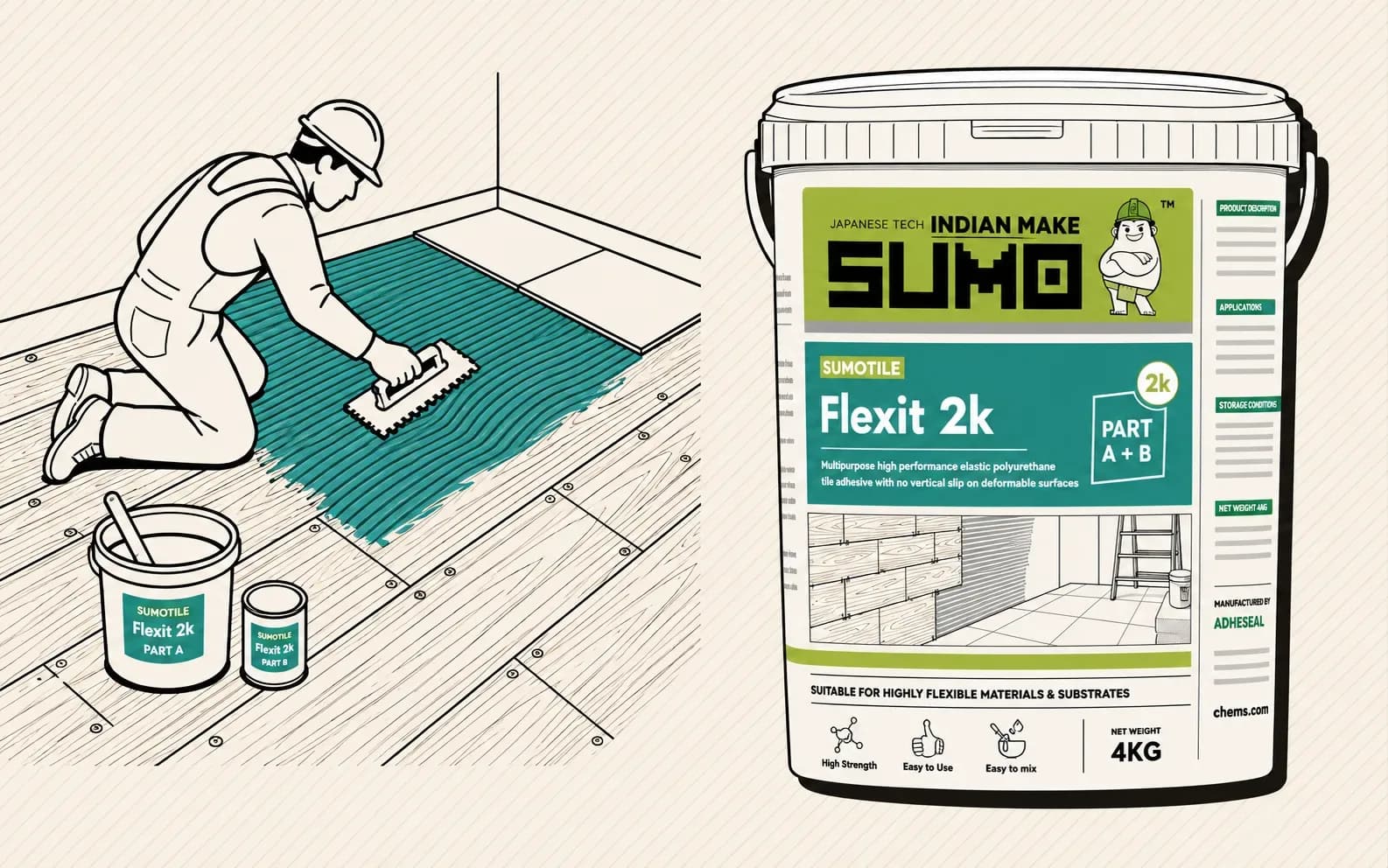
How to fix tiles on a wooden or plywood floor
Timber floors flex and move — the enemy of rigid tiles. Here is how to stiffen the base and fix tiles with SUMO Flexit 2K PU so they do not crack or pop off.
ON THIS PAGE
Timber and plywood deflect underfoot and swell and shrink with humidity. Rigid tiles fixed with a rigid adhesive over a moving base crack at the grout lines or debond — which is why tiling on wood has a bad reputation it does not deserve when done correctly.
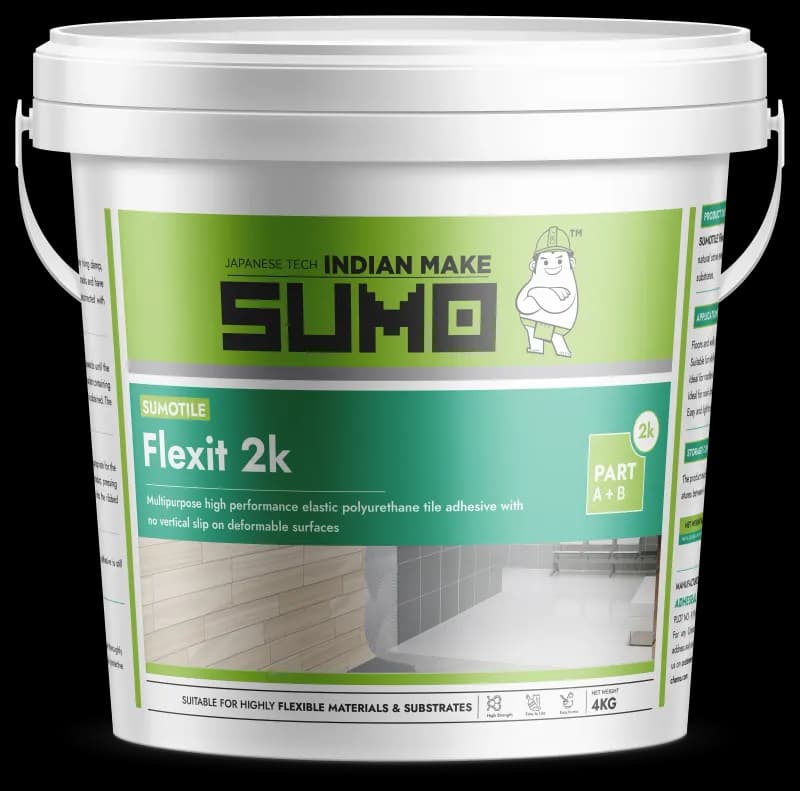
The answer is a stiff, well-fixed base plus a highly deformable adhesive. SUMO Flexit 2K, an EN R2T reaction-resin PU adhesive, is built to absorb substrate movement. This guide covers preparing the timber base and fixing tiles that stay put.
What you’ll need
Step by step
Check and stiffen the deck
The floor must not bounce. Where it deflects, add a layer of exterior-grade plywood or tile backer board, screwed down at close centres to the joists/deck, to build a stiff, stable base.
Secure and clean the surface
Screw down any loose boards to kill squeaks and movement, and make sure the surface is clean, dry and free of polish, wax or old finishes that would stop adhesion.
Prime if required
Prime the timber/board surface where the adhesive guidance calls for it, so the flexible adhesive keys properly to the base.
Fix tiles with a flexible PU adhesive
Comb SUMO Flexit 2K with a notched trowel and back-butter each tile. Its high deformability absorbs the small movements a timber base makes without stressing the tiles.
Leave movement joints
Leave perimeter movement joints at walls and around fixed points, and honour any existing movement joints in the floor. These let the assembly expand and contract without cracking.
Cure, then grout flexibly
Let the adhesive cure, then grout. A slightly flexible grout complements the flexible bed on a moving substrate.
Care, tips & what to avoid
- !Tiling over a bouncy floorDeflection cracks tiles and grout. Stiffen the deck with board before tiling.
- !Using a rigid cement adhesiveTimber moves; a rigid mix cannot follow it. Use a deformable PU adhesive like Flexit 2K.
- !No movement jointsWithout perimeter and field movement joints, expansion has nowhere to go and tiles pop.
- !Leaving finishes on the woodWax, polish and old sealers stop adhesion. Clean or prime the surface first.