How to fix tiles in a swimming pool (that stay put underwater)
A pool is permanent immersion plus movement — the toughest job in tiling. SUMO S04 is the adhesive recommended for swimming pools. Here is how to waterproof, fix and grout so it holds underwater.
ON THIS PAGE
Swimming pools are the most demanding tiling environment there is: permanent water immersion, water pressure, pool chemicals and thermal movement all attack the tile bed at once. A standard cement adhesive and cement grout will not survive it.
The professional build-up is a structural waterproofing layer first, then SUMO S04 — a deformable C2TES1 adhesive recommended for swimming pools — to fix the tiles, and epoxy grout to seal the joints. This guide covers the sequence and the checks that keep a pool watertight.
What you’ll need
Step by step
Confirm the shell is sound and cured
The concrete shell must be fully cured, structurally sound and free of active leaks. Repair honeycombing and cracks and let repairs cure.
Waterproof the shell
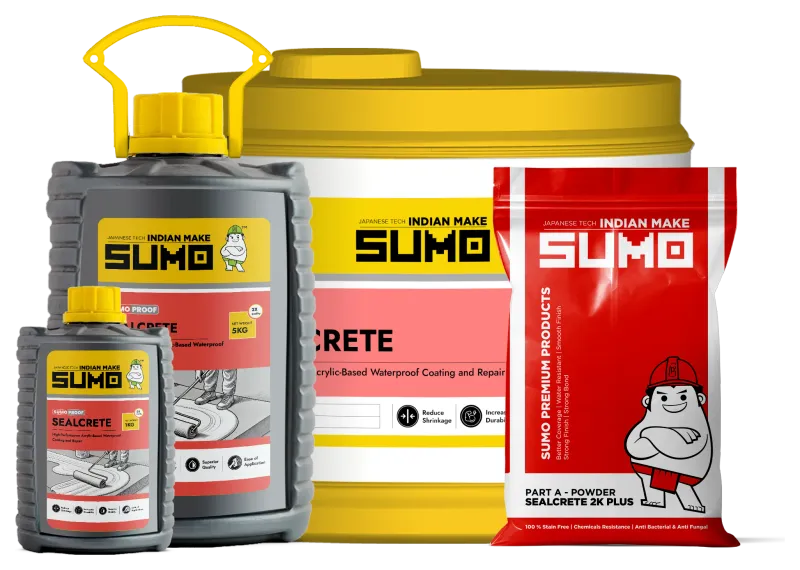
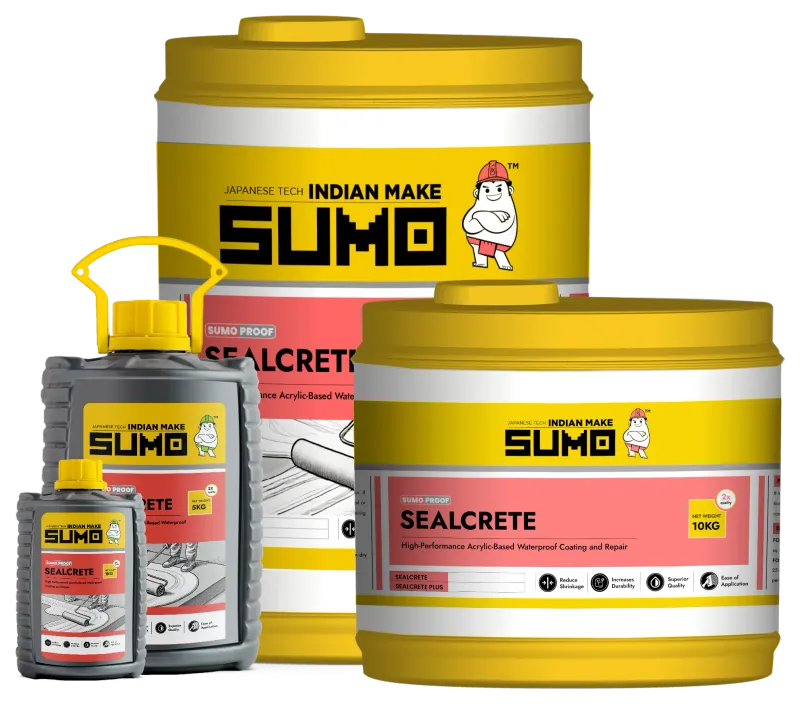
Apply a structural cementitious waterproofing coat such as SUMO Sealcrete over the whole shell, with extra care at floor-to-wall junctions, inlets and drains. Build the specified coats and cure.
Flood-test before you tile
Fill the waterproofed shell and leave it to confirm the waterproofing holds. Finding a leak now is far cheaper than after the tiles are on.
Fix tiles with SUMO S04
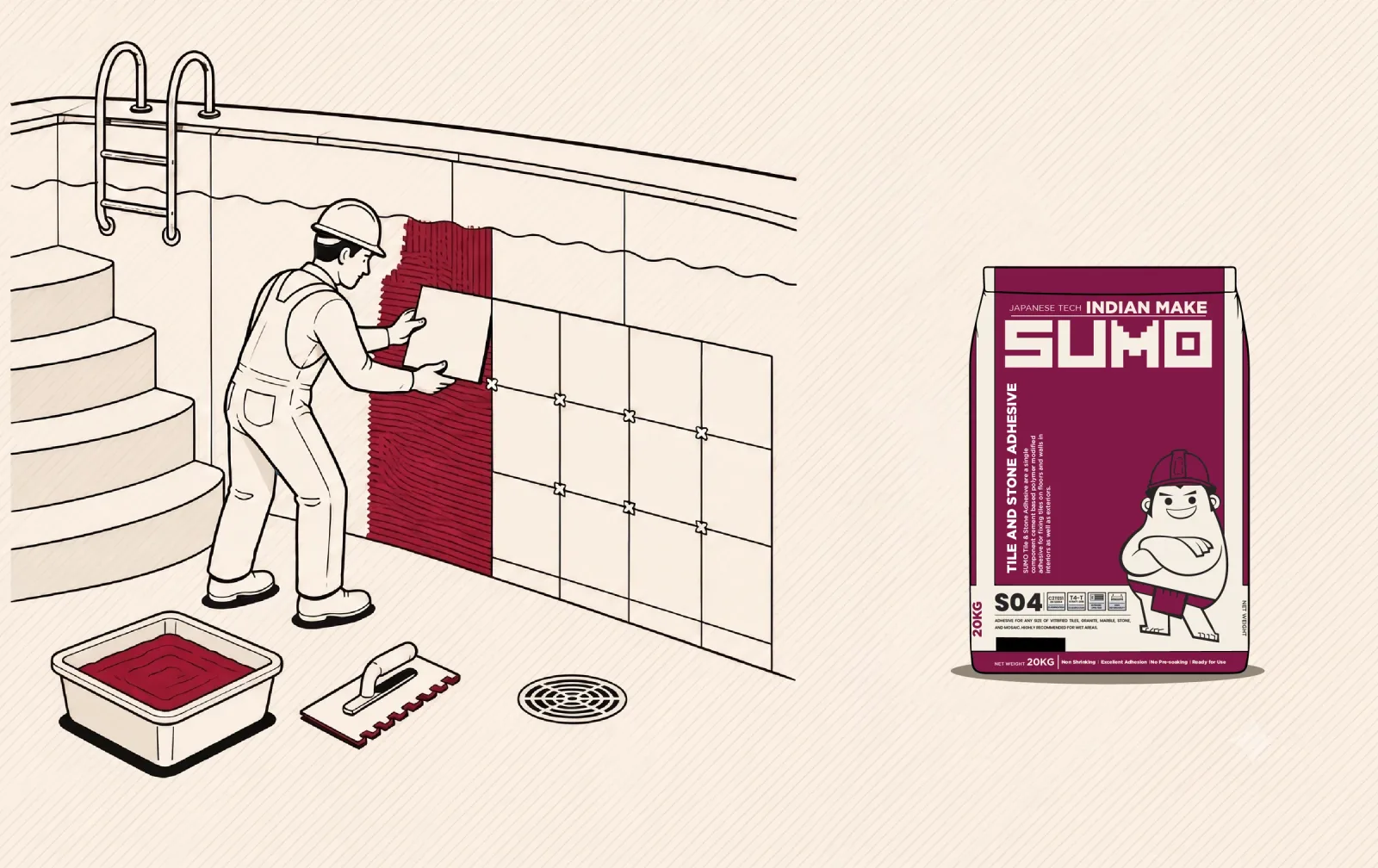
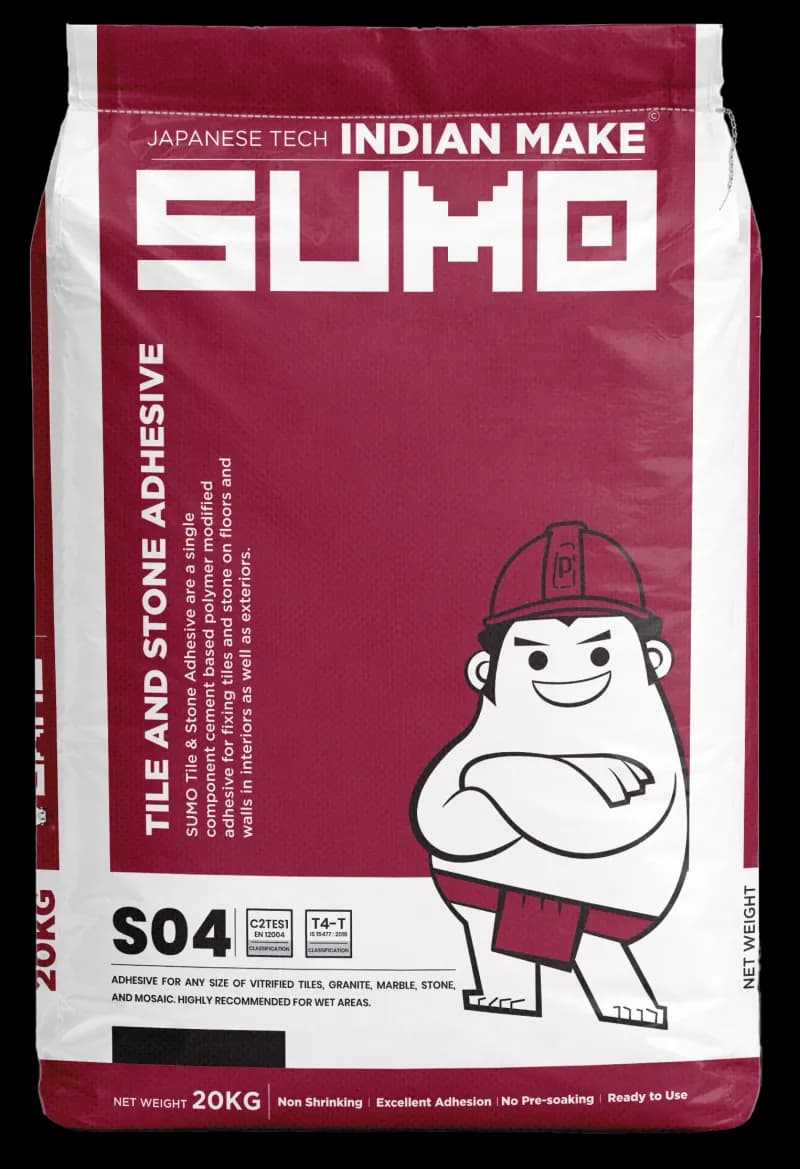
Drain and dry, then fix the tiles with SUMO S04 — a deformable C2TES1 adhesive recommended for swimming pools and wet areas. Comb the bed and back-butter each tile for full, void-free contact.
Grout with epoxy grout
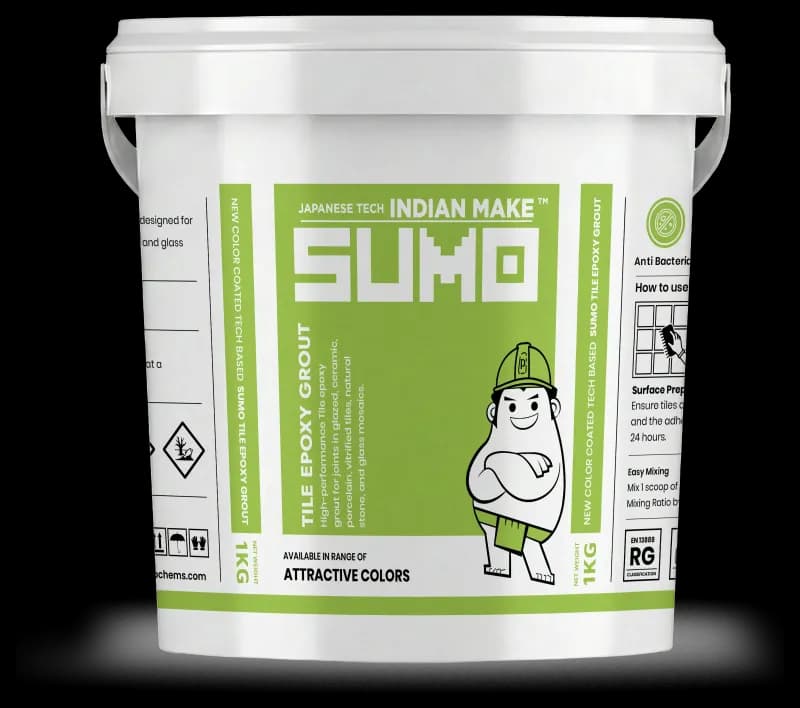
Once the adhesive has cured, grout all joints with SUMO Sumoxy 2K epoxy grout, packing every joint solid. Epoxy grout resists pool water and chemicals where cement grout would erode.
Cure fully, then fill slowly
Allow the adhesive and grout their full cure time before filling — immersing an uncured system weakens it. Fill the pool gradually so the structure loads evenly.
Care, tips & what to avoid
- !Skipping structural waterproofingTiles and grout are not a waterproofing layer. The shell must be waterproofed and flood-tested first.
- !Using cement adhesive/groutPermanent immersion and pool chemicals demand epoxy fixing and epoxy grout.
- !Leaving voids behind tilesWater gets behind poorly-bedded tiles and forces them off. Back-butter for full contact.
- !Filling before cureImmersing uncured epoxy weakens the bond. Wait the full cure time, then fill slowly.