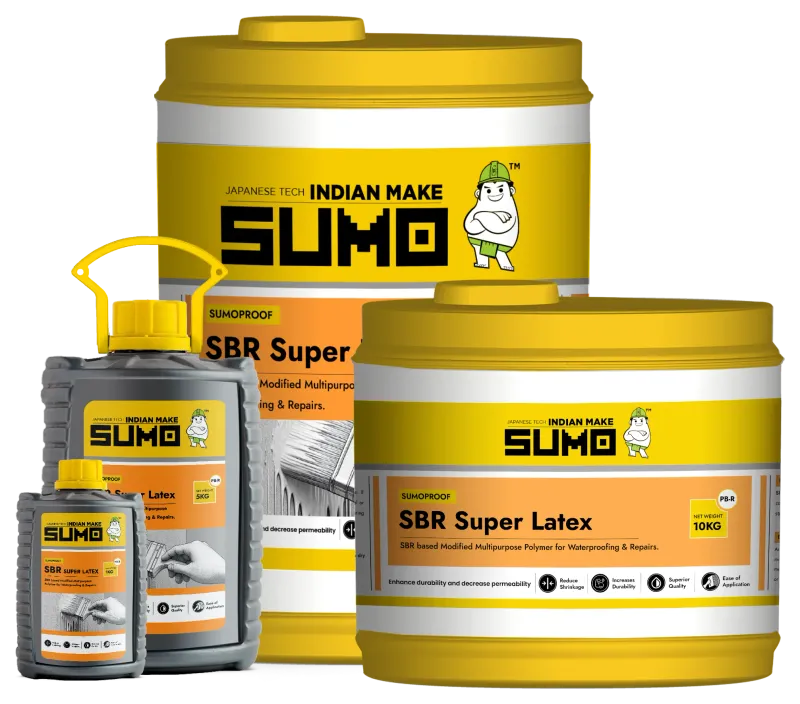
How to use SUMO SBR Latex (bonding & waterproofing)
SBR latex is the site all-rounder — a bonding agent, waterproofer and mortar-improver in one bottle. Here is how to use SUMO SBR Latex for each job.
ON THIS PAGE
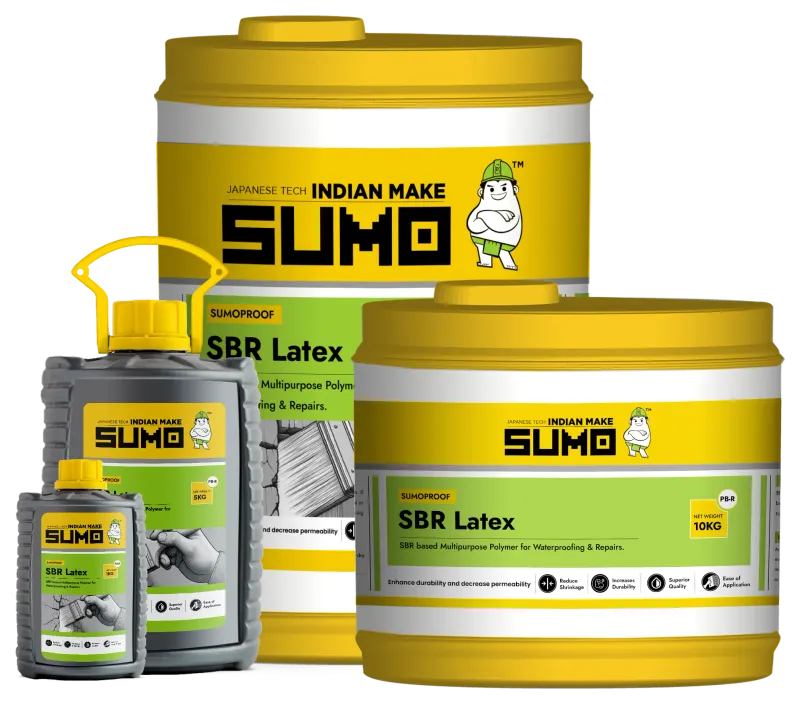
SBR (styrene-butadiene rubber) latex is one of the most versatile products on site. Added to cement it improves adhesion, flexibility and water resistance; brushed on as a slurry it bonds new mortar to old concrete. SUMO SBR Latex handles bonding coats, waterproof and repair mortars, and general mortar improvement.
This guide covers the three most common uses and how to get the dilution right for each.
What you’ll need
Step by step
As a bonding slurry (new to old)
To bond new mortar or concrete to an old surface, mix SUMO SBR Latex with cement (and a little water) into a brushable slurry and scrub it into the clean, damp old surface. Lay the new mortar while the slurry is still tacky — “wet on wet”.
To gauge a waterproof / repair mortar
Replace part of the gauging water with SBR Latex when mixing a repair or waterproof mortar. The latex improves adhesion, reduces water absorption and adds flexibility — ideal for patch repairs and wet areas.
Get the dilution right
Different jobs need different SBR-to-water ratios — a richer mix for bonding slurries, a measured dose for gauging mortars. Follow the dilution guidance on the product for the specific use.
Cure it properly
SBR-modified mortars still need normal curing — keep them from drying out too fast so they gain full strength and water resistance.
Care, tips & what to avoid
- !Letting the bond slurry dry before mortaringA dried bond coat does not bond. Work wet-on-wet — fresh mortar onto tacky slurry.
- !Over-dosing the latexToo much SBR makes mortar sticky and slow-setting. Use the recommended dose.
- !Applying to a dirty or dusty surfaceSBR bonds to sound, clean, damp surfaces. Clean and dampen the substrate first.
- !Skipping curingSBR mortars still need curing to reach full strength and water resistance.