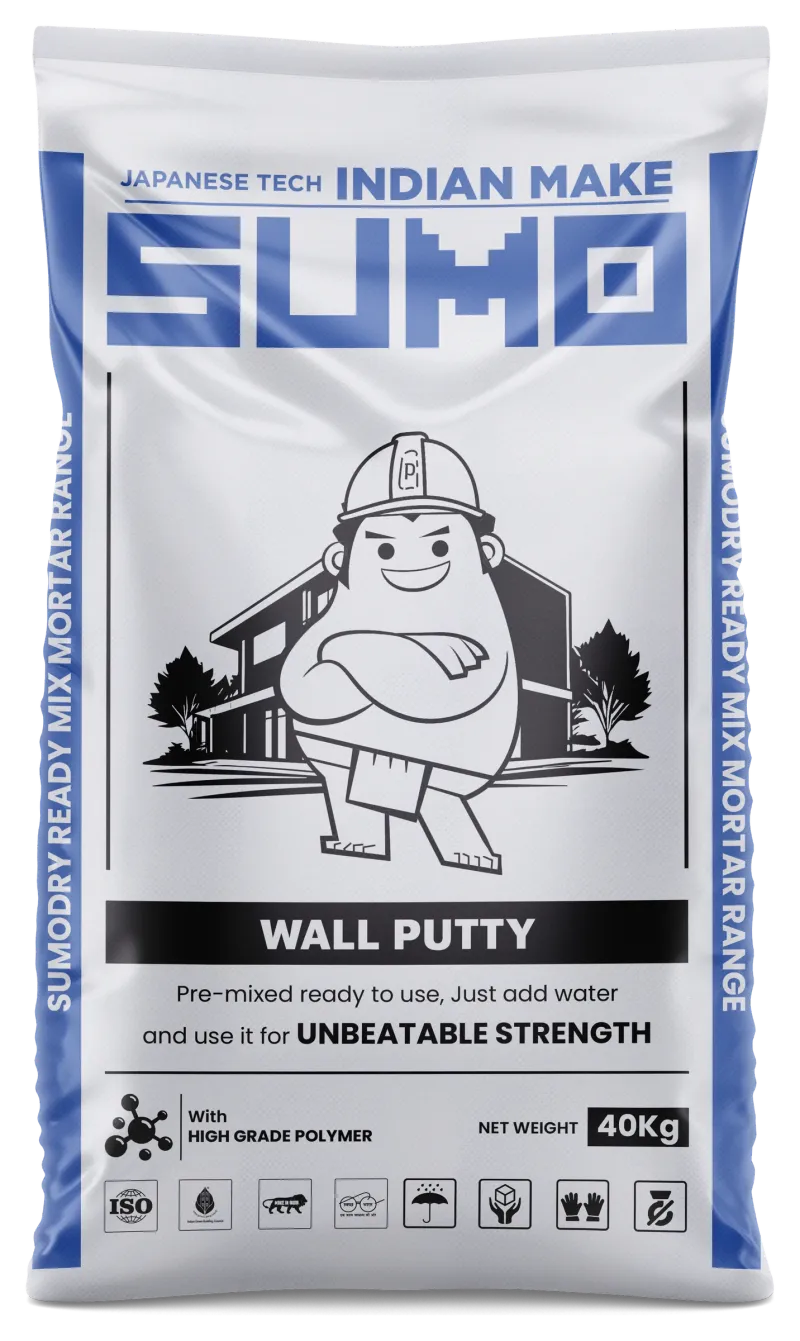
How to use SUMO Wall Putty (smooth, paint-ready walls)
Wall putty is what makes paint look flawless and last longer. Here is how to apply SUMO Wall Putty in two coats for a smooth, hard, paint-ready wall.
ON THIS PAGE
Wall putty fills the fine pores and imperfections in plaster and concrete, giving paint a smooth, hard, uniform base. Done well it makes paint look better, cover more evenly and last longer; done badly it powders, cracks or peels.
This guide covers applying SUMO Wall Putty in two thin coats with sanding between them, for a smooth, paint-ready wall.
What you’ll need
Step by step
Prepare and clean the wall
The wall must be cured, sound and clean — remove loose plaster, dust, grease and any flaking old paint. Fill large hollows or cracks separately first; putty is for a fine finish, not deep filling.
Dampen the surface
Lightly dampen a very absorbent wall so it does not pull water out of the putty too fast, which causes powdering. The surface should be damp, not wet.
Mix to a smooth, lump-free paste
Add SUMO Wall Putty to clean water (powder into water) and mix with a paddle to a smooth, creamy, lump-free consistency. Let it stand a few minutes and remix.
Apply the first coat thin
Spread a thin, even first coat with the blade, working it into the surface. Keep it thin — thick putty coats are prone to cracking. Let it dry.
Sand, then apply the second coat
Lightly sand the first coat to knock off ridges, dust off, then apply a second thin coat to fill the remaining fine imperfections and level the surface.
Final sand, then prime and paint
Once dry, give a final light sand for a smooth finish, remove all dust, and apply a primer before painting for the best, longest-lasting result.
Care, tips & what to avoid
- !Applying putty too thickThick coats crack and debond. Build up in two thin coats instead.
- !Skipping surface prepPutty over dust, grease or flaking paint peels. Clean and make the wall sound first.
- !Not dampening an absorbent wallA thirsty wall dries the putty too fast and it powders. Dampen it lightly first.
- !Painting without primerPriming over putty evens porosity and improves paint adhesion and coverage.